How can research infrastructures build sustainable futures, strengthen collaboration and support the people who make them work?These questions were at the heart of the Life Science Research Infrastructures for the Future (RI4Future) Symposium, held on 5–6 November 2026 in Copenhagen, Denmark. The event brought together core facility staff and research infrastructure leaders from across Danish and European institutions, alongside representatives of public and private funding bodies and policymakers, to exchange experiences and discuss the future development of the Danish research infrastructure landscape.
Organised at the University of Copenhagen, the symposium aimed to strengthen connections across the Danish life science research infrastructure community and contribute to a shared vision for its future. The programme combined presentations showcasing the diversity and capabilities of Danish research infrastructures with strategic discussions on funding, coordination and long-term sustainability.
Shaping a shared vision for Danish research infrastructures
A central focus of the symposium was the national conversation around how Danish research infrastructures can work more closely together and develop sustainably. While Denmark has a strong landscape of advanced research facilities and technological expertise, ensuring effective coordination, long-term funding and broad access to these capabilities requires collaboration across institutions and stakeholders.
The programme addressed these questions from multiple perspectives, including a presentation on the Danish national roadmap for life science research infrastructures by Lise Arleth, Vice Dean for Research at the University of Copenhagen and member of the National Committee for Research Infrastructures (NUFI). Contributions from the Novo Nordisk Foundation provided insights into the perspectives of a major private Danish research funders.
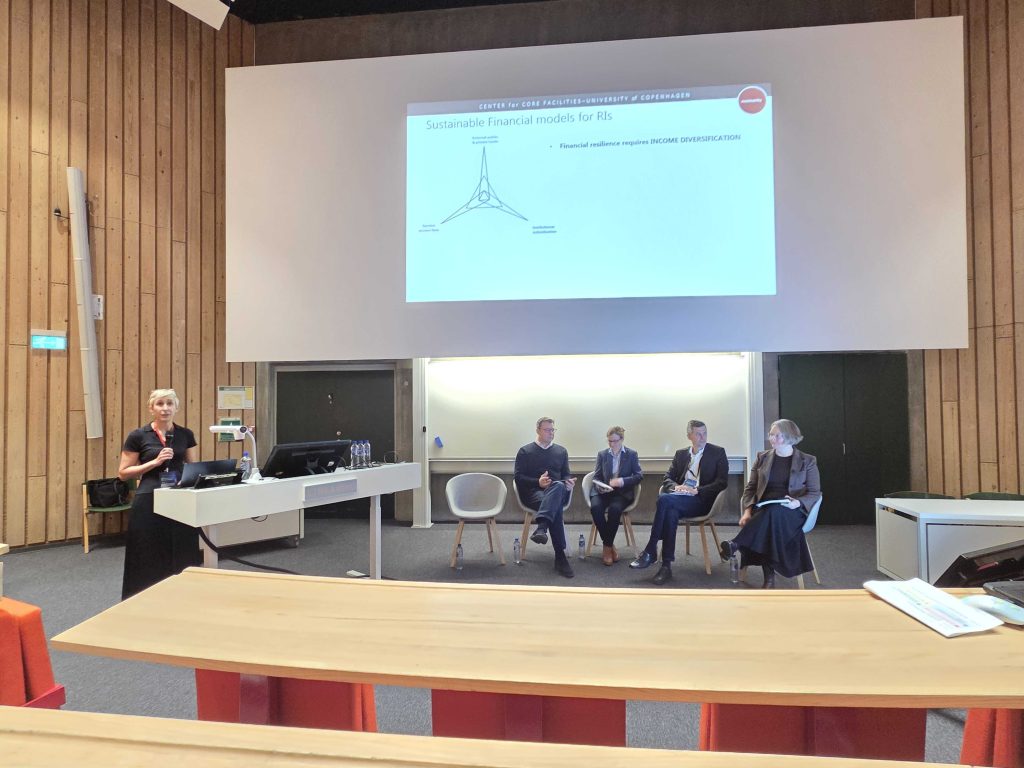
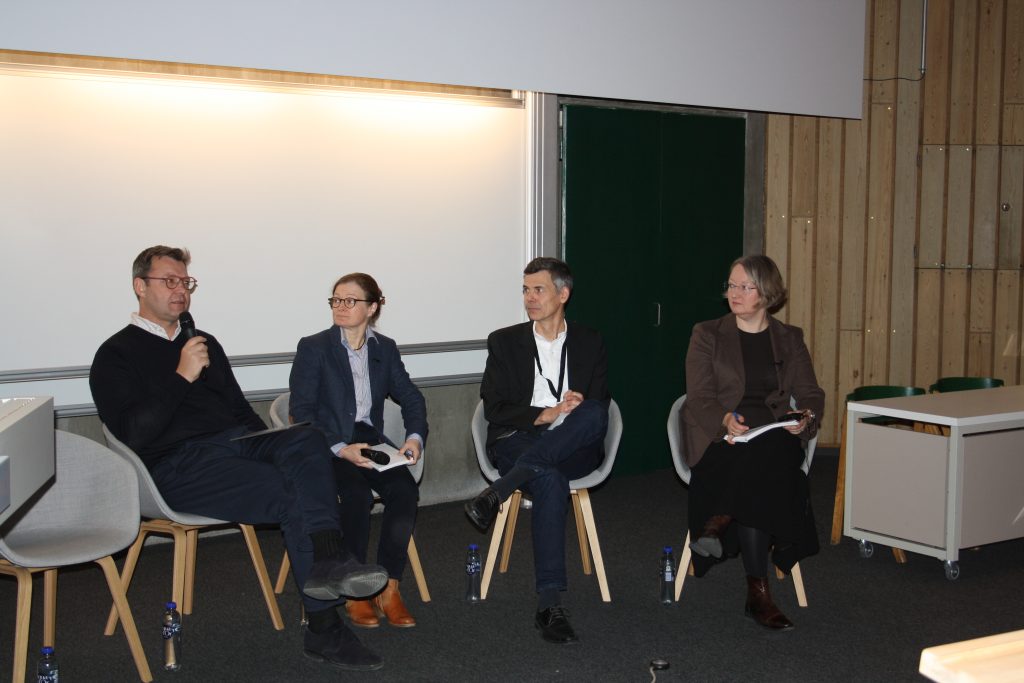
Two panel discussions brought together research infrastructure leaders, institutional representatives, funders and European experts to explore the long-term sustainability of excellent service provision and world-class infrastructures, as well as the role of research infrastructures in driving scientific discovery, research excellence and innovation capacity. These discussions connected questions of strategic investment and coordination with the practical needs of research facilities and the wider research and innovation ecosystem.
Clara Prats animates the panel discussion at RI4Future. Photo courtesy of Johanna Bischof. Panel discussion at the Research Infrastructures for Future (RI4Future) Symposium in Copenhagen, November 2026. Antje Keppler represented Euro-BioImaging. Photo courtesy of KU (University of Copenhagen).
Another important theme was the growing role of data infrastructures. Presentations from the Danish e-Infrastructure Cooperation and the Danish ELIXIR Node addressed FAIR data management, collaboration and the development of AI-ready life science data, highlighting the importance of connecting physical research infrastructures with the wider data ecosystem.
Alongside these strategic exchanges, flash talks, poster sessions and networking opportunities allowed participants to discover the capabilities available across Danish institutions, establish new connections and identify opportunities for collaboration.
Bringing European perspectives into the national conversation
The national discussions were complemented by contributions from European research infrastructure initiatives, offering experiences and policy perspectives that could inform future developments in Denmark.
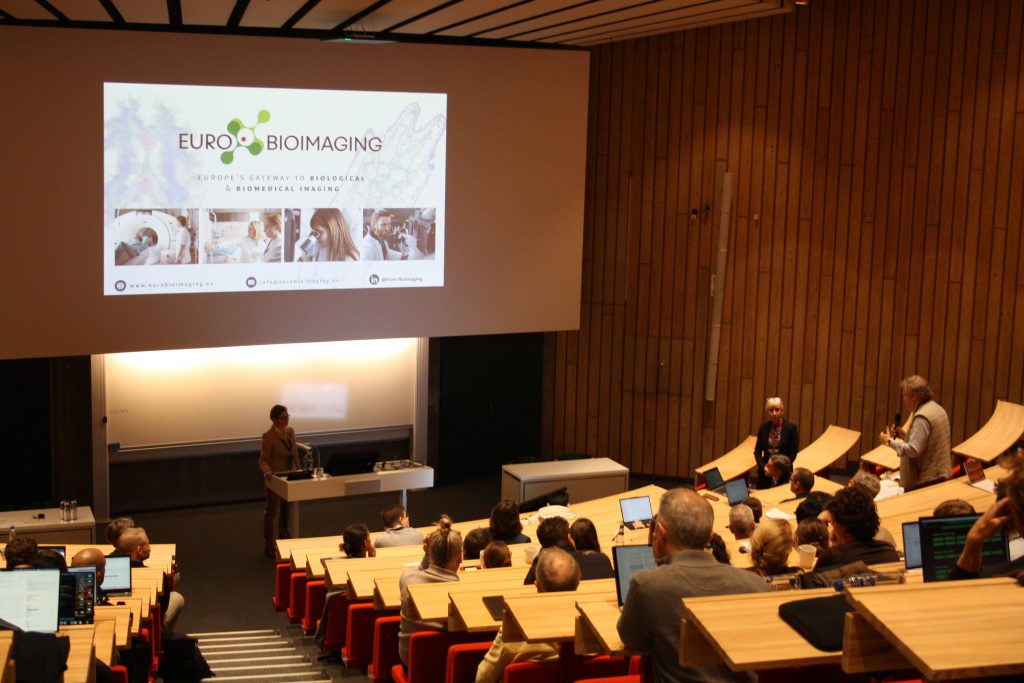
Antje Keppler, Euro-BioImaging Bio-Hub Director, presented "Strong institutional and national research & technology infrastructures are essential for Europe's competitiveness", highlighting the importance of well-connected research infrastructures at institutional, national and European levels. Drawing on experiences and activities from Euro-BioImaging and the ERIC Forum, she illustrated how European collaboration can support national communities, strengthen access to advanced technologies and contribute to the wider research and innovation ecosystem.
Antje Keppler's presentation at the RI4Future Symposium in Copenhagen (November 2026). Photo by University of Copenhagen.
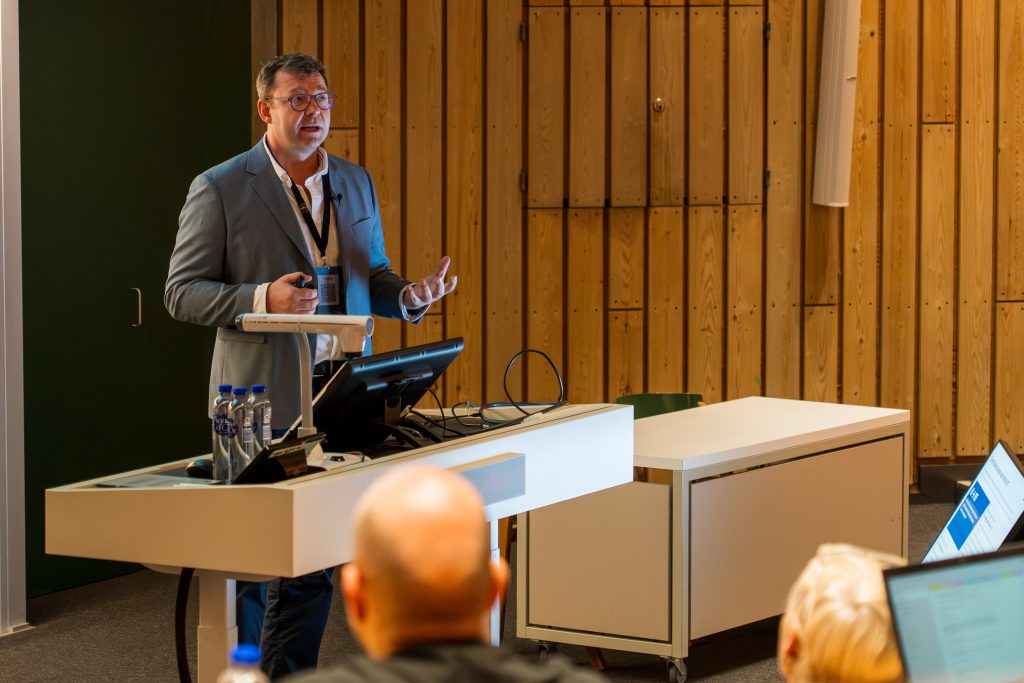
Ricardo Migueis, Head of INESC Hub Brussels, contributed a further European perspective with his presentation "Research Infrastructures – new and costly entities that require new and stable funding schemes". Drawing on insights from the European FUND-RI project (GA# 101292880), he addressed the need for funding approaches that reflect the long-term operational requirements and evolving roles of research infrastructures.
Ricardo Migueis, Head of INESC Hub Brussels, contributed a further European perspective with his presentation "Research Infrastructures – new and costly entities that require new and stable funding schemes" at the RI4Future Symposium in Copenhagen (November 2026). Photo courtesy of KU (University of Copenhagen).
Putting core facility professionals at the centre
Beyond infrastructure funding and coordination, the symposium also placed a strong emphasis on the people who operate research infrastructures and make their services available to scientific communities.
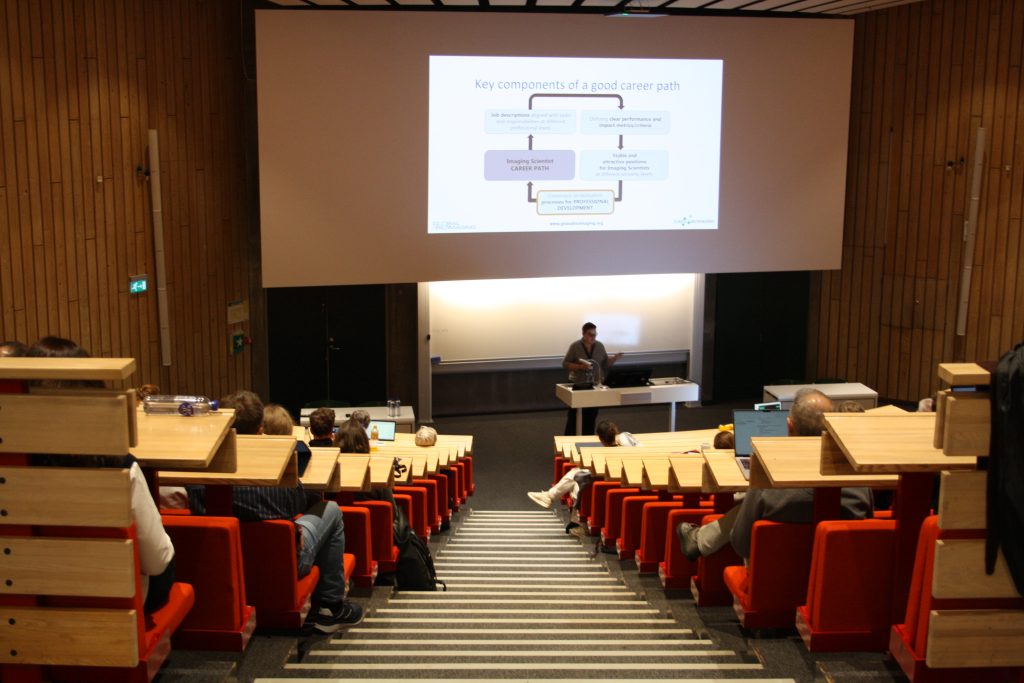
Johanna Bischof, Euro-BioImaging Head of Bio-Hub Operations, presented the work of the Global BioImaging Working Group on Career Paths for Imaging Scientists in her talk "Research Infrastructure Professional recognition and integration to life science institutions". The presentation highlighted international efforts to improve recognition, career development and institutional integration of core facility professionals.
A dedicated breakout session, "Research Infrastructure Professionals, mind the Career Path Gap", provided space for participants to exchange experiences and discuss challenges and opportunities for strengthening career paths within Danish research institutions. These exchanges connected international perspectives developed through Global BioImaging with the practical realities and needs of local facilities, and developed concrete suggestions for a path forward towards an improved national career path system.
Other parallel sessions addressed strategic coordination between infrastructures, life science data infrastructure development and the role of research and technology infrastructures in supporting innovation, providing opportunities for more focused exchanges and identifying potential next steps.
Strengthening connections across the Danish community
One of the most valuable aspects of the symposium was the opportunity for core facility staff and research infrastructure leaders from different Danish institutions to connect, share experiences and learn from each other. Participants particularly appreciated these networking opportunities, alongside the broader strategic and policy discussions that offered inspiration for developing their own facilities and research infrastructures.
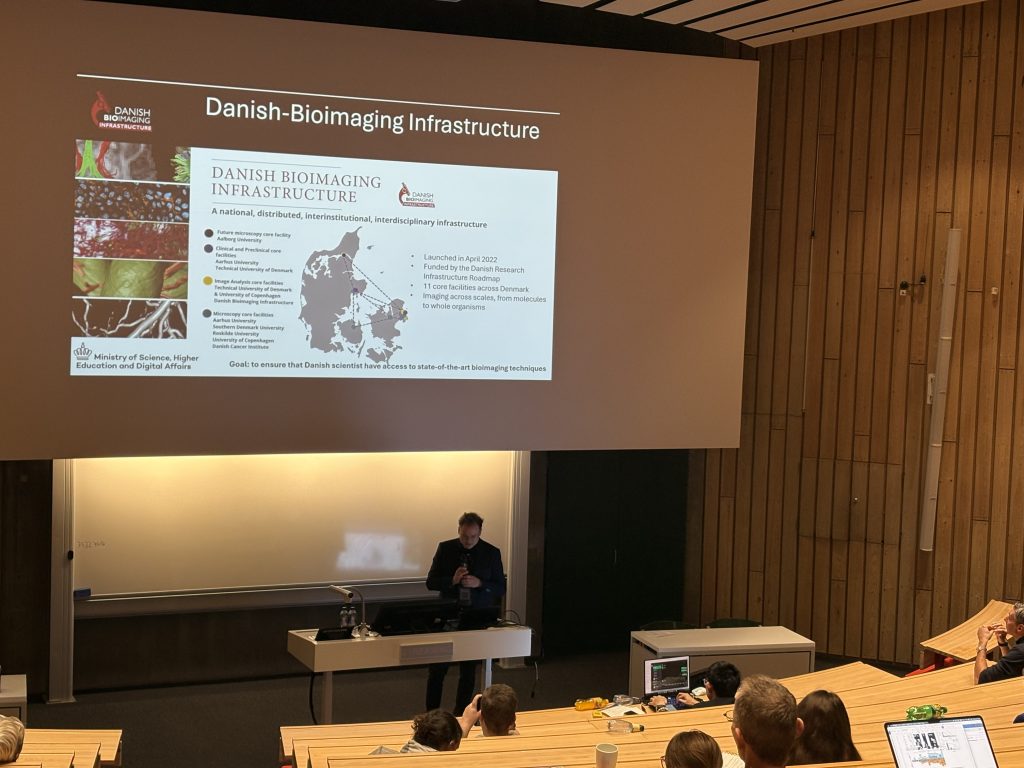
Jonathan Brewer, University of Southern Denmark, made a pitch on the Danish BioImaging Infrastructure at the RI4Future Symposium. Photo by Danish BioImaging.
By combining discussions on national research infrastructure priorities with practical exchanges between facilities, RI4Future provided an important platform for strengthening connections across the Danish life science research infrastructure community.
Euro-BioImaging was pleased to contribute European and global perspectives to this initiative, supporting its Member State communities in strengthening national coordination, exchanging experiences and building connections across the wider research infrastructure landscape.
More news from Euro-BioImaging
November 13, 2026
Euro-BioImaging contributes to advancing complex in vitro models at PRIM-TECH3R Annual Meeting
On 29–30 October 2026, partners of the European PRIM-TECH3R project gathered at the University of Veterinary Medicine Vienna, Austria, for their annual project…
Following chromosomes in living cells with Oblique Plane Microscopy
How can researchers follow chromosomes over time while keeping the cells they study alive? For Rumen Stamatov, a postdoctoral researcher at Euro-BioImaging’s Sofia…