
October 16, 2026
RAISE Hub: One gateway to Europe’s AI in Science Community
A new online platform to connect researchers, infrastructures, and funders to accelerate AI scientific discovery across Europe Dublin, Ireland, 15 October…



The Basque Resource for Electron Microscopy (BREM) provides access to high-end instrumentation and expertise in high-resolution cryo-electron microscopy (Cryo-EM) to national and international researchers, from academia and industry. One of their newest additions is a well-trained scientist called Cristina Fernandez. As part of our ongoing series of interviews with Euro-BioImaging Node staff, our Scientific Ambassador, Rajiven Srikantharajah, sat down with Cristina to learn what brought her to this state-of-the-art facility and what motivates her the most in this collaborative, innovative, and interdisciplinary environment.
Article contributed by Euro-BioImaging Scientific Ambassador Rajiven Srikantharajah (Centro Nacional de Investigaciones Cardiovasculares (CNIC), Madrid, Spain)
As a trained biochemist, Cristina Fernandez underwent her PhD training in Madrid (CNB), followed by training at the National Institute of Health in Bethesda, Maryland (USA), and a second post-doctoral training in Madrid (CNB). While in her initial scientific days she studied bioremediation, a process using bacteria to degrade harmful environmental compounds (e.g., benzene). In her postdoctoral phase, she focused mostly on protein interactions and protein aggregation, using static light scattering and finally electron microscopy. Eventually Cristina transitioned from a traditional research path into a technical role. “Scientific careers can be unstable,” she explains. “I also enjoy working with instruments and helping others with their experiments. A technical career allows me to continue working in science while focusing on the technology that makes research possible.” Overall her interdisciplinary spirit is clearly reflected by her own scientific trajectory.
In the highly collaborative environment, Cristina highlights especially the interdisciplinary spirit of the BREM. The BREM is located in biophysical institute of Bilbao, combining scientists from multiple backgrounds, spanning from biology, engineering, chemistry and physics to answer pressing and complex research questions. Hence, when asked to describe her workplace in five words, Cristina says: collaborative, innovative, challenging, dynamic and interdisciplinary.
“The [Euro-BioImaging] network connects many institutes and research groups. Sharing knowledge about instrumentation and offering services across institutions is not easy, but Euro-BioImaging does a very good job facilitating this collaboration.”
-- Cristina Fernandez, BREM
She is also happy about the involvement as a Euro-BioImaging Node. “The network connects many institutes and research groups. Sharing knowledge about instrumentation and offering services across institutions is not easy, but Euro-BioImaging does a very good job facilitating this collaboration.”
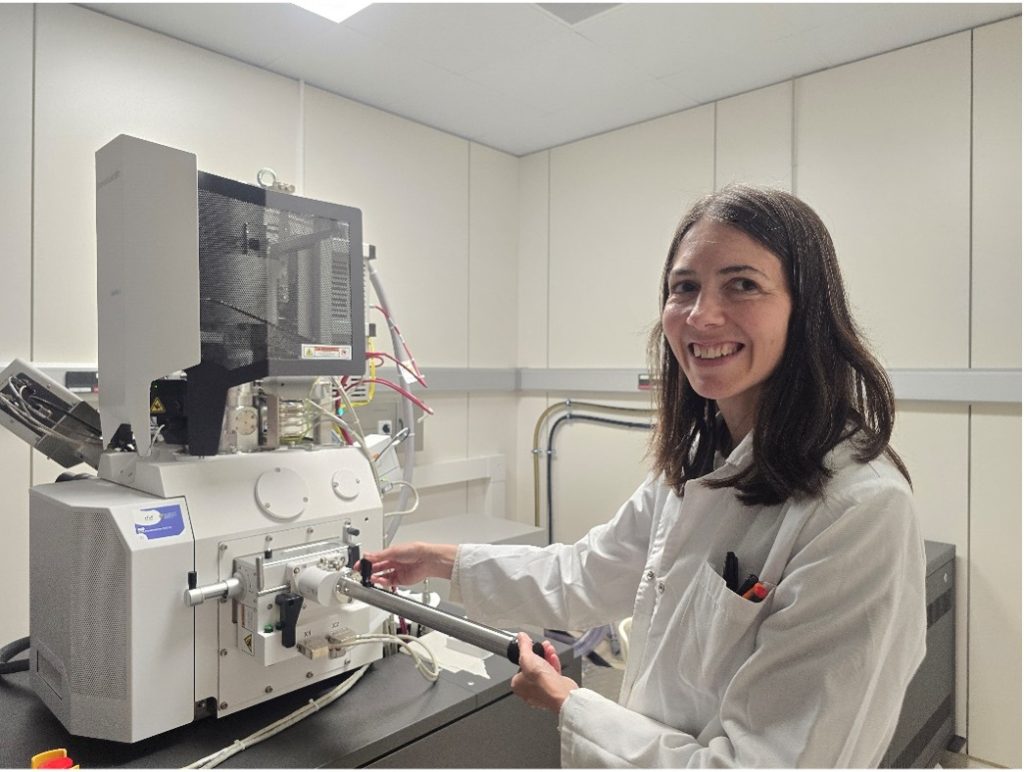
At BREM, Cristina's role is to support researchers using advanced electron microscopy. Her work includes preparing biological samples, operating microscopes and helping analyze the resulting images. For many users, especially at the start, this support is essential. She explains “that the workflow is complex and sample preparation is extremely important, especially for biological samples.” This gets even more complicated as “each sample behaves differently […], optimising protocols takes time.” A standard workflow can take around three days - from preparing the sample, producing lamellae, polishing them and finally imaging them with the electron microscope.
"A technical career allows me to continue working in science while focussing on the technology that makes research possible.”
-- Cristina Fernandez, BREM
Her fascination for electron microscopy stems from her own experience. The near-atomic resolution is unique to electron microscopy techniques and their derivatives. “During much of my career I studied protein interactions indirectly through measurements in solution,” she explains, while adding “With electron microscopy you can directly observe structures and complexes, which is fascinating.”
With the new addition of the cryo-electron tomography machinery (Titan Krios), the institute is able to study and analyse single protein resolution and its three-dimensional structure. Currently they are expanding their capabilities in CLEM. Developing such workflows requires patience. “We need to correlate fluorescence signals with electron microscopy structures reliably,” she insists and says that the next challenge is to make the process faster and more efficient, so it can be applied to different biological samples. She highlights especially automation in both data acquisition and sample preparation to be future key drivers to help standardise workflows to make these techniques accessible to more users.
While she is facing and overcoming new challenges at the BREM, she aims to become a microscopy specialist, allowing her “To collaborate on projects, train new users, and continue developing my expertise with these techniques.” She advises scientists considering to switch from a scientific career into a technical role not to be afraid of change.
“Technical careers offer many opportunities to remain involved in science. It can be very rewarding to help other researchers complete their projects using your expertise. There is not only one career path in science and students should know that technical roles are also valuable and fulfilling.”
-- Cristina Fernandez, BREM
October 16, 2026
A new online platform to connect researchers, infrastructures, and funders to accelerate AI scientific discovery across Europe Dublin, Ireland, 15 October…
October 16, 2026
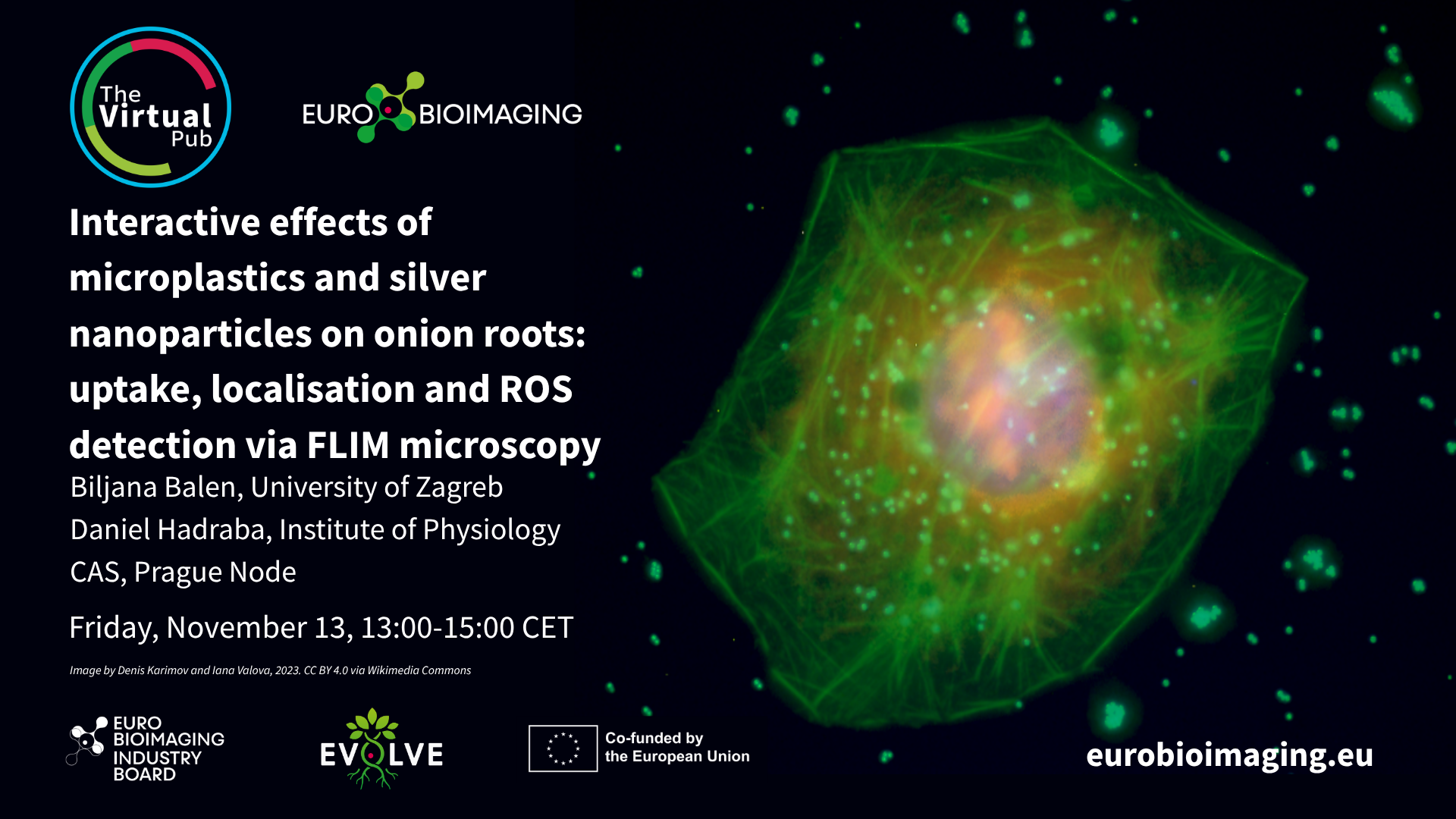
At the Special Edition Virtual Pub, “Imaging Micro- and Nanoplastics,” Euro-BioImaging users, Node experts and Industry partners will explore how advanced microscopy, clinical…
October 16, 2026
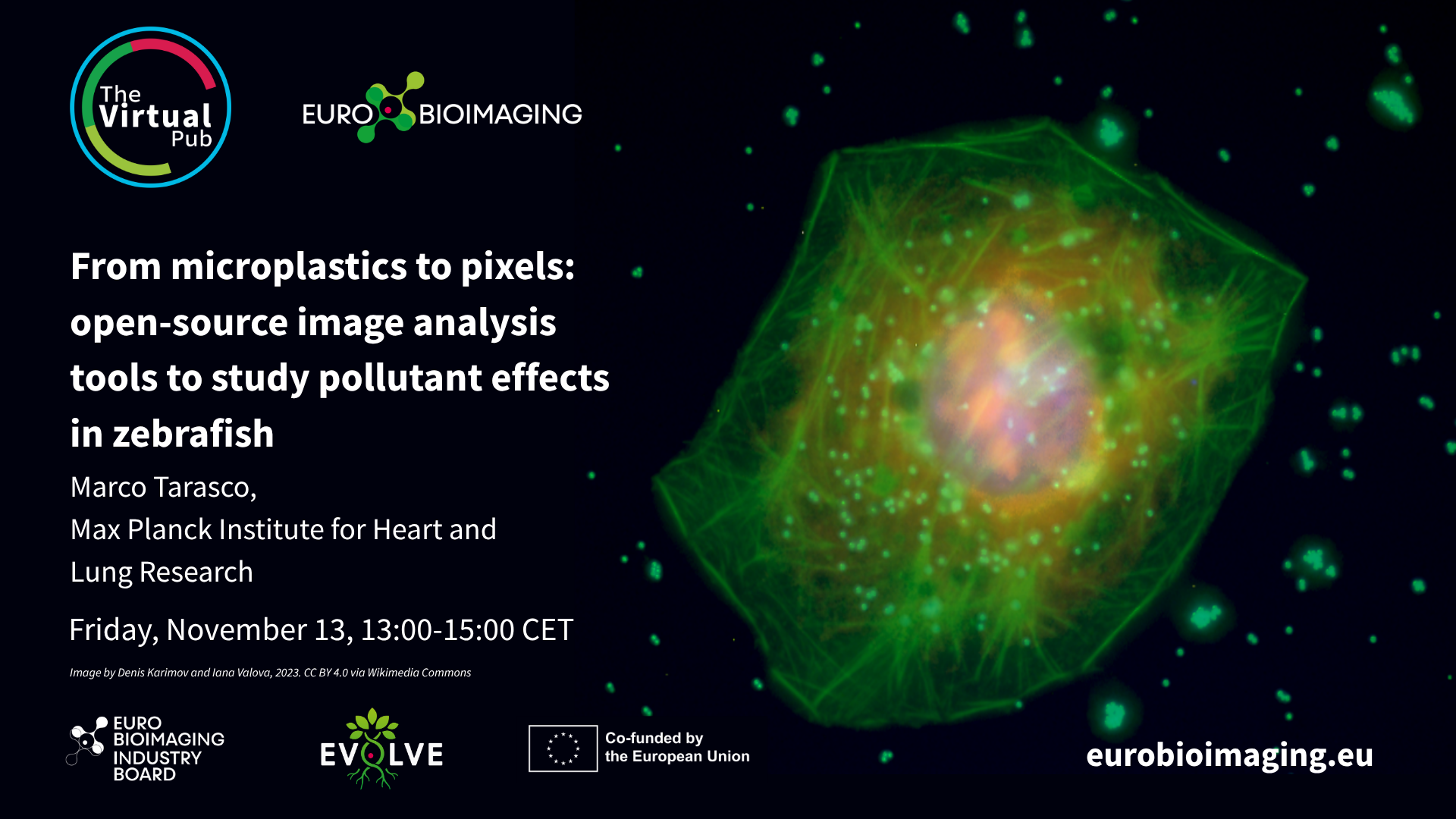
At the Special Edition Virtual Pub, “Imaging Micro- and Nanoplastics,” Euro-BioImaging users, Node experts and Industry partners will explore how advanced microscopy, clinical…