
March 30, 2026
Euro-BioImaging at the EOSC ESFRI meeting in Milan
Euro-BioImaging was delighted to attend the ESFRI/EOSC Policy Workshop on “EOSC and Research Infrastructures: Opportunities and Strategies” in Milan from March 15-16, represented by…



One of the key aspects of the EVOLVE project is to broaden and diversify our user base across scientific communities. At Euro-BioImaging we have identified four main areas of research where we want to raise awareness of our imaging services and the related amazing expertise of our Nodes. With the open call for Node participation in conferences, we are looking for Node staff who would like to give an oral presentation at conferences in these areas.
Our current focus fields are:
Euro-BioImaging is pleased to support conference participation with an oral presentation in any of these areas (and more in Table 1 on our website) with up to 750€ in reimbursement. Applications are accepted on a rolling basis. Conferences must take place in 2026.
Who can apply: Anyone working at a Euro-BioImaging Node
When: The conference must take place in 2026.
Where: No geographical limitation
Martina Capozza (MMMI Node) attended the ESP (European Society for Photobiology) conference in Bari, Italy, from August 24th to August 28th participating with an oral talk titled “Enhancing Tumor Uptake of Silicon Phthalocyanine and Improving PDT Efficacy in a Triple-Negative Breast Cancer Murine Model via In Situ Sonoporation.” This conference participation was made possible by the EVOLVE call for Node conference participation.
The ESP conference brought together researchers from diverse disciplines, including chemistry, physics, plant science and biotechnology, all connected around the photobiology theme.
Martina says: “Photodynamic research covers a broad range of applications, from chemical up to plant and environmental photobiology. Through this call I had the opportunity to present both my work and the work developed at the Node to a wider scientific audience and increase the Euro-BioImaging visibility beyond the imaging community.”

This work is made possible by funding from the European Union as part of the EVOLVE project.
March 30, 2026
Euro-BioImaging was delighted to attend the ESFRI/EOSC Policy Workshop on “EOSC and Research Infrastructures: Opportunities and Strategies” in Milan from March 15-16, represented by…
March 30, 2026
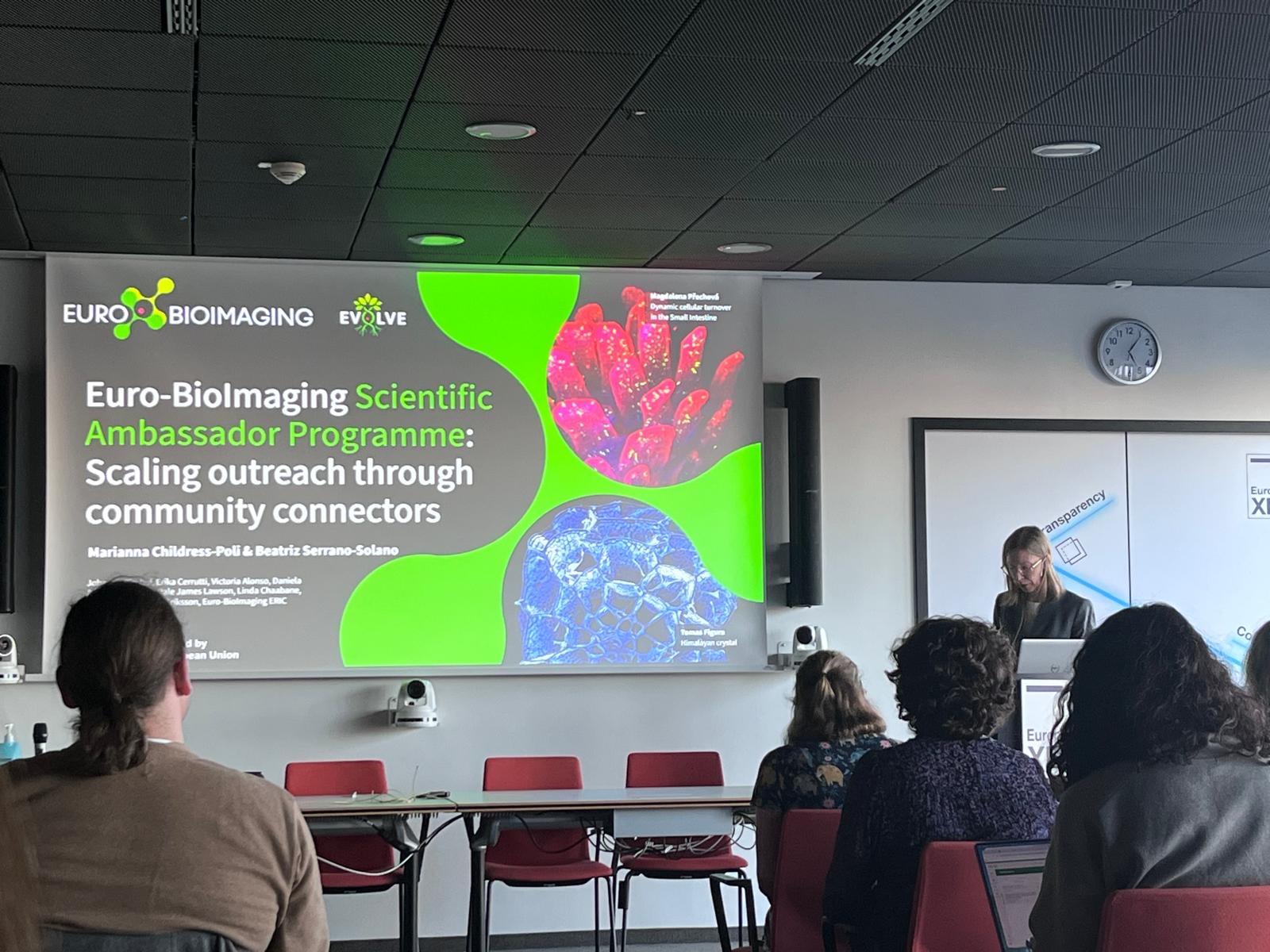
Euro-BioImaging was delighted to attend the Public Awareness & Engagement of Research Infrastructures (PAERI) conference, represented by External Communications Officer, Marianna Childress-Poli. This year’s…
March 26, 2026
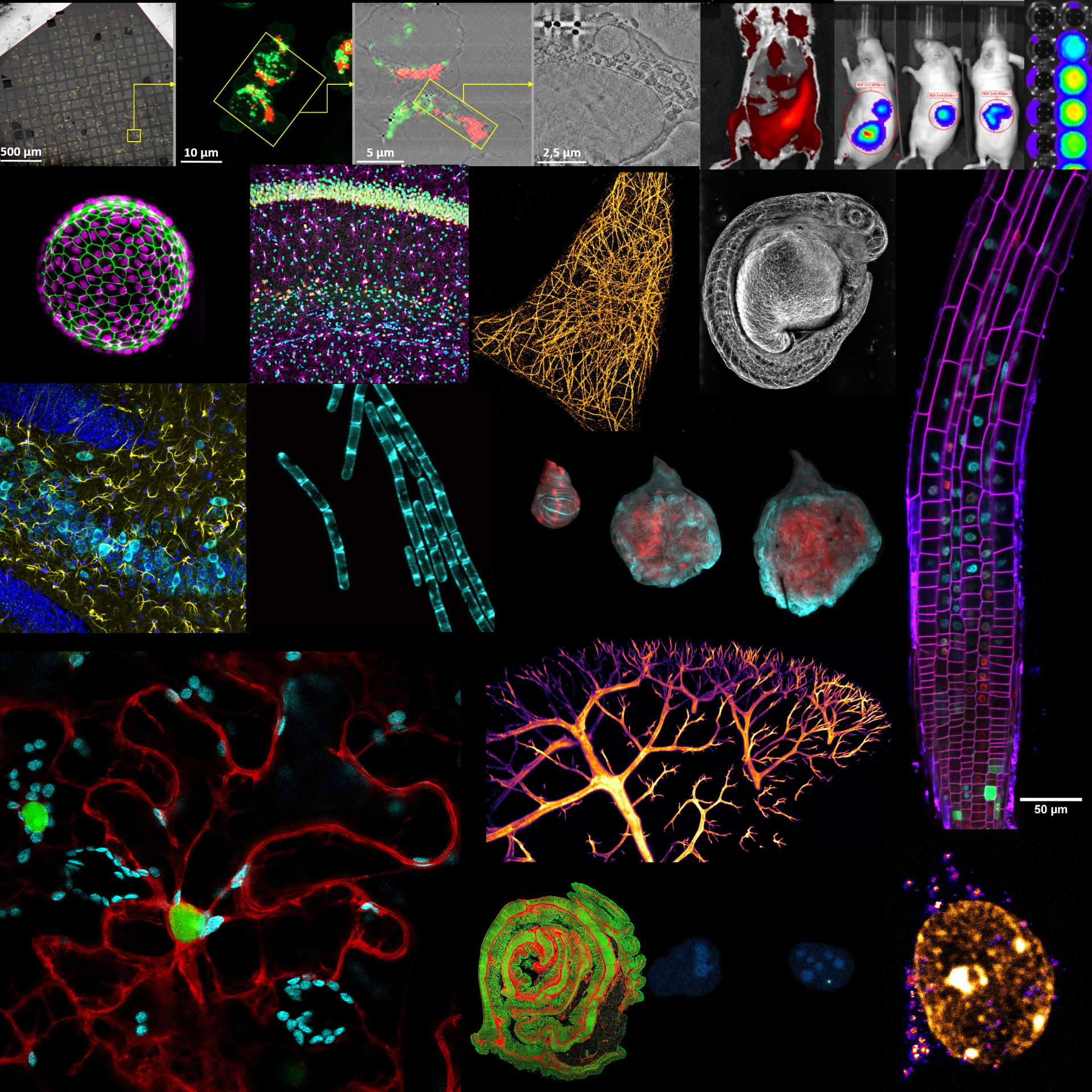
The Madrid Advanced Microscopy Center (MAdMiC) is the first Euro-BioImaging Node in Madrid (Spain). It is formed through the collaboration and close work of…