
March 30, 2026
Euro-BioImaging at the EOSC ESFRI meeting in Milan
Euro-BioImaging was delighted to attend the ESFRI/EOSC Policy Workshop on “EOSC and Research Infrastructures: Opportunities and Strategies” in Milan from March 15-16, represented by…



The Elettra Sincrotrone Trieste - the beamline of Euro-BioImaging’s Phase Contrast Imaging Flagship Node - is undergoing a massive upgrade that will significantly enhance the brilliance and coherence of the X-ray source. Giuliana Tromba explains what researchers will gain when the beamline reopens in 2027.
A major upgrade program, Elettra 2.0, is currently being implemented at the Elettra synchrotron that will boost the brilliance and coherence of the X-ray source, surpassing the current capabilities of Elettra facility. The SYRMEP_LS beamline, currently under construction as part of the Elettra 2.0 upgrade, will be specifically designed for Life Sciences imaging applications and will overcome the limitations of the present beamline, serving as the Phase Contrast Imaging Flagship Node Trieste. SYRMEP_LS will offer the Euro-Bioimaging community state-of-the-art synchrotron radiation (SR) phase contrast imaging techniques with significant advancements, including an extended X-ray energy range and enhanced achievable spatial resolutions.
The upgrade will be executed in two phases. In the first phase the new source’s brilliance operating at 2.4 GeV will be exploited by a 1.4 T bending magnet. In the second phase, the source will be replaced with a super conducting Bending Magnet (super BM) with 6 T field. This new installation will make possible a significant extension of the available energy range and an important increase of beam intensity.
Two setups will be available for in-vitro/ex-vivo or small animal studies with a wide beam such as 210 mm × 8 mm at the sample stage (located at 30 meters from the source). As part of a dedicated research program, a patient setup will be developed at 38 meters from the source designed to conduct clinical studies of lung tomography.
The new beamline, in its final configuration, will operate in an energy range between 10 keV and 130 keV for monochromatic imaging. This range will be further extended to about 300 keV when using pink beam modality. The broader energy interval will expand the research horizons to encompass paleontology, paleo-anthropology, materials science and medical research.
The propagation-based phase contrast imaging setup will be offered to users for multiscale applications with typical pixel sizes ranging from 0.3 µm to 23 µm, according to the sample characteristics and needed resolution.
Thanks to the high fluxes, SYRMEP-LS will be able to provide dynamic imaging, known as the so-called 4D CT. This process involves acquiring multiple CT scans with acquisition times of a few seconds each.
Following the commissioning of the new Elettra 2.0 synchrotron, the new beamline will start operating in November 2026. Opening to user is expected at the beginning of 2027.
The beamline is supported by two dedicated laboratory microfocus sources for micro-tomography (microCT) experiments (known as TomoLab). Being independent setups, the access to these sources is always available through the EuroBioimaging Portal of the Node, even during the upgrade period of Elettra 2.0.
TomoLab Page: https://www.elettra.eu/lightsources/labs-and-services/tomolab/tomolab.html
For any further information about proposal preparation related to TomoLab, please do not hesitate to get in touch.
This article was contributed by Giuliana Tromba, Manager of the Phase Contrast Imaging Node
March 30, 2026
Euro-BioImaging was delighted to attend the ESFRI/EOSC Policy Workshop on “EOSC and Research Infrastructures: Opportunities and Strategies” in Milan from March 15-16, represented by…
March 30, 2026
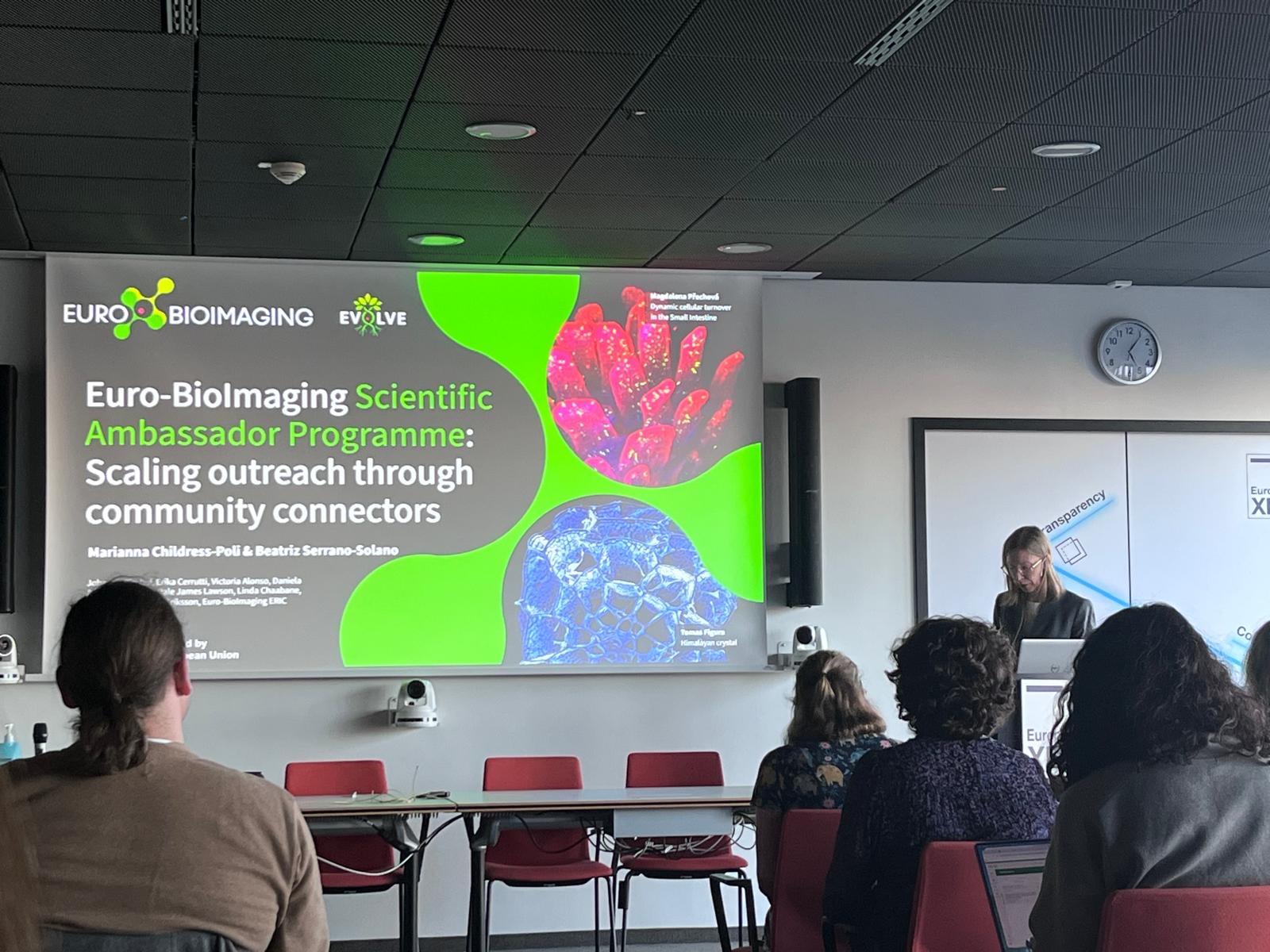
Euro-BioImaging was delighted to attend the Public Awareness & Engagement of Research Infrastructures (PAERI) conference, represented by External Communications Officer, Marianna Childress-Poli. This year’s…
March 26, 2026
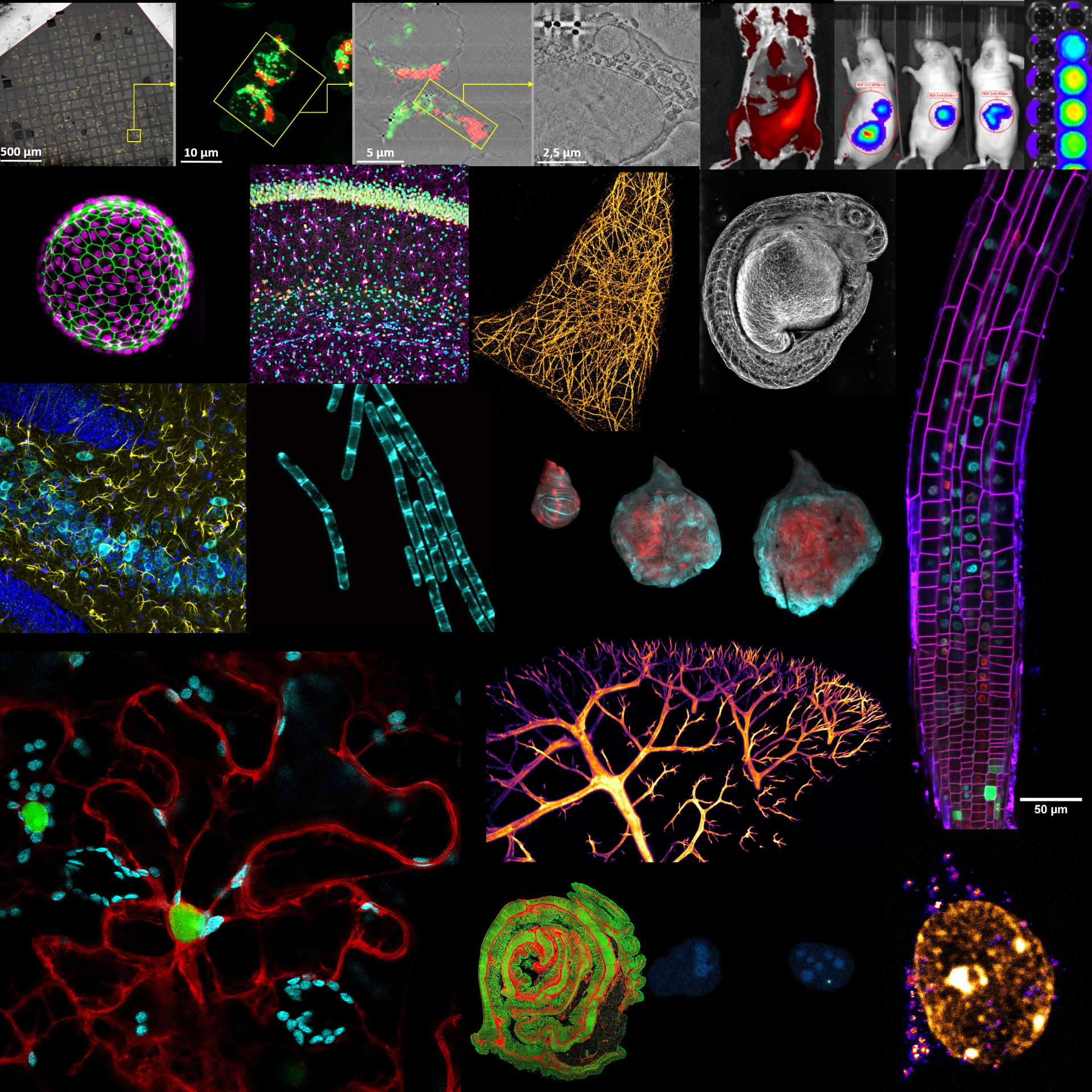
The Madrid Advanced Microscopy Center (MAdMiC) is the first Euro-BioImaging Node in Madrid (Spain). It is formed through the collaboration and close work of…