
October 12, 2026
EVOLVE Mentoring Programme 2026: Building connections across the imaging community
The second edition of the EVOLVE Mentoring Programme has come to a close, marking the end of several months of mentoring, knowledge exchange…



On June 12th, Euro-BioImaging hosted its latest Special Edition Virtual Pub, bringing together over 200 researchers and technology developers working at the cutting edge of multiplexed and spatial imaging. The session showcased how DNA-based molecular tools are pushing fluorescence microscopy beyond conventional limits — from super-resolution imaging of single molecules to spatially resolved profiling of RNA, protein, and molecular interactions across entire tissues. Talks ranged from fundamental method development to platform-scale workflows now entering translational and clinical use, giving attendees a broad view of where spatial transcriptomics is heading next.
The Special Edition Virtual Pub format continues to draw a mixed audience of imaging scientists, core facility staff, technology developers, and industry representatives, reflecting the fast-growing interest in multiplexed and spatial methods across the life sciences. The event featured five talks spanning DNA nanotechnology, spatial transcriptomics, automated spatial biology platforms, and novel proximity-detection chemistries. The summaries of the talks are below.
A big thank you to all the speakers and attendees for making this Special Edition a success. Stay tuned for details on our next session on Spatial Proteomics!
Programming DNA for Multiplexed Super-Resolution Microscopy
- Florian Schueder, EPFL, Lausanne
Florian presented how combining super-resolution microscopy with DNA nanotechnology is helping to overcome the diffraction limit in fluorescence imaging, enabling spectrally unlimited multiplexed imaging for cell-biological research.
Watch the recording
Making 3D MERFISH Available for All Types of Organisms: From Probe Design to Image Analysis
- Jonathan Enriquez, Institut de Génomique Fonctionnelle de Lyon (IGFL)
Jonathan introduced the comprehensive 3D MERFISH pipeline being developed at the Spatial Cell ID (SCID) national platform, covering probe design through image analysis, with the aim of making the technology broadly accessible across diverse biological systems.
Watch the recording
From Complexity to Clarity: Automated Spatial Biology Workflows Powered by AI
- Mortiz Widmeier, Carl Zeiss Microscopy
Mortiz showcased ZEISS's integrated, end-to-end spatial biology solution, combining flexible multiplex immunofluorescence, automated imaging with the Axioscan 7, and AI-powered analysis via PhenoScout AI, aimed at reducing hands-on time and improving reproducibility at scale.
Watch the recording
MULTI-SPACE - A Cross-Institutional Platform for Spatially Resolved Omics
- Karsten Rippe, Division of Chromatin Networks, German Cancer Research Center (DKFZ) and BioQuant, Heidelberg
Karsten introduced MULTI-SPACE, a distributed spatial omics hub within the Health + Life Science Alliance Heidelberg Mannheim, connecting core facilities and research groups across Heidelberg University, DKFZ, EMBL, and the Medical Faculties of Heidelberg and Mannheim. The platform offers coordinated access to more than 10 spatially resolved technologies spanning transcriptomics, antibody-based proteomics, and metabolomics, and is developing multimodal workflows that combine two or three omics readouts within the same tissue section across institutions.
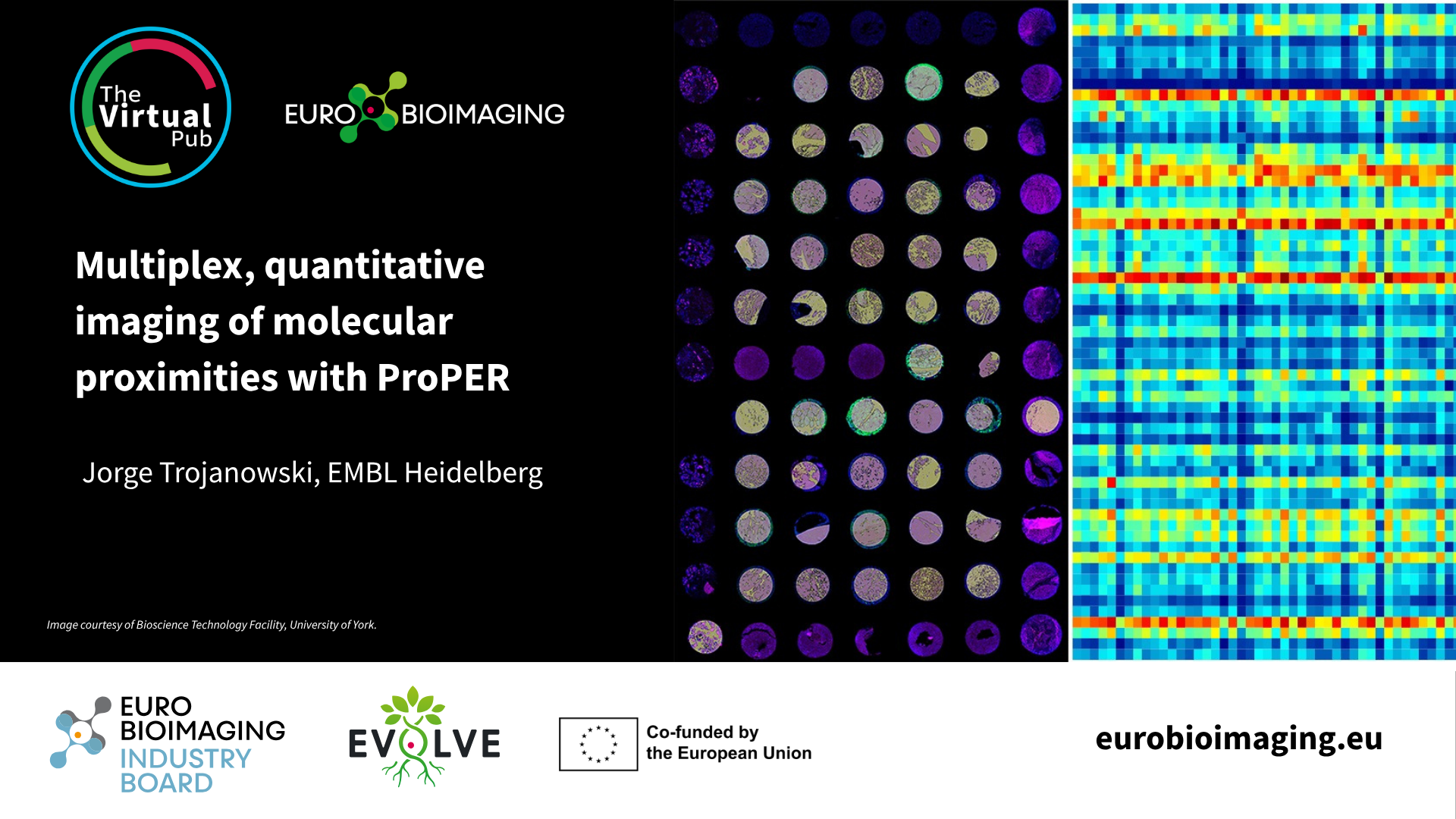
Multiplex, Quantitative Imaging of Molecular Proximities with ProPER
- Jorge Trojanowski, EMBL Heidelberg
Jorge presented ProPER (proximity primer exchange reaction), a new ligation-free method for detecting protein-protein and RNA-RNA interactions in situ, demonstrating its use in resolving RNA life-cycle stages and tracing expression delays in inflammatory response genes.
Watch the recording
October 12, 2026
The second edition of the EVOLVE Mentoring Programme has come to a close, marking the end of several months of mentoring, knowledge exchange…
October 8, 2026
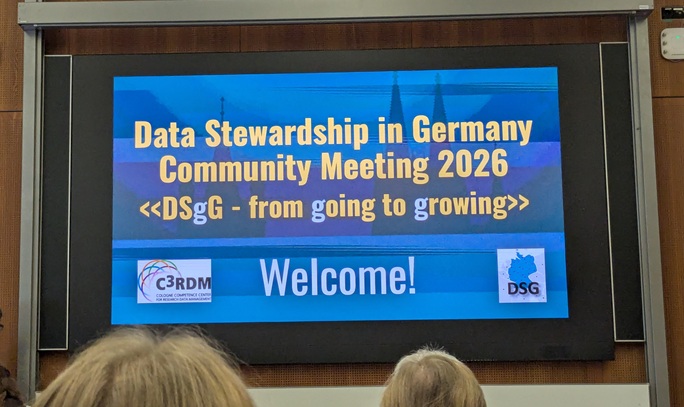
This September, Euro-BioImaging was part of the Data Stewardship goes Germany (DSgG) Community Meeting in Cologne. Under the theme “from going to…

October 7, 2026
On 28–29 September 2026, the growing French volume electron microscopy (vEM) community came together in Bordeaux for the first France VolumeEM Scientific Days.