
October 15, 2026
Open Call: Exploit Large Scientific Datasets with AI and HPC through RI-SCALE
The European RI-SCALE project has launched an Open Call for Use Cases, inviting research teams, research infrastructures and companies to…



Armed conflicts generate long-lasting environmental contamination that extends well beyond the duration of military operations. The release of heavy metals such as Arsenic, Cadmium, Mercury, Lead, Silicon and other toxins, such as persistent organic pollutants into soil and water poses significant public health concerns, particularly for vulnerable populations. In particular, prenatal exposure to environmental contaminants has been associated with oxidative stress, epigenetic dysregulation, impaired fetal development, and an increased risk of childhood cancers, including leukemia and solid tumours.
Professor Olexiy Kovalyov, Head of Department of Oncology and Oncosurgery at the Zaporizhzhia State Medical and Pharmaceutical University is investigating the molecular mechanisms underlying the effects of war-related environmental exposure in the Zaporizhzhia region of Ukraine, an area heavily affected by Russian military incursion.
Professor Olexiy Kovalyov is an oncologist with over 44 years of clinical experience and extensive expertise in cancer diagnosis and treatment with a focus on the impact of war-related environmental contamination on cancer risk in Ukraine. His work investigates the presence of carcinogenic pollutants including heavy metals, airborne nanoparticles, and rocket fuel residues in conflict-affected regions, as well as their potential effects on human health.
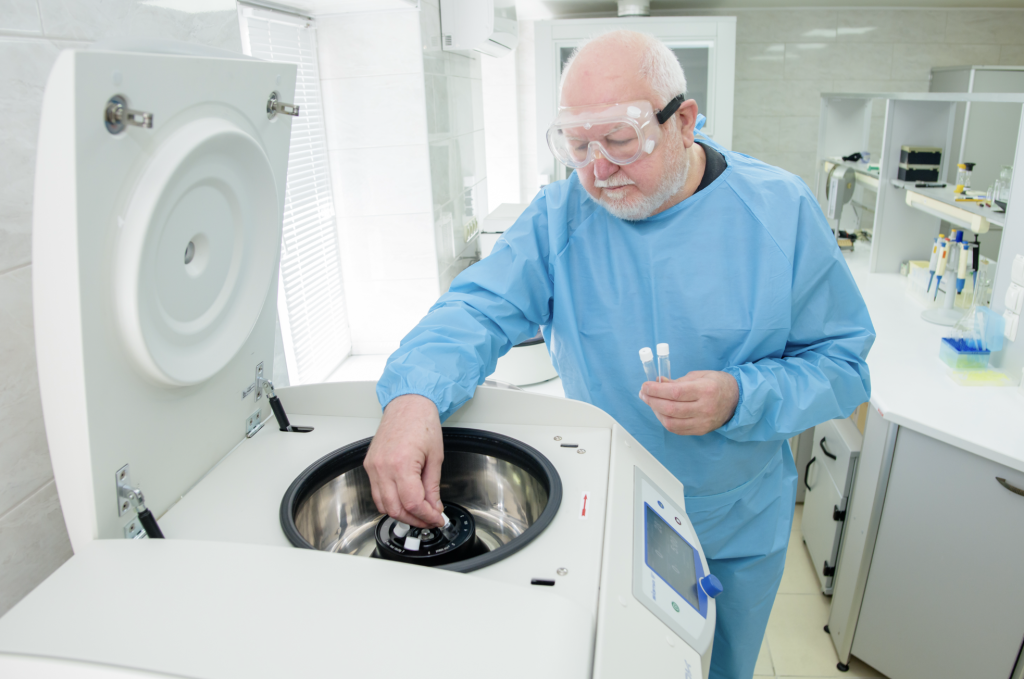
Olexiy received funding from the canSERV project (Horizon Europe GA No. 101058620) to use Euro-BioImaging's services to further investigate the influence of heavy metals and other environmental toxins arising from the war in Ukraine on the placenta of pregnant women as factors of oncogenic risk in the fetus. Thanks to this funding, Olexiy was able to get access to state-of-the-art X-Ray fluorescence spectrometry provided by Euro-BioImaging’s Austrian BioImaging Node in Vienna.
This has allowed Olexiy and his team to perform a quantiative analysis of the presence and distribution of heavy metal traces in archival samples of placental tissue, allowing them to show where and to what extend environmental contaminants make it to the placenta. This provides critical foundational data to understand the relationship of these heavy metals with placental damage and diseases of newborns, as well as chronic diseases (including cancer) in early childhood and adolescence.
Due to the war ongoing in the region of Zaporizhzhia, this project was conducted under remote access, with the samples being shipped from Ukraine to Vienna and being processed and analysed by the team of Prof. Christina Streli at the X-Ray Center of the TU Vienna.
The canSERV project demonstrates how open access to Research Infrastructures can bridge scientific, technological and geographical barriers, enabling researchers to collaborate across borders even in times of crisis. Through transnational access to cutting-edge technologies and expertise, infrastructures such as Euro-BioImaging provide scientists with capabilities that are often unavailable in their home institutions, fostering truly collaborative and multidisciplinary research.
For Ukrainian researchers, participation in canSERV has represented far more than access to advanced instrumentation - it has provided a pathway to integration into the European Research Area. By connecting strong clinical expertise and unique patient cohorts with world-class imaging and other analytical technologies, canServ illustrates how open science and shared research infrastructures can accelerate discovery, strengthen international partnerships and ensure that excellent science continues despite challenging circumstances.
CanSERV was not just access to advanced research infrastructure, it was a pathway to integrating Ukrainian science into the European research ecosystem. It showed us what modern oncology research should look like: open, collaborative and transnational. - Olexiy Kovalyov
Researchers are investigating a complex "war exposome" that combines chemical contaminants, heavy metals, airborne pollutants and psychosocial stressors, offering insights that cannot be obtained elsewhere. While these conditions are the consequence of a humanitarian crisis, they also present an opportunity to advance understanding of how environmental factors influence cancer development across the life course.
As Olexiy explains, the ongoing war has created an unprecedented environmental and societal context, making Ukraine a unique setting for studying the relationship between environmental exposures and cancer.
Ukraine is not only a recipient of European support; it is also a contributor. The unique war-related exposome we are studying can help develop new approaches to understanding cancer risk and prevention that are relevant for Europe as a whole. - Olexiy Kovalyov
Through this canSERV project enabling access to Euro-BioImaging technologies, Ukrainian scientists are generating knowledge with relevance far beyond national borders from identifying early-life biomarkers of exposure to developing new approaches for cancer prevention in crisis settings. These studies not only strengthen European cancer research but also demonstrate how integrating Ukrainian researchers into European infrastructures benefits the entire scientific community.
Article written by Ayoub El Ghadraoui
October 15, 2026
The European RI-SCALE project has launched an Open Call for Use Cases, inviting research teams, research infrastructures and companies to…

October 15, 2026
The 2026 edition of SPAOM, the meeting of the Spanish and Portuguese Advanced Optical Microscopy community, marked a special milestone: the 10th edition of this meeting bringing together researchers, microscopy specialists, technology developers and imaging facilities.

October 13, 2026
From 27 September to 1 October, our team member Feriel Ramdhane (Image Data Scientist at Med-Hub) represented Euro-BioImaging at MICCAI 2026 in Strasbourg.