October 8, 2026
Euro-BioImaging at ‘Data Stewardship goes Germany – from going to growing’
This September, Euro-BioImaging was part of the Data Stewardship goes Germany (DSgG) Community Meeting in Cologne. Under the theme “from going to…



We are delighted to announce the winners of the “Spring” round of our Four Seasons of the Invisible Imaging Contest. Launched in March 2025, our photo competition is designed to highlight seasonally inspired imaging work. For “Spring,” we were delighted to receive images representing pollen grains, diatoms blooming in the Baltic sea, a glandular trichome of a tomato plant and even a Copepode waiting to give birth.
We received a high number of exceptionally beautiful images and our panel of six judges had the difficult task of selecting only two winners based on the beauty of the images they submitted and their relevance to the seasonal theme. The first prize goes to Tomáš Figura of Charles University with two images that tied for first place, “Himalayan Crystal” and “Four Shades of Pollen Allergy.” The runner up was Sebastian Wasserstrom of Lund University BioImaging Centre with an image entitled “Primula Veris - First of Spring“.
Tomáš will receive reimbursement of up to 1,000 Euros to attend the scientific conference of his choice, and Sebastian will receive reimbursement of up to 500 Euros to attend a scientific conference.
Check out the breath-taking winning images (below) and don’t miss the opportunity to submit an image to the “Summer” round of the Four Seasons of the Invisible imaging contest. You can submit your entries until September 21.
Congratulations to the winners, and thanks to everyone who participated in the contest! We will be sharing some of the other beautiful images that were submitted via our social media channels.
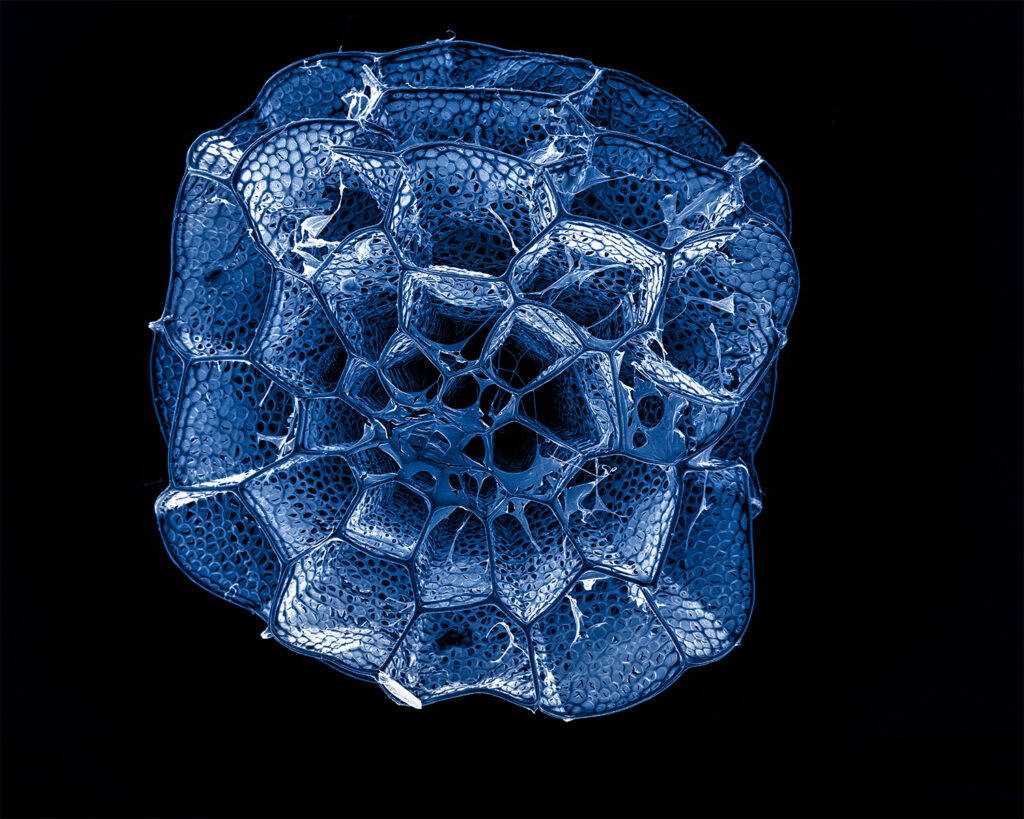
Xylanche himalaica, a spring-flowering, parasitic plant without a hint of chlorophyll, lives off rhododendrons and might not win a beauty contest at first glance. But look closer: its seeds, resembling tiny crystals or diamonds, have unexpected elegance. The delicate, perforated structures you see help this plant spread effortlessly on the wind. Imaged using scanning electron microscope + colourised.
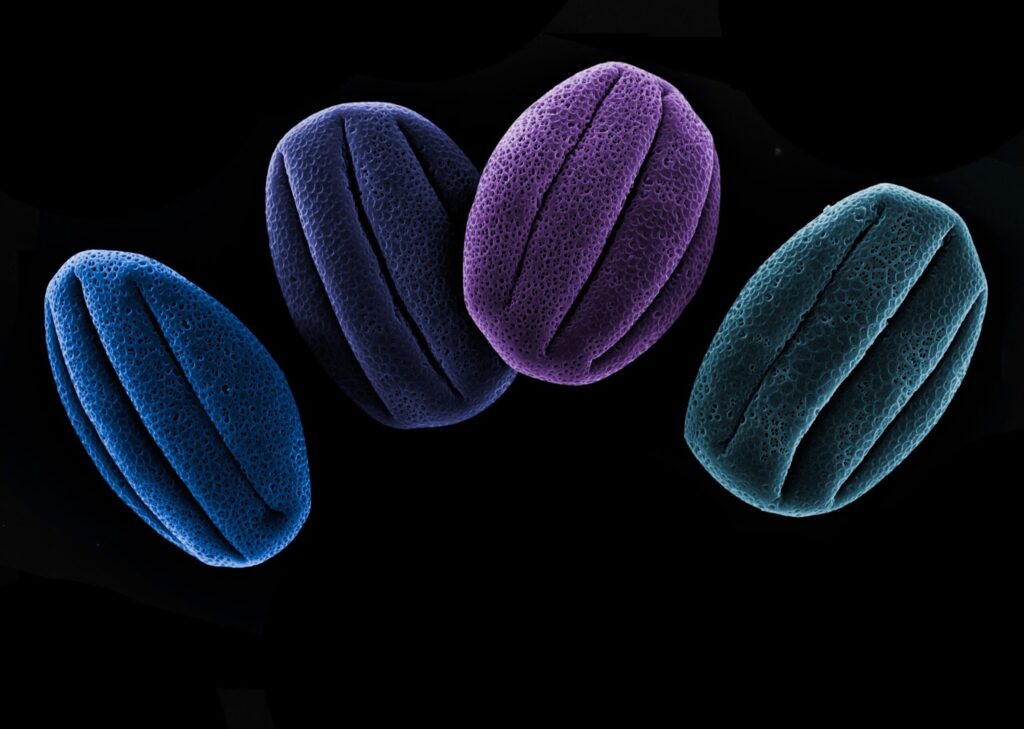
Depicted are four lavender pollen grains in different shades of violet. While lavender pollen is less likely to cause allergies than pollen from trees or grasses, it can still trigger symptoms in some individuals. Lavender typically blooms and releases its pollen during the summer. Imaged using Scanning electron microscopy + colourised.
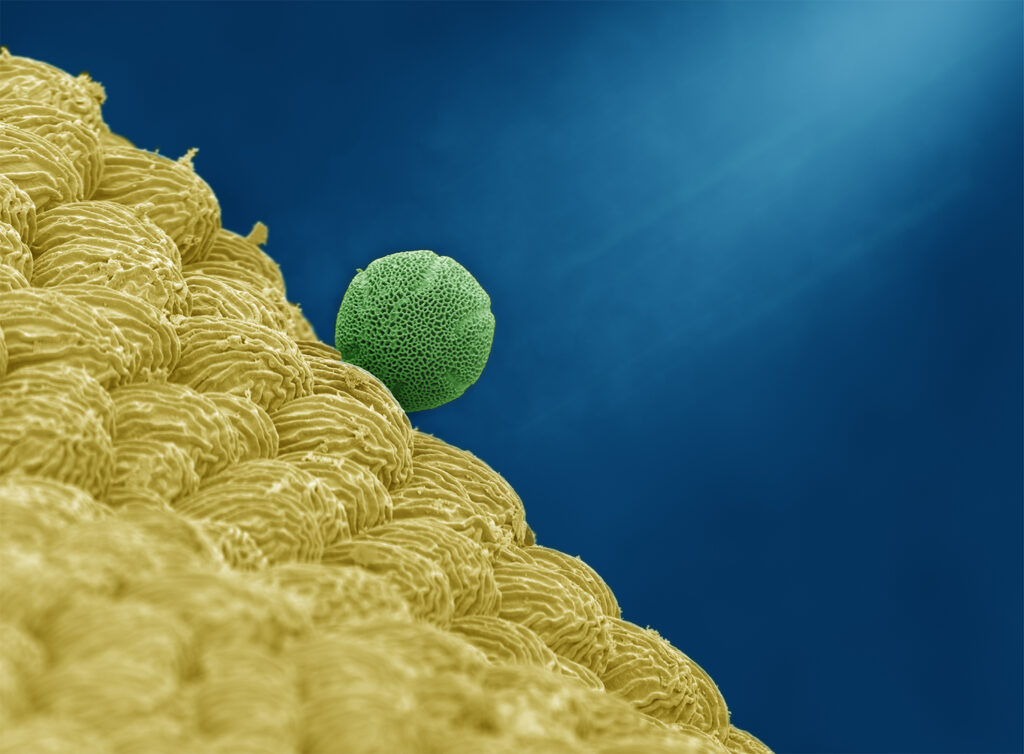
A pollen grain resting on the petal of a Cowslip (Primula veris), one of the first wildflowers to bloom in spring. Imaged with Scanning electron microscopy with pseudo-coloring and lighting effects done in Adobe Photoshop. The author acknowledges support from Lisa Karlsson and Sofia Andersson.
October 8, 2026
This September, Euro-BioImaging was part of the Data Stewardship goes Germany (DSgG) Community Meeting in Cologne. Under the theme “from going to…

October 7, 2026
On 28–29 September 2026, the growing French volume electron microscopy (vEM) community came together in Bordeaux for the first France VolumeEM Scientific Days.

October 7, 2026
Euro-BioImaging joined partners from across Europe on 29. & 30. September 2026 at the official kick-off meeting for STARDAST, a new Horizon Europe…