October 15, 2026
Open Call: Exploit Large Scientific Datasets with AI and HPC through RI-SCALE
The European RI-SCALE project has launched an Open Call for Use Cases, inviting research teams, research infrastructures and companies to…



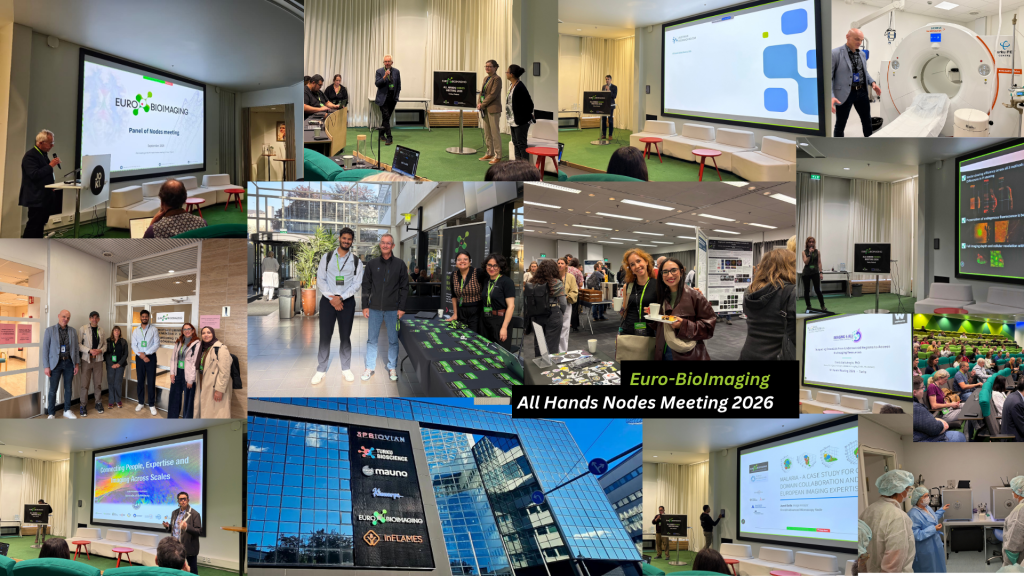
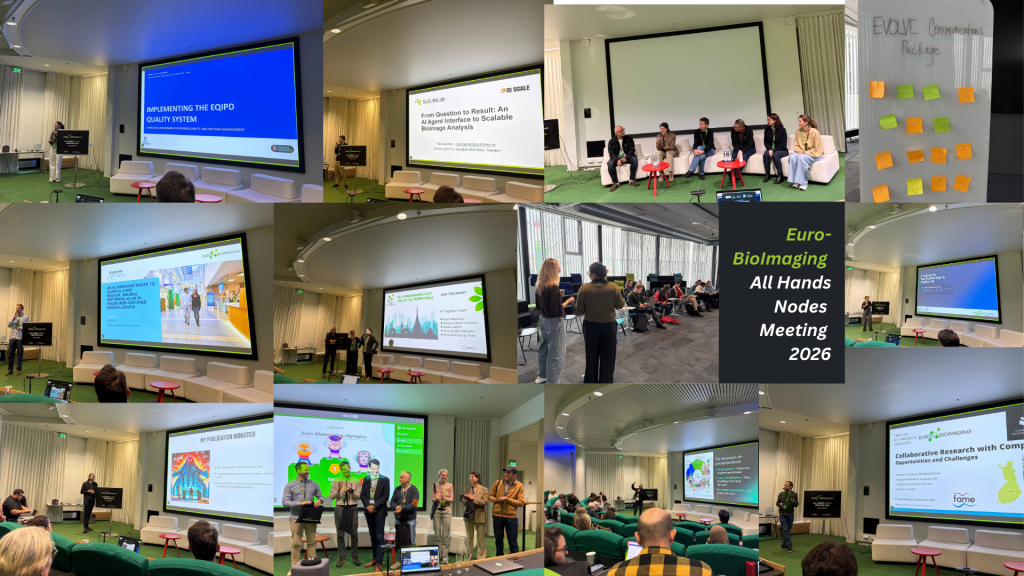
From 15–18 September, the Euro-BioImaging Hub team welcomed our Node community and industry partners to BioCity in Turku, Finland, home to Euro-BioImaging’s Statutory Seat. With representatives from our 40 Nodes, the All Hands Nodes Meeting was a vibrant opportunity to exchange ideas, share expertise and strengthen connections across our community. The programme spanned community building, multimodal imaging, academia–industry collaboration and AI. Attendees also participated in break-out sessions on training, outreach and innovation, and updates to the Euro-BioImaging access portal. Thank you to everyone who joined us in Turku to make this such a stimulating and inspiring event!
The event opened with the Panel of Nodes meeting, bringing together Node coordinators for updates and future planning. As an advisory body within Euro-BioImaging’s governance, the Panel meets regularly to advise the Directorate on activities related to the Nodes. The meeting was chaired by Panel of Nodes Chair Sebastian Munck (FlaBI Node) and Vice-Chair Gaby Martins (PPBI Node).
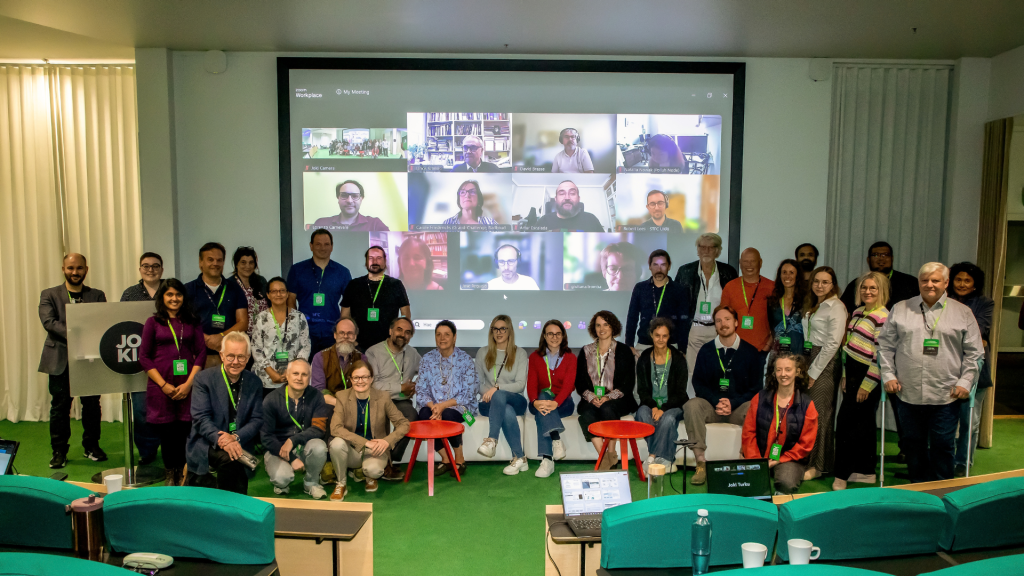
It was great pleasure to join the Euro-BioImaging community conference—the All Hands Node Meeting in Turku. We heard the latest news from the bioimaging community, caught up with old, but "still" young friends, got together with the large Czech-BioImaging delegation and made many new connections.
– Milan Esner, Head of Cellular Imaging Core Facility at CEITEC (LinkedIn)
The first day concentrated on success stories in connecting various scientific communities. Remarkable presentations from our Nodes told the story of the collaborating across country borders with different imaging modalities in order to better understand the brain (Swedish NMI Node), and illustrated how Euro-BioImaging can help researchers access funding, instrumentation and image analysis expertise across Nodes—in this case, using electron microscopy to unravel the mysteries of malaria ( the Prague Node and Finnish Advanced Microscopy Node). We also explored how marketing practices can be applied to core facilities from Austrian BioImaging and heard from Israel, Portugal and Finland on how to build connected national imaging communities around a shared mission, keep members informed and bring people together, even with limited or no dedicated funding. The day ended with an uplifting talk about Global BIoImaging’s Imaging 4 All initiative, which supported user projects and collaborations to Euro-BioImaging Nodes from Low and Middle Income Countries.
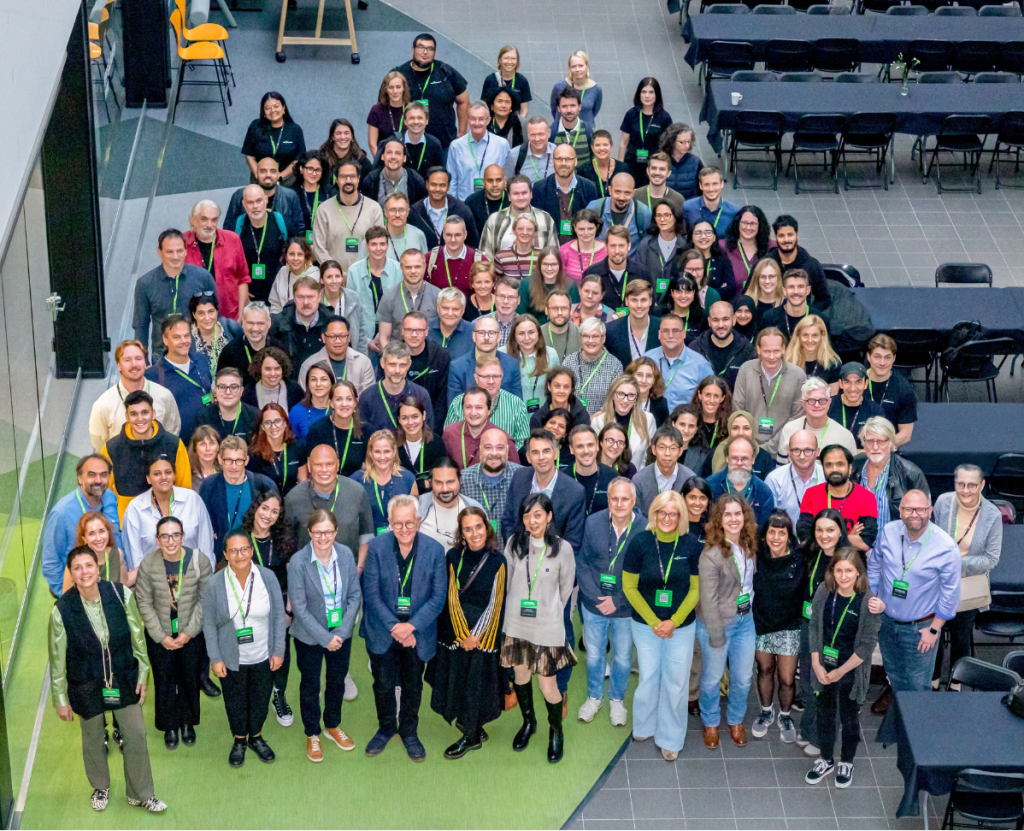
A brilliant few days in Turku for the Euro-BioImaging All Hands Nodes Meeting. It was a great opportunity to represent the Advanced Imaging Facilities at the University of Birmingham and share our work in advanced imaging at The Centre of Membrane Proteins and Receptors (COMPARE). I especially enjoyed making new connections across the community, with lots of stimulating discussions and ideas to take back with me.
– Mezida Saaeed, University of Birmingham (LinkedIn)
The multimodal imaging sessions showcased the breadth and depth of expertise across Euro-BioImaging. The Finnish Biomedical Imaging Node presented neuroscience applications combining MEG, EEG and fMRI, while the AMMI Maastricht Node explored the use of advanced optical microscopy, mass spectrometry imaging and MRI/PET in plant biology. Other Nodes explored tracking with MINFLUX (EMBL Node), expertise in whole-tissue clearing (SOM Node) and multimodal, translational and longitudinal approaches support research into neurodegenerative disorders such as Alzheimer’s disease (PRIME Node). The Phase Contrast Imaging Node Trieste explored how X-ray virtual histology can complement other imaging approaches across a broad range of research applications. Austrian BioImaging illustrated how optical coherence tomography (OCT), a distinctive offering within the Euro-BioImaging community, can bridge microscopy, preclinical model systems and clinical translation.
The Finnish Advanced Microscopy Node shared a multimodal and interdisciplinary project integrating drone, satellite and multispectral imaging with custom analysis pipelines to identify biologically and environmentally relevant patterns in large-scale image datasets.
The morning session also included a very active panel discussion on what it takes to put multimodal cross-scale projects into practice for external users in open access core facilities.
The third day started with breakout sessions on topics that are of interest to the Euro-BioImaging community - from training and innovation, to outreach and upgrades to Euro-BioImaging user access portal. Euro-BioImaging Industry Board partners shared technology developments, including previews of upcoming innovations. Node presentations highlighted successful collaborations between academia and industry, showing how supporting industry users can create mutual benefits for companies and core facilities. Other examples demonstrated the value of developing technologies and approaches together.
What a productive and enjoyable Euro-BioImaging All Hands Nodes meeting we had in Turku! We had the opportunity to present our recent works on various topics, such as stakeholder engagement, multimodal imaging and talked extensively about AI-assisted tools for RIs. We also had the chance to meet friends from other nodes, make new friends and connections with industry, and plan the next steps we need to take in the context of RIs.
– Baubak Bajoghli, Managing Director at Austrian BioImaging/CMI Node (LinkedIn)
A panel discussion explored what helps academia–industry partnerships succeed, with a particular focus on Euro-BioImaging’s role in facilitating and supporting these collaborations.
Under sustainability considerations, technical experts from the Nodes and the EBIB also discussed how we can work together to extend instrument lifetime and make the increasingly complex and costly imaging systems work better for longer.
The final day explored how AI can support core facility operations and help address emerging challenges. Examples included AI agents for image analysis and machine-readable instrument databases that could help researchers automatically generate methods sections for their publications.
Speakers also examined what is needed to improve the use of AI in medical imaging. Participants were introduced to the new Image Analysis unit at the UK Node, UK-BIAS, adding another opportunity for expertise and collaboration within our community.
Alongside the scientific sessions, a lively social programme and plenty of conversation over coffee gave participants time to reconnect, meet new colleagues and explore ideas together. We were especially pleased to welcome representatives from new facilities in the United Kingdom and Spain.
Thank you to all our speakers, Node representatives and industry partners for their energy, openness and contributions. We left Turku with fresh ideas, stronger connections and renewed enthusiasm for what we can achieve together.
If you want to know more about the exciting talks, please consult the Book of Abstracts.
Save the date: the next All Hands Nodes Meeting will take place in Torino, Italy, from 24–28 May 2027. We look forward to seeing you there!
October 15, 2026
The European RI-SCALE project has launched an Open Call for Use Cases, inviting research teams, research infrastructures and companies to…

October 15, 2026
The 2026 edition of SPAOM, the meeting of the Spanish and Portuguese Advanced Optical Microscopy community, marked a special milestone: the 10th edition of this meeting bringing together researchers, microscopy specialists, technology developers and imaging facilities.

October 13, 2026
From 27 September to 1 October, our team member Feriel Ramdhane (Image Data Scientist at Med-Hub) represented Euro-BioImaging at MICCAI 2026 in Strasbourg.