
Euro-BioImaging at MICCAI 2026 in Strasbourg, France 


Published October 13, 2026
Category

From 27 September to 1 October, our team member Feriel Ramdhane (Image Data Scientist at Med-Hub) represented Euro-BioImaging at MICCAI 2026 in Strasbourg. Now in its 29th edition, the International Conference on Medical Image Computing and Computer-Assisted Intervention (MICCAI) more than 3,300 of the top scientists in medical imaging, computer-assisted interventions, and AI came together in Strasbourg, France, to tackle some of the hardest problems in healthcare. This year's programme counted 1,167 accepted papers, 58 workshops, 45 challenges and 9 tutorials. Segmentation was the most popular topic, but there was much more: image reconstruction, diagnosis, image generation, denoising, low-field MRI and large language models in medicine, with MRI and ultrasound among the most represented imaging modalities. There were also many discussions on fairness, how to report bias in AI models, and how to bring these tools into clinical practice.

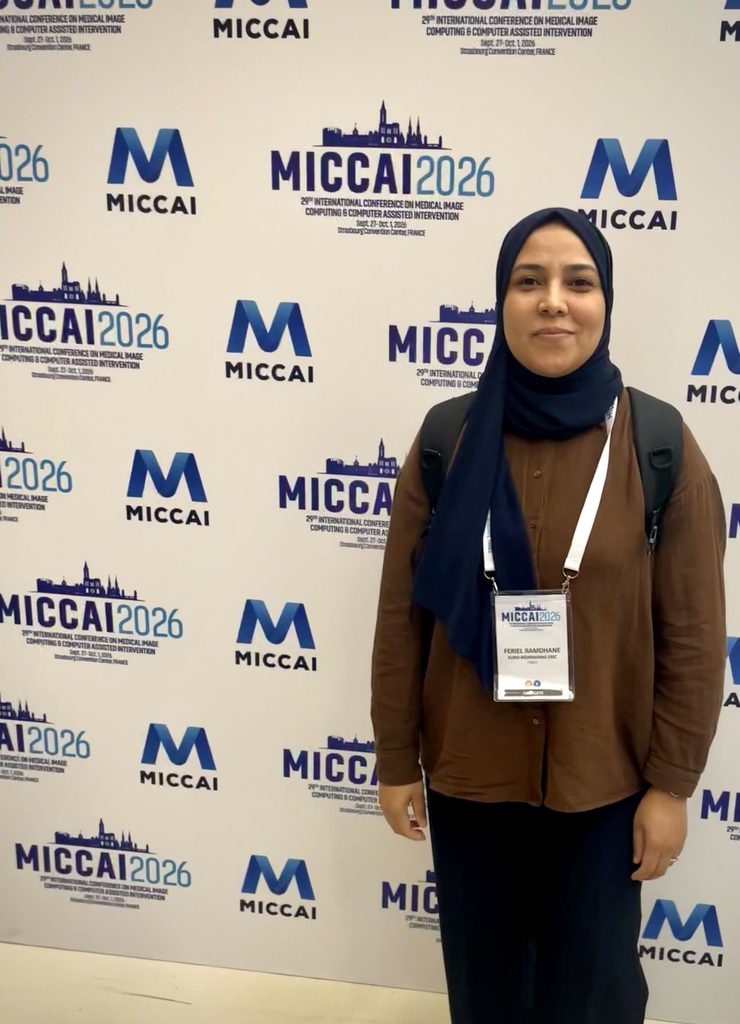
Feriel Ramdhane at the MICCAI 2026 banner, Strasbourg, France.

Our Nodes at the conference

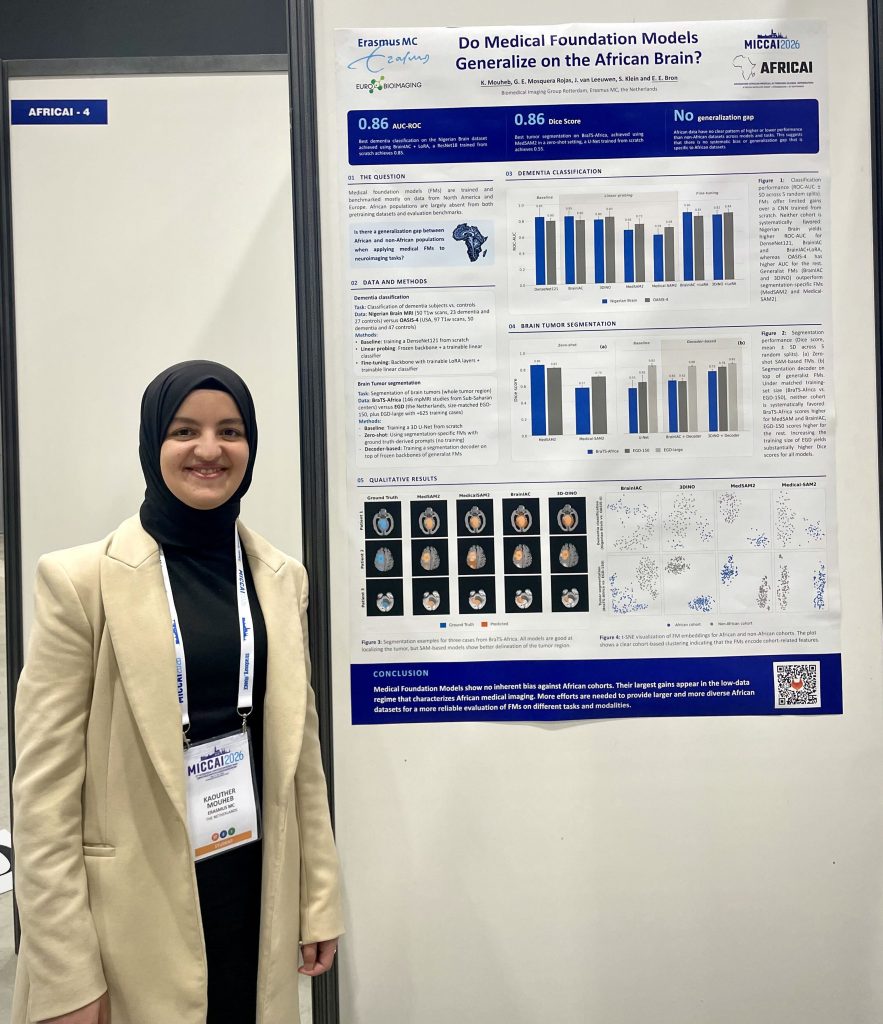
Researchers from several Euro-BioImaging Nodes were actively contributing to several scientific topics and endorsing several roles as chairing sessions and organising  workshops. Among them, Kaouther Mouheb, a PhD candidate at our Population Imaging Flagship Node presented her poster "Do Medical Foundation Models Generalise on the African Brain?". She attended MICCAI 2026 with a Euro-BioImaging EVOLVE Conference Participation grant.

Kaouther Mouheb (Erasmus MC, Population Imaging Flagship Node) presenting her poster at MICCAI 2026.
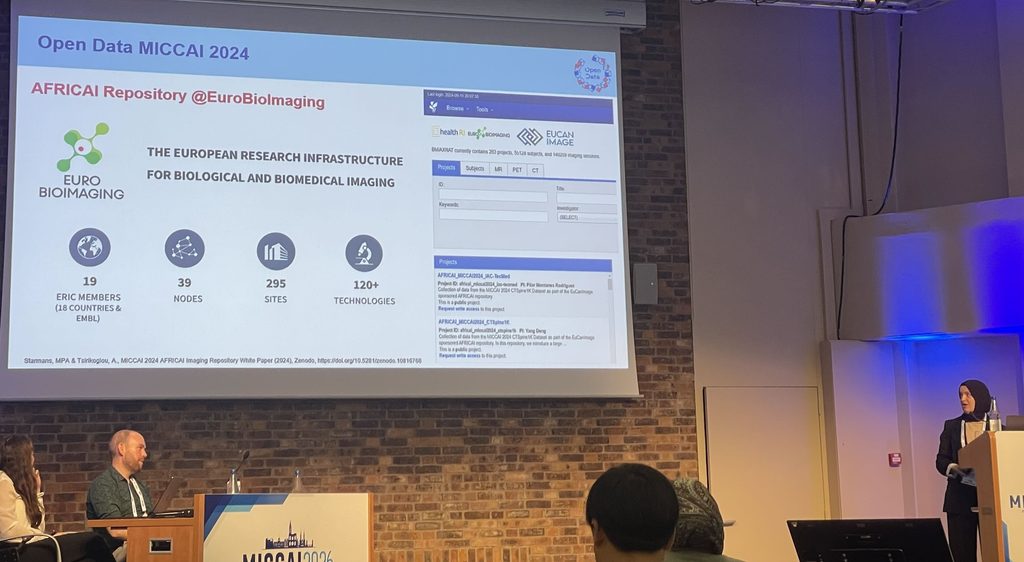
Kaouther Mouheb presenting the Euro-BioImaging Medical Imaging Archive (XNAT) at the MICCAI 2026 Open Data session.

Erasmus MC, from Euro-BioImaging Population Imaging Flagship Node in Rotterdam, participated in the organising committee of the MICCAI Open Data session. The session aimed to foster the sharing of medical imaging datasets, build a community that helps overcome barriers to open data availability, and establish an open, sustainable repository for high-quality datasets. It also sought to bridge gaps regarding underrepresented populations and diseases, and to improve global healthcare by ensuring equitable access to data. For instance, they presented AFRICAI Imaging Datasets resources  hosted publicly on the Medical Imaging Archive (XNAT) of the Euro-BioImaging node in Rotterdam.

Looking ahead

MICCAI brings together many of the people who build AI tools for medical imaging, and who need well-curated, open data to do it. That makes it a natural place for Euro-BioImaging to be, and we plan to stay involved through the work of our Nodes and through initiatives like Open Data.

Want to know more about our services, including sharing and accessing imaging data? Visit the Euro-BioImaging access portal.


More news from Euro-BioImaging