

October 16, 2026
RAISE Hub: One gateway to Europe’s AI in Science Community
A new online platform to connect researchers, infrastructures, and funders to accelerate AI scientific discovery across Europe Dublin, Ireland, 15 October…


Euro-BioImaging is delighted to announce a significant expansion. Six of our Nodes - Austrian BioImaging/CMI, UK Node, Cellular Imaging Hungary, Danish BioImaging, Portuguese Platform for BioImaging (PPBI) and Radiology and Medical Imaging Node Valencia have added new facilities. After stringent review by our Scientific Advisory Board, they were approved by our Board in Prague last week. A total of 31 new facilities have been added to our infrastructure. These facilities bring an exciting and complementary range of technologies to the infrastructure, from large animal imaging and spatial omics, to deep brain imaging to new capacity and expertise in image data analysis.
Euro-BioImaging is proud to now be able to offer open access to and expertise from 329 facilities organised into 40 Nodes. We welcome the new facilities to the Euro-BioImaging family and look forward to working with everyone to support excellent science all across Europe through advanced imaging technologies!
Below you will find an overview of the new expertise and geographical coverage these Node Upgrades represents.

Austrian BioImaging/CMI is adding two new facilities from the Center for Biomedical Research and Translational Surgery, Medical University of Vienna – one of which is located in Vienna, the other one is in Himberg. With four large-animal operating rooms, these facilities introduce clinically relevant image-guided large-animal capabilities: such as integrated angiography, CT, echocardiography, surgical and interventional infrastructure as well as a single hybrid environment. These additional facilities bridge the gap between small-animal imaging and translational applications, with a strong propensity to further develop data management and image analysis support, as well introduce an expanded capacity for training in post processing and quantitative analysis.

The Radiology and Medical Imaging Valencia Node adds two new facilities - the Magnetic Resonance and Molecular Imaging Facility, Instituto de Neurociencias CSIC-UMH in Alicante and the Biomedical NMR Sebastián Cerdán Facility, Instituto de Investigaciones Biomédicas Sols-Morreale CSIC-UAM inMadrid. These facilities enrich the Node’s technology offer with additional low (3T), high (7T) and ultra-highfield preclinical MRI (in vivo and ex vivo imaging) and NMR metabolomics capacity. The Node is now able to offer a full translational imaging pipeline, thus strengthening the capacity for imaging biomarker discovery, validation and clinical translation.
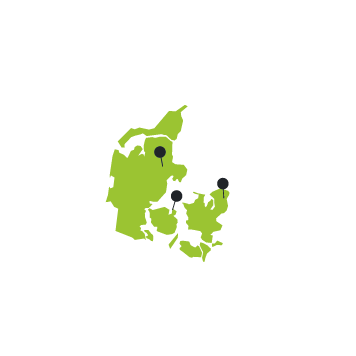
Our Danish BioImaging Node adds one new facility in Copenhagen, namely the Laboratory, Automation, Screening and Microscopy (LASM) core facility at the Biotech Research and Innovation Centre, University of Copenhagen. The new facility offers access to both high-throughput widefield and confocal microscopy and multiplexing microscopy as well as an automation platform for sample preparation, arrayed whole human genome CRISPR knock-out and activation libraries (available for whole genome screening or cherry-picking for targeted screens with a set of genes of interest) as well as a drug library for screening purposes.
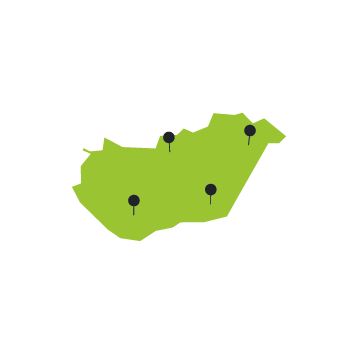
Our Cellular Imaging Hungary Node adds a new facility in Budapest, the BrainVisionCenter, thus integrating unique expertise in 2D and 3D functional imaging, multiphoton imaging, optogenetics and photomanipulation, all applied in vivo to study brain activity in awake and behaving animals. These technologies represent a unique specialisation in the region, and a strong evolution for the Node, towards offering new services for live animal imaging.
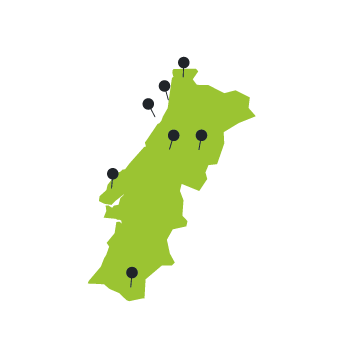
PPBI Node is adding one new facility in Lisbon, the Advanced Bioimaging and BioOptics Experimental (ABBE) Platform at the Champalimaud Foundation. This facility uniquely offers light field microscopy, as well as a range of other advanced light microscopy and live cell imaging techniques, such as lightsheet, super-resolution and high-throughput microscopy. The Champalimaud Foundation represents a very strong research environment combining basic and translational research in neuroscience and cancer biology, enabling imaging studies that bridge experimental models and clinical relevance.

Our UK Node undergoes a very significant expansion with the addition of 24 new facilities across 6 hosting institutions. These include: Babraham Institute, Newcastle University, University of Birmingham, University of Leeds, University of Oxford and UK-BIAS (distributed sub-Node for image analysis). This expansion represents a very broad portfolio of technologies across Light and Electron Microscopy with specific expansion of capacity and new technologies in spatial omics, cryoEM, vEM, high content imaging, mechanobiology, and deep tissue imaging. It also represents a considerable improvement in the Node’s geographical coverage on the national level. The introduction of the distributed UK-BIAS sub-Node for Image analysis also represents an important step forward for both the user community and the image analysts at the participating institutions who are for the first time working together and combining their expertise in this distributed Node setup.
October 16, 2026
A new online platform to connect researchers, infrastructures, and funders to accelerate AI scientific discovery across Europe Dublin, Ireland, 15 October…
October 16, 2026
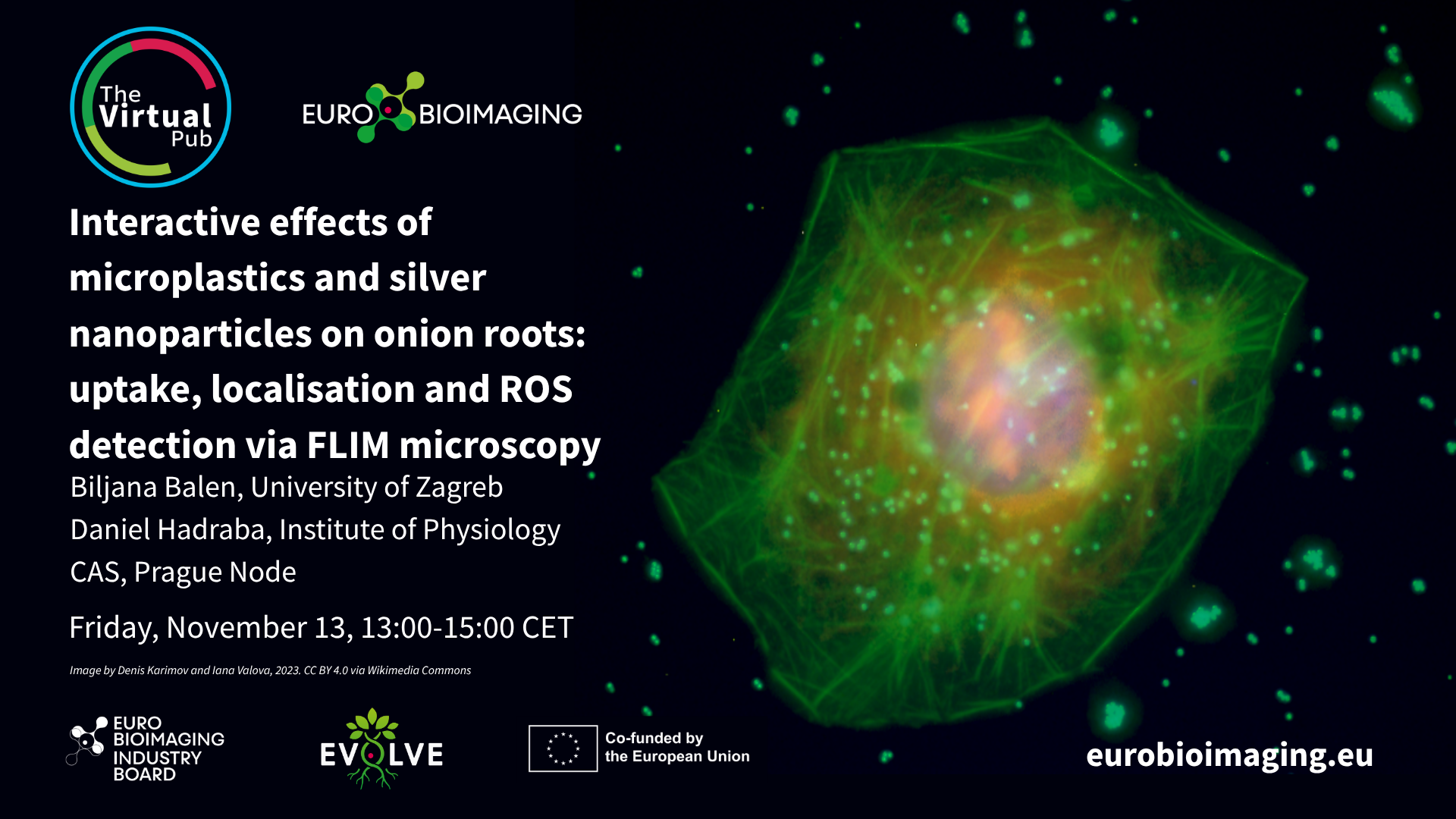
At the Special Edition Virtual Pub, “Imaging Micro- and Nanoplastics,” Euro-BioImaging users, Node experts and Industry partners will explore how advanced microscopy, clinical…
October 16, 2026
At the Special Edition Virtual Pub, “Imaging Micro- and Nanoplastics,” Euro-BioImaging users, Node experts and Industry partners will explore how advanced microscopy, clinical…