October 8, 2026
Euro-BioImaging at ‘Data Stewardship goes Germany – from going to growing’
This September, Euro-BioImaging was part of the Data Stewardship goes Germany (DSgG) Community Meeting in Cologne. Under the theme “from going to…



The second edition of the EVOLVE Mentoring Programme has come to a close, marking the end of several months of mentoring, knowledge exchange and professional development across the international imaging community.
This year, the programme brought together 17 mentor–mentee pairs from 16 countries, with participants representing both academia and industry. Participants covered a broad range of expertise, from light-sheet and super-resolution microscopy to electron microscopy, PET, spatial omics, image analysis and biomedical imaging.
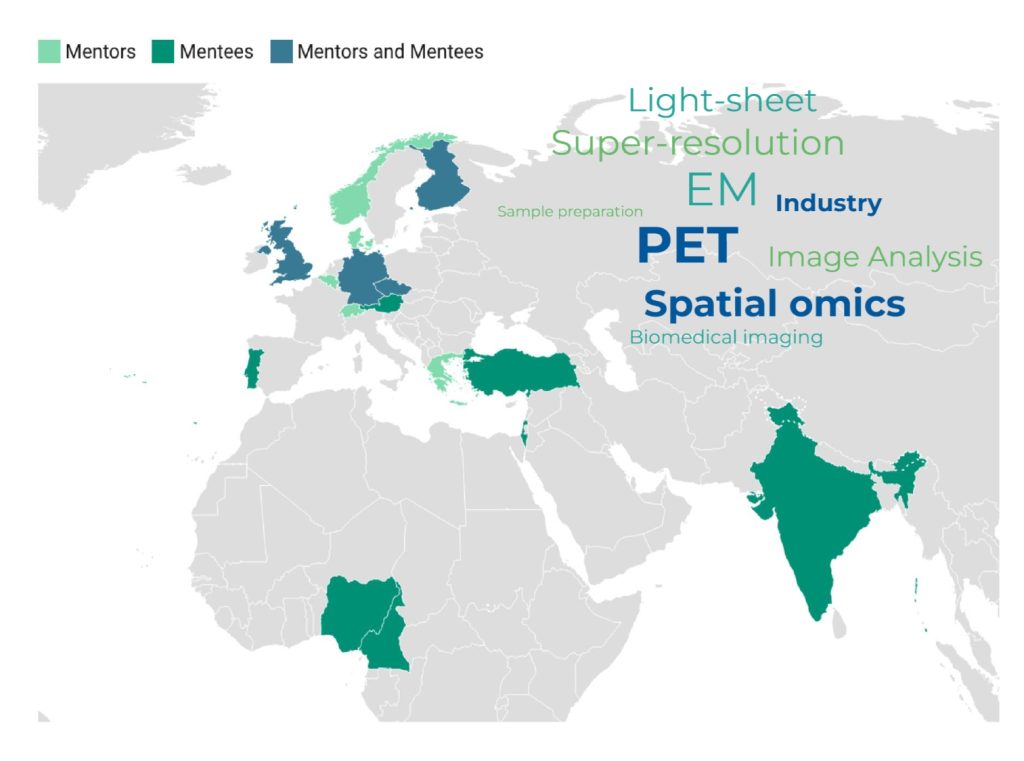
The programme was designed to create connections across institutions, countries and career stages, giving participants a space to discuss professional development, facility management, technical expertise and the challenges of working in imaging core facilities.
Throughout the programme, mentor–mentee pairs met regularly to exchange experiences, set goals and work on topics tailored to the mentees’ professional development. For some participants, these conversations also developed into opportunities for hands-on exchange and longer-term collaboration.
One example was Nirit Kara, from the National Preclinical Imaging Center at Bar-Ilan University & Sheba Medical Center, who was mentored by Prof. Harish Poptani, Director of the Centre for Preclinical Imaging at the University of Liverpool.
Their mentoring relationship began with monthly online meetings while Nirit and her colleagues were establishing a new national preclinical imaging facility. The discussions covered goals, facility development and practical challenges. The mentoring was then complemented by a two-week Job Shadowing visit to Liverpool in July 2026, where Nirit gained hands-on experience in MRI, ultrasound, CT and optical imaging, as well as insight into SOPs, quality management and user access.
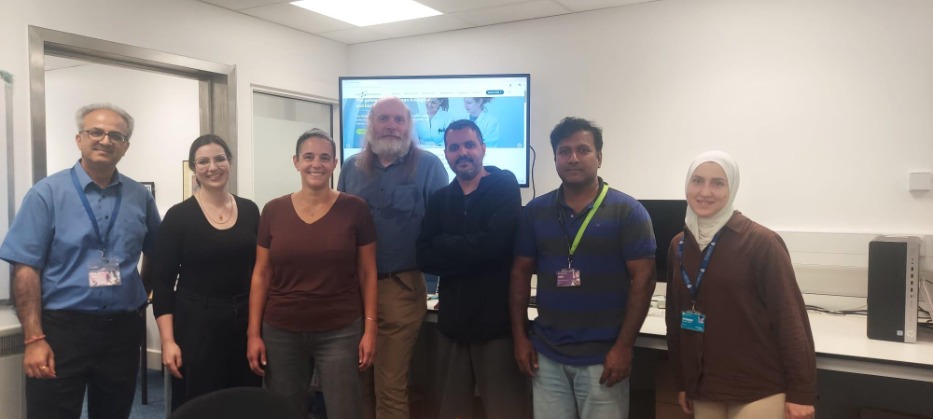
The experience illustrates how different EVOLVE training opportunities can reinforce each other: in this case, mentoring provided months of guidance, while Job Shadowing offered the opportunity to see those principles applied in practice.
Career development was another important theme throughout the programme. Carolina Feliciano, from the Bacterial Imaging Cluster at ITQB NOVA in Portugal, worked with Xian Hu (Edna) from the NorMIC Imaging Platform at the University of Oslo.
During the offboarding meeting, Carolina highlighted how the mentoring relationship helped her think more strategically about her career, approach applications and opportunities, and better recognise and communicate her own strengths. She summed up one of the lessons from the experience simply:
Sometimes you need someone else to help you see what you already bring to the table.
Their connection also extended beyond career mentoring towards scientific exchange between their imaging facilities, demonstrating how a mentoring relationship can become the starting point for future collaboration.
The diversity of the cohort also created opportunities for conversations across sectors. Participants from companies brought perspectives from industry into exchanges with colleagues working in academic research infrastructures.
Konrad Winkler from Leica reflected on how the programme revealed common ground between the two environments:
It was not such a big surprise that on many levels academia and company work environments are not so different when it comes to managing our priorities, relationships and ourselves.
Another example of the value of connecting academia and industry came from Joanna Pylvänäinen, Clinical AI Model Lead at Aiforia Technologies, and her mentee Tereza Belinova, an imaging facility team leader at the Institute of Science and Technology Austria (ISTA).
What began as an opportunity to discuss leadership challenges, career development and the transition between academia and industry evolved into a mutually enriching exchange. Joanna gained insights into how imaging core facilities operate in different countries, while Tereza explored the opportunities and challenges of pursuing a career in industry as an image analyst.
Both highlighted the value of having an equal partner with whom to share professional challenges and gain fresh perspectives. Their discussions also sparked an idea for a joint publication on the value of a PhD in industry, demonstrating how mentoring can lead to unexpected outcomes and new collaborations.
The 2025–2026 edition shows that mentoring can offer much more than individual career advice. The programme created connections between people who might otherwise never have had the opportunity to work together, linking different imaging technologies, facilities, countries and professional environments.
The formal programme may now be over, but many of these relationships are continuing through scientific exchange, collaboration, Job Shadowing and informal professional networks.
While the EVOLVE mentoring initiative is coming to an end, the journey will continue. Building on the experience and lessons learned, we are already planning an enhanced Mentoring Programme as part of THRIVE, a new project recently funded by the European Commission. The next programme will build on what worked well in EVOLVE while incorporating participant feedback and new opportunities to further strengthen professional development, knowledge exchange and connections across the global imaging community.
October 8, 2026
This September, Euro-BioImaging was part of the Data Stewardship goes Germany (DSgG) Community Meeting in Cologne. Under the theme “from going to…

October 7, 2026
On 28–29 September 2026, the growing French volume electron microscopy (vEM) community came together in Bordeaux for the first France VolumeEM Scientific Days.

October 7, 2026
Euro-BioImaging joined partners from across Europe on 29. & 30. September 2026 at the official kick-off meeting for STARDAST, a new Horizon Europe…