October 8, 2026
Euro-BioImaging at ‘Data Stewardship goes Germany – from going to growing’
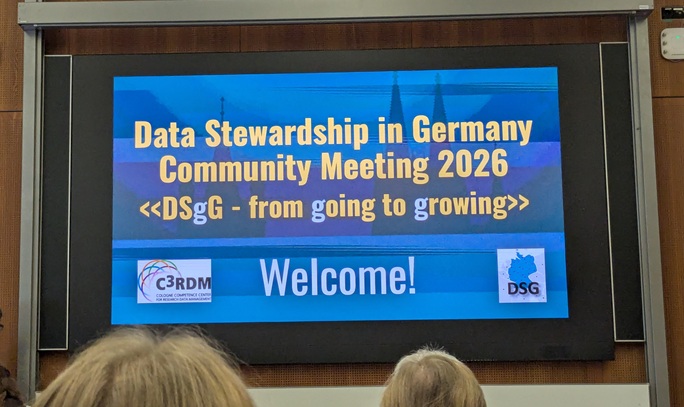
This September, Euro-BioImaging was part of the Data Stewardship goes Germany (DSgG) Community Meeting in Cologne. Under the theme “from going to…



After 2.5 years of international collaboration, technical development and community building, the foundingGIDE project officially concluded in June 2026. Coordinated by Euro-BioImaging ERIC and supported by the European Union’s Horizon Europe programme, foundingGIDE brought together research infrastructures, image data repositories, imaging facilities, researchers, developers, industry representatives and policy stakeholders from across Europe, Australia and Japan to address the fundamental standardisation challenge in biological and preclinical imaging.
Biological and preclinical imaging data are generated across diverse instruments, facilities and research infrastructures, using different metadata models, vocabularies and data management practices. This fragmentation makes it difficult to connect datasets and limits their reuse, particularly as the demand for large, well-annotated and interoperable datasets grows in the era of AI-driven research.
FoundingGIDE was established to tackle this standardization challenge by laying the foundations for a Global Image Data Ecosystem (GIDE). Rather than creating another isolated infrastructure, the project focused on bringing existing communities and image data resources (BioImage Archive, IDR and SSBD) together around shared approaches to metadata, ontologies and technical interoperability.
From global conversations to shared solutions
A central theme of foundingGIDE was that interoperability is as much a community challenge as it is a technical one. Developing standards and tools is only meaningful if they reflect the needs of the researchers, data stewards, infrastructure providers and repositories that will use them.
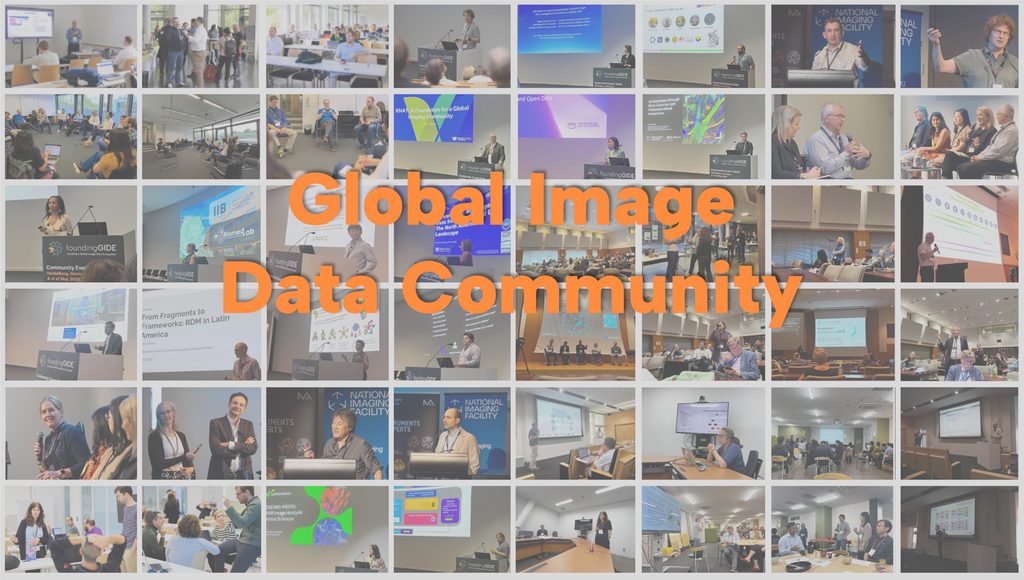
Community engagement was therefore at the centre of the project from the beginning. Over the course of foundingGIDE, more than 430 community members from over 40 countries engaged with the project through workshops, technical meetings, conferences, hackathons and international collaborations. Three major Community Events provided milestones for this global exchange, taking the project from Okazaki, Japan, in 2024, to Brisbane, Australia, in 2025, and finally to Heidelberg, Germany, in 2026.
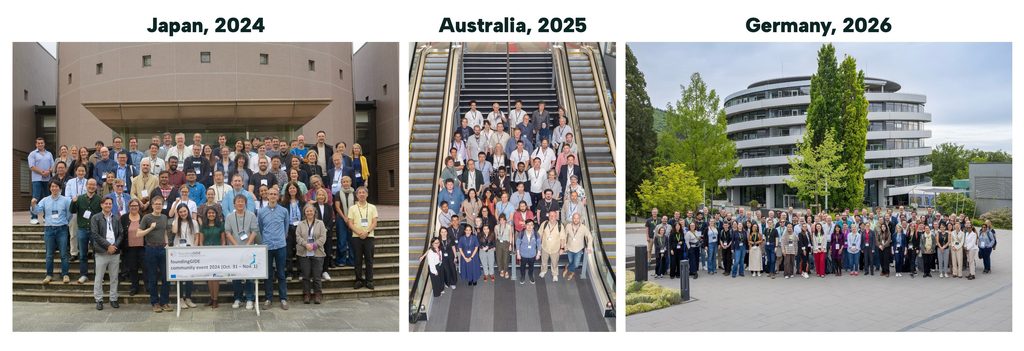
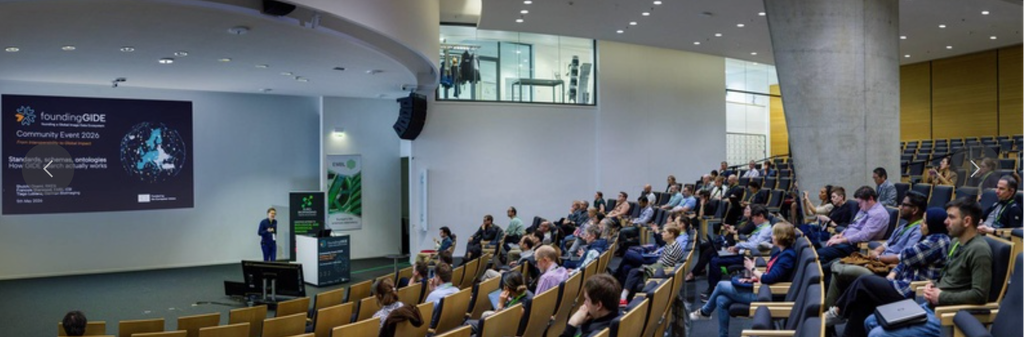
Each community event built on the previous one. The first event in Japan (2024) focused on developing a shared understanding of the challenges surrounding image data interoperability and identifying common priorities. The second in Australia (2025) moved towards practical solutions and closer alignment between different communities. The final Community Event in Heidelberg (2026) brought these discussions together, focusing on the transition from interoperability towards long-term impact and sustainability.
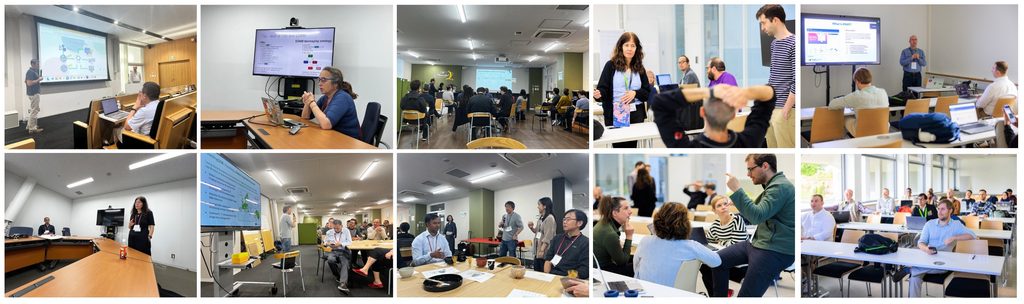
The community activities were complemented by technical workshops and hackathons (2024, 2026), where participants could move beyond discussion and work directly on standards, tools and implementation approaches.
A shared foundation for interoperable image data
Alongside this community work, foundingGIDE made substantial progress towards a shared technical foundation for GIDE. The project analysed existing metadata models and ontologies, identified areas of overlap and gaps, and developed recommendations for biological and preclinical imaging. These efforts resulted in harmonised metadata approaches and ontology recommendations intended to make datasets more consistently described across different resources.
These developments were brought together in the GIDE Stack, a multi-layered framework combining metadata models, ontology recommendations and technical tools. The stack includes work on a minimal shared interoperability metadata set for bioimaging (GIDE RO-Crate model), a harmonised metadata model for preclinical imaging (PRISM preclinical metadata model), recommendations for biological and preclinical imaging ontologies, and tools supporting metadata management and interoperability.
The project also moved from standards towards implementation. Technical developments included an indexing and search API (GIDE API), reference search portal connecting information across bioimage data resources (GIDE Search Portal), and tools supporting preclinical imaging data and metadata interoperability (tools). Together, these components demonstrate how common standards can be translated into practical infrastructure for discovering and connecting image data.
One of the key achievements presented at the final Community Event was the implementation of shared ontologies, the development of a common GIDE RO-Crate exchange schema, and the launch of a centralised image data search portal. This capability is also live on the Euro-BioImaging Access Portal (EAP), where technology service pages now dynamically display representative sample images. These developments represent an important step towards making image data more discoverable and enabling resources to exchange information using shared approaches.
Building an ecosystem
An important principle underlying foundingGIDE was that a Global Image Data Ecosystem should build on existing resources rather than replace them. The project worked with major image data resources, BioImage Archive, IDR and SSBD. This federated approach recognises that image data will continue to be generated and managed in many different environments.
This approach is particularly important as imaging becomes increasingly central to data-intensive and AI-driven research. Making image data findable and interoperable across resources is a prerequisite for responsible reuse, large-scale analysis and the development of AI methods that can work across diverse datasets.
The end of the foundingGIDE project does not mark the end of this work. Instead, it marks the transition from a coordinated foundation-building project towards the continued development of GIDE.
The project's deliverables, recommendations, technical resources and software will remain available to the community (Zenodo, a list of all deliverables can be found here). The final project outputs cover areas ranging from ontology recommendations and metadata harmonisation to data portals, APIs and tools for metadata interoperability, providing a shared knowledge base for researchers, infrastructure providers, repository developers and policymakers.
foundingGIDE brought together a network of people and organisations that now share a common understanding of the challenges and opportunities surrounding image data interoperability. The connections established through the project provide a foundation for continued collaboration through research infrastructures, international initiatives and future projects.
For Euro-BioImaging, this community and the connections it has created are among the project's most important deliverables. The progress made over the past 2.5 years demonstrates what can be achieved when research infrastructures, repositories, researchers and technology developers work together across disciplines and continents towards shared solutions.
From foundingGIDE to GIDE
We thank all foundingGIDE partners, EMBL-EBI, CNR, German BioImaging, Global BioImaging, RIKEN, National Imaging Facility, Microscopy Australia, as well as the wider community for their contributions throughout the project. Their expertise and collaboration were essential to developing the foundations of GIDE. We look forward to continuing this work together beyond the project.
FoundingGIDE was created to lay the foundations for a Global Image Data Ecosystem. With the project now concluded, those foundations are in place: a growing international community, shared recommendations for metadata and ontologies, technical solutions for interoperability and a common vision for connecting biological and preclinical image data.
As the need for accessible, interoperable and AI-ready image data continues to grow, the principles established through foundingGIDE will remain relevant well beyond the lifetime of the project. The work now moves from founding an ecosystem towards strengthening and expanding it.
October 8, 2026
This September, Euro-BioImaging was part of the Data Stewardship goes Germany (DSgG) Community Meeting in Cologne. Under the theme “from going to…

October 7, 2026
On 28–29 September 2026, the growing French volume electron microscopy (vEM) community came together in Bordeaux for the first France VolumeEM Scientific Days.

October 7, 2026
Euro-BioImaging joined partners from across Europe on 29. & 30. September 2026 at the official kick-off meeting for STARDAST, a new Horizon Europe…