October 8, 2026
Euro-BioImaging at ‘Data Stewardship goes Germany – from going to growing’
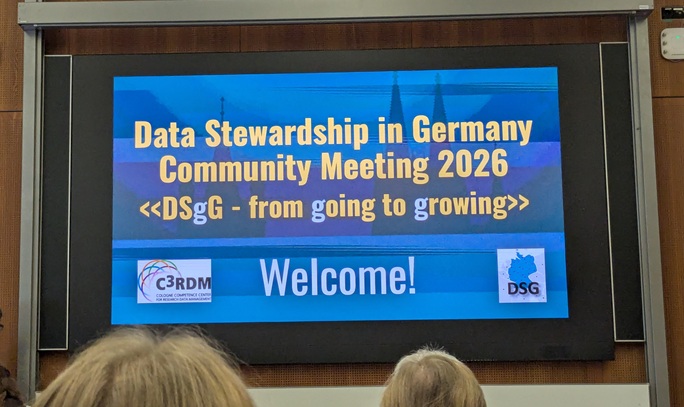
This September, Euro-BioImaging was part of the Data Stewardship goes Germany (DSgG) Community Meeting in Cologne. Under the theme “from going to…



On 3 June, colleagues from across Europe’s research and innovation community gathered in Brussels to launch three Horizon Europe initiatives that will help shape the future of the European Research and Technology (RTI) ecosystem: FUND-RI, Access2Access and COORDINA-INNOV.
Photos by Eric Berghen
Bringing together policymakers, research infrastructure leaders, industry representatives, researchers and users, the event was designed as more than a project launch. It created space for a broader conversation: how Europe can strengthen and future-proof its Research and Technology Infrastructure ecosystem at a time of increasing technological complexity, geopolitical uncertainty and growing expectations around competitiveness, openness and resilience.
The morning opened with reflections from Michael Arentoft (European Commission), setting the scene for why this moment matters and why the questions addressed through INFRADEV-05 have become increasingly urgent.
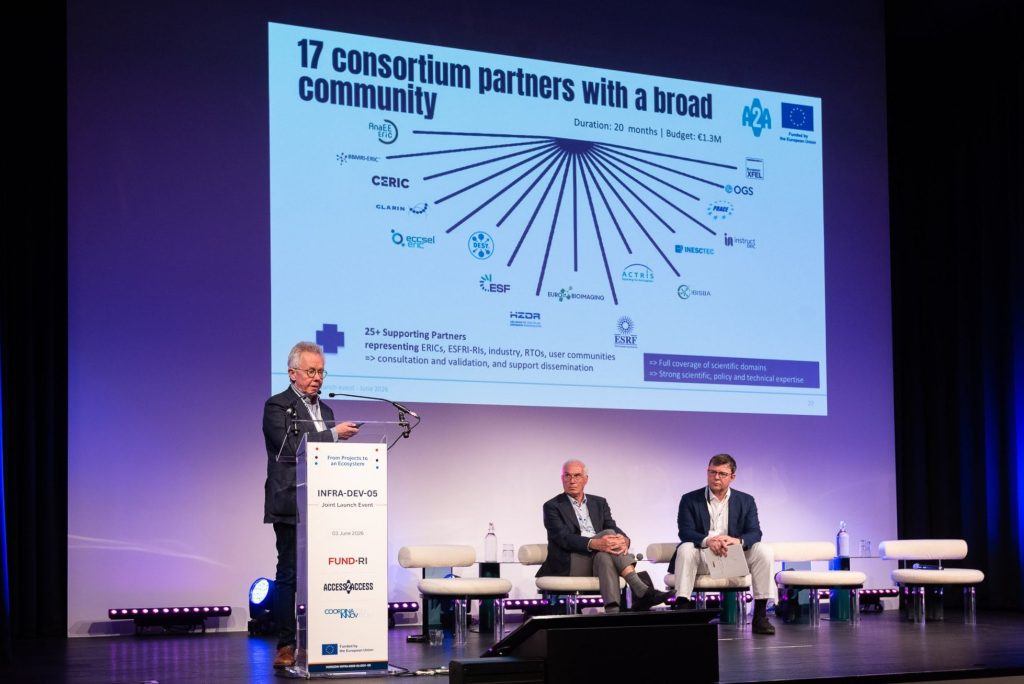
This was followed by a high-level roundtable moderated by Thomas Brent, with contributions from Catherine Berens (ERC), Inmaculada Figueroa (Ministry of Science and Innovation of Spain), Bonnie Wolff-Boenisch (CESSDA ERIC) and Bernhard Schwarz (ZEISS Microscopy). The discussion explored expectations for Europe’s research infrastructure system by 2030 and touched on themes that would continue throughout the day: strategic autonomy, openness, stronger connections between infrastructures and users, and the need to build systems that remain collaborative while becoming more resilient.
A recurring message emerged throughout the discussions: Europe already has extraordinary scientific capability and world-leading infrastructures. The challenge ahead is not simply building more infrastructures, but creating a more connected, interoperable and strategically coordinated ecosystem that maximises the value of Europe’s existing investments.
Against this backdrop, the coordinators of the three INFRADEV-05 projects introduced their shared ambition.
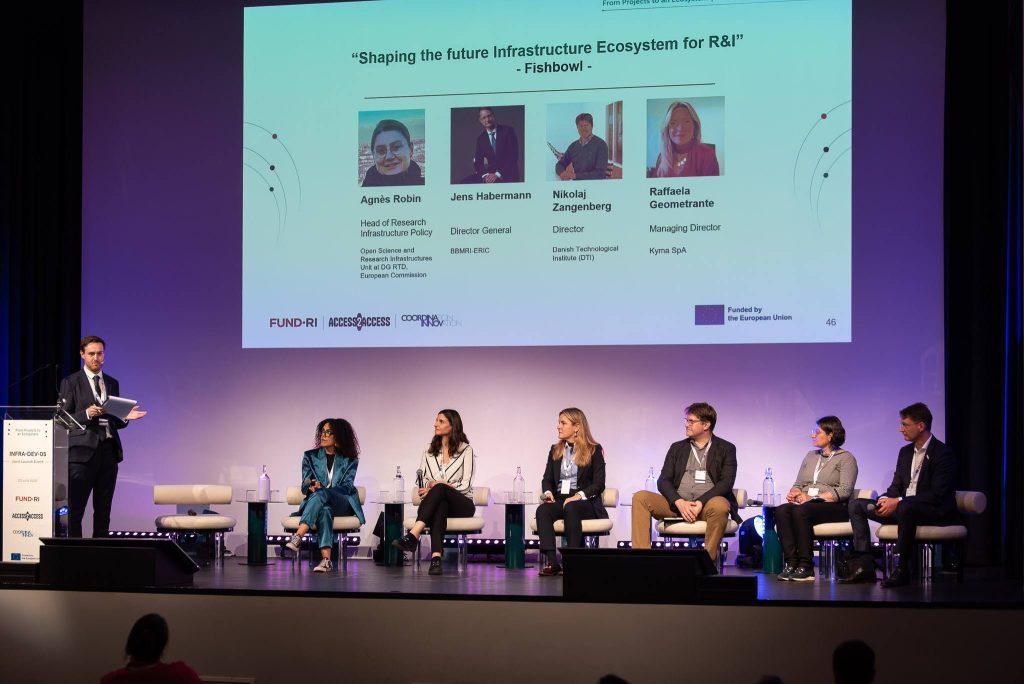
Ricardo Miguéis presented FUND-RI, which addresses one of the long-standing challenges facing research infrastructures: how to move beyond fragmented and often disconnected funding approaches towards more coherent investment strategies across the full infrastructure lifecycle. His reflections challenged participants to think not only about what infrastructures are, but about what they enable, and how funding can better reflect the value they generate for research, innovation and society.
John Eriksson described Access2Access, which foucses on the future of access to research infrastructures in Europe. Building on Europe’s strong tradition of federated and transnational access, the project aims to make infrastructures easier to discover, navigate and use, while exploring more integrated and user-centred approaches supported by emerging digital and AI-enabled tools. Access2Access aims not only to simplify access, but also to help design the next generation of European infrastructure access models, creating a more connected, discoverable and impact-driven ecosystem for research and innovation.
Helmut Dosch presented COORDINA-INNOV and its goal to strengthen long-term coordination for joint technology development across research infrastructures and industry. His intervention highlighted both Europe’s existing strengths and the need to create more durable structures for co-innovation, helping ensure that research infrastructures continue to contribute to scientific leadership, industrial competitiveness and technological sovereignty.
Although each project addresses a different dimension of the challenge, the discussion made clear that they are designed to work in complementarity: funding, access and co-innovation as interconnected foundations of a stronger European ecosystem.
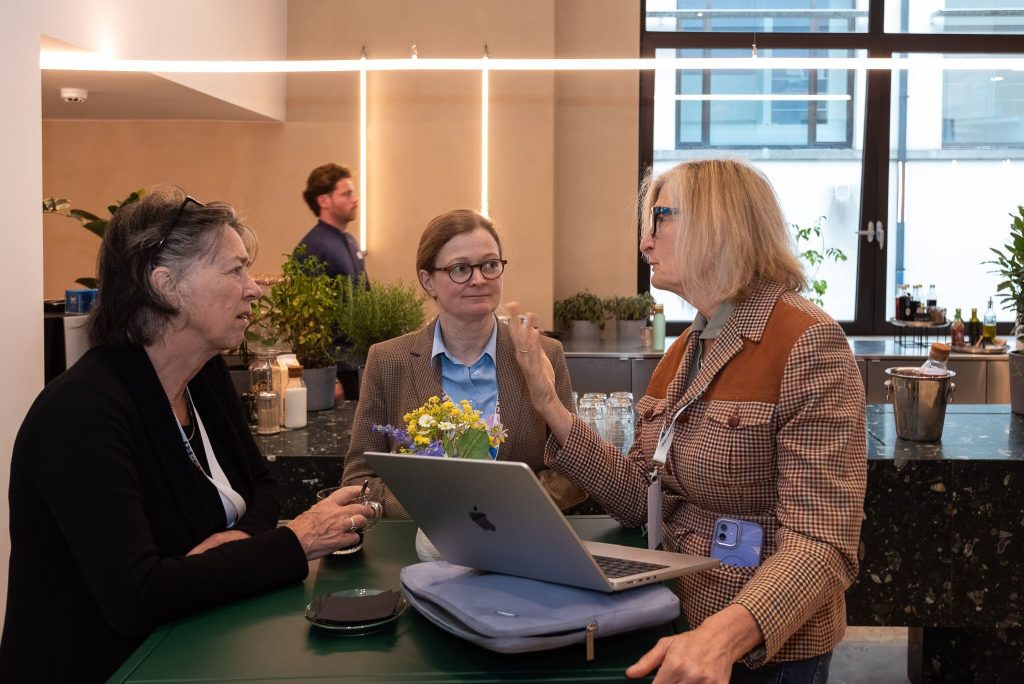
The afternoon Fishbowl discussion “Shaping the future Infrastructure Ecosystem for R&I” brought additional perspectives into the conversation. Agnès Robin (European Commission), Jens Habermann (BBMRI-ERIC), Nikolaj Zangenberg (DTI), Raffaela Geometrante (Kyma SpA), together with next-generation researchers Vanessa Coelho-Santos (University of Coimbra) and Meytal Landau (DESY), moved the discussion from strategy to implementation.
Questions around fragmentation, mobility, interoperability, industry engagement, interoperability and the everyday realities of navigating infrastructures across Europe brought an important practical dimension to the debate. Several participants reflected on the need to create more continuity between projects, reduce unnecessary complexity and strengthen communication between communities that do not always speak the same language, researchers, infrastructures, industry and policymakers.
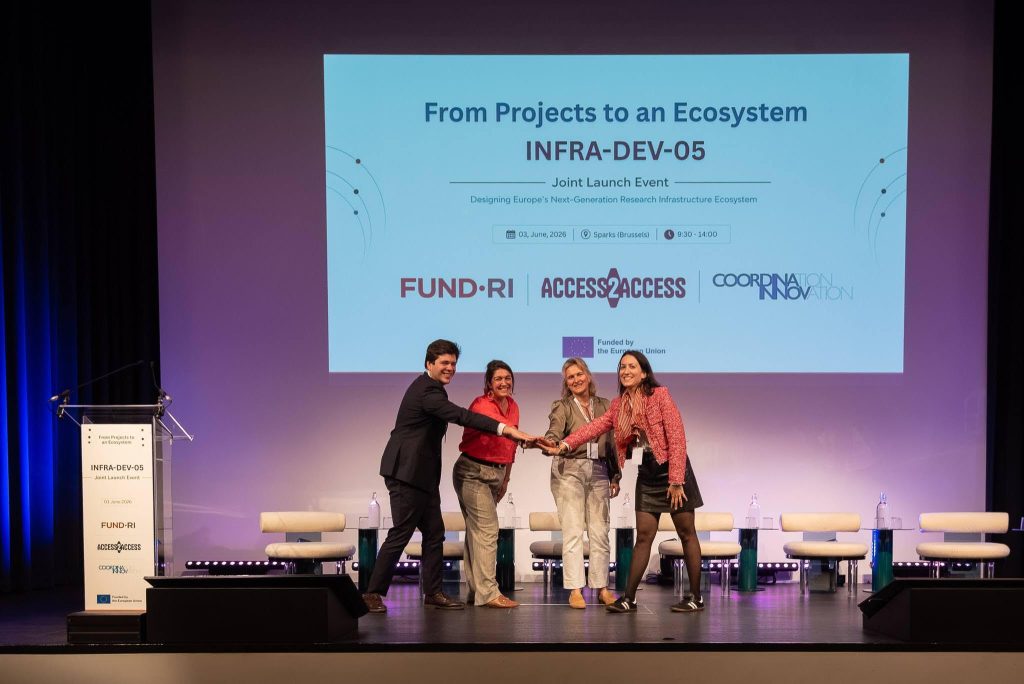
At the same time, the discussion remained optimistic. There was broad recognition that Europe already has many of the capabilities, communities and instruments required; the opportunity now lies in connecting them more effectively and creating the conditions for collaboration to flourish over time. Participants highlighted that world-class infrastructures are increasingly becoming strategic assets for European competitiveness, scientific excellence, technological sovereignty and resilience.
The event closed with reflections from Ricardo Miguéis, John Eriksson and Helmut Dosch, who emphasised that this launch marks the beginning of a collaborative process rather than a finished vision.
The conversations in Brussels made one thing clear: shaping the future of Europe’s research infrastructure ecosystem will require experimentation, coordination and sustained dialogue, but also confidence in the strengths already present across the European landscape.
October 8, 2026
This September, Euro-BioImaging was part of the Data Stewardship goes Germany (DSgG) Community Meeting in Cologne. Under the theme “from going to…

October 7, 2026
On 28–29 September 2026, the growing French volume electron microscopy (vEM) community came together in Bordeaux for the first France VolumeEM Scientific Days.

October 7, 2026
Euro-BioImaging joined partners from across Europe on 29. & 30. September 2026 at the official kick-off meeting for STARDAST, a new Horizon Europe…