November 5, 2026
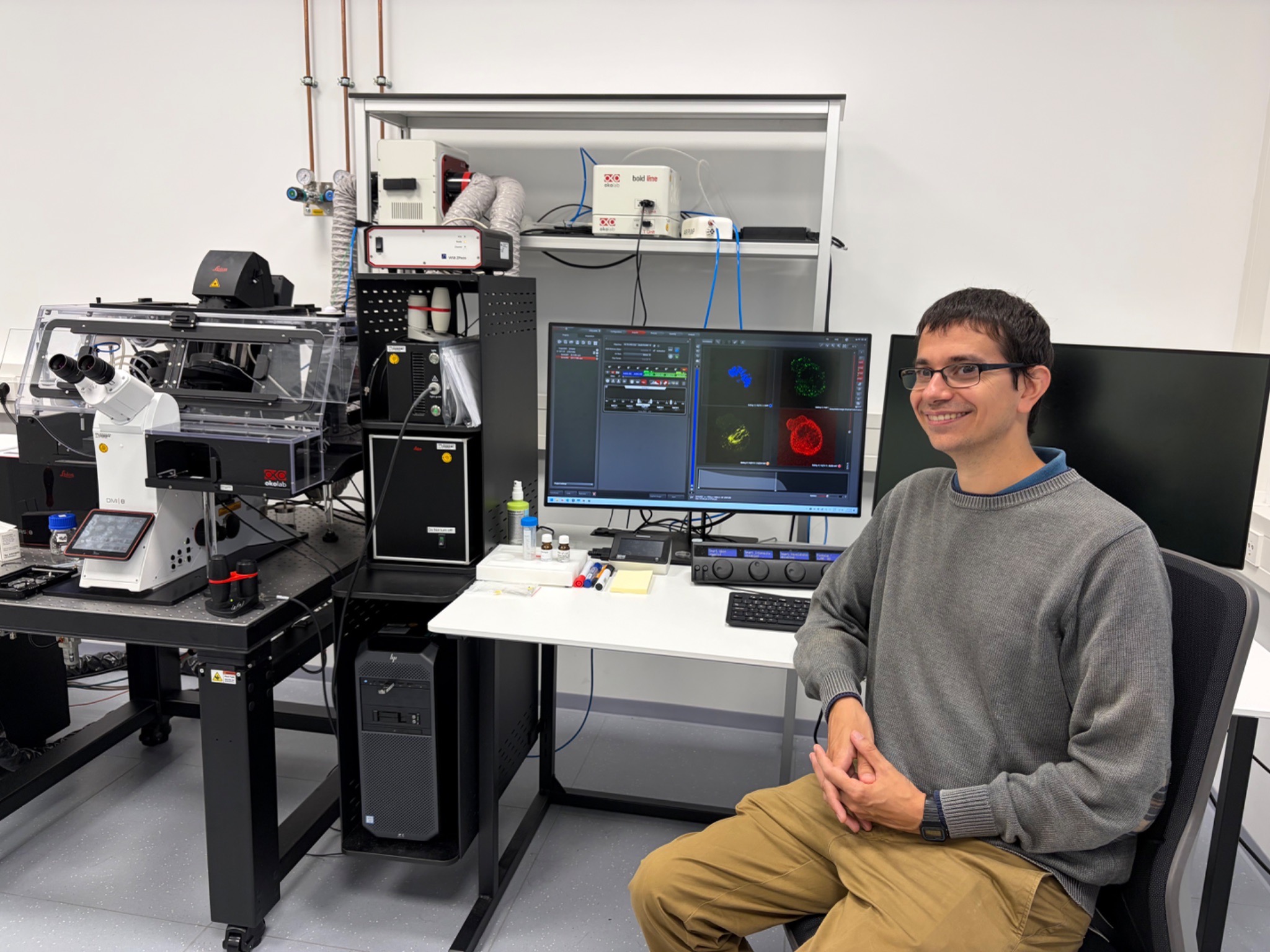
From shadowing to service: building STED and FLIM expertise at BRALM
With a new STED microscope due to arrive at the Basque Resource for Advanced Light Microscopy (BRALM) in Bilbao before the end of…


At the Special Edition Virtual Pub, "Imaging Micro- and Nanoplastics," Euro-BioImaging users, Node experts and Industry partners will explore how advanced microscopy, clinical imaging, and image analysis can be used to detect and study micro- and nanoplastic particles.
At this event, Biljana Balen University of Zagreb, and Daniel Hadraba, Institute of Physiology CAS, Prague Node, will share their work using advanced two-photon excitation microscopy coupled with fluorescence-lifetime imaging microscopy (FLIM) for in situ visualisation of the simultaneous uptake and localisation of microplastic polymers.
Join us on Friday, November 13, from 1-3 pm CEST for the Special Edition Virtual Pub to hear this talk and others like it!
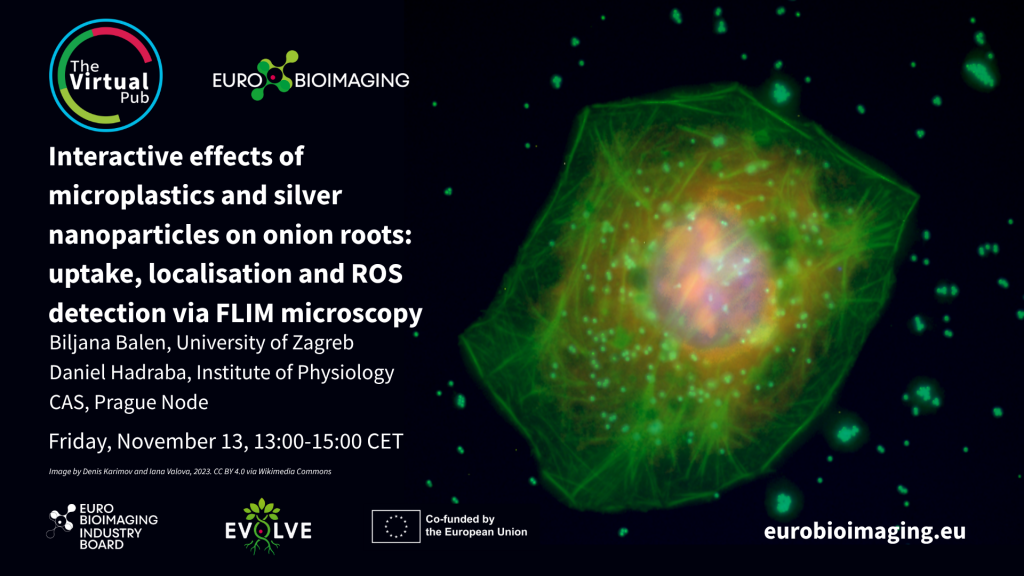
Interactive effects of microplastics and silver nanoparticles on onion roots: uptake, localisation and ROS detection via FLIM microscopy
Speakers: Biljana Balen, University of Zagreb, and Daniel Hadraba, Institute of Physiology CAS, Prague Node
Given the pervasive presence of microplastics (MPs) and silver nanoparticles (AgNPs) in the environment, this project proposes an innovative study of their interactive effects on plants, an area that currently lacks published literature. Using onion (Allium cepa) roots as a model, the research investigates the combined exposure and uptake of two MP polymers (PS and PMMA) and AgNPs with two coatings (PVP and CTAB). The aim is to determine whether their co-exposure results in mitigating or synergistic effects, and whether these interactions depend on the polymer type or the AgNP stabilisation coating.
To achieve this, the project uses advanced two-photon excitation microscopy coupled with fluorescence-lifetime imaging microscopy (FLIM) for in situ visualisation of the simultaneous uptake and localisation of both particle types. AgNPs are detected via light reflectance and short-lifetime luminescence, while MPs are tracked using FluorGreen fluorescent probes. In addition, this advanced microscopy setup is used to detect reactive oxygen species (ROS) in the roots after the same treatments, employing specific fluorescent probes to assess oxidative stress. Mapping this dual uptake and the resulting molecular response at an early stage is critical for interpreting subsequent physiological data.
November 5, 2026
With a new STED microscope due to arrive at the Basque Resource for Advanced Light Microscopy (BRALM) in Bilbao before the end of…

November 2, 2026
20–22 October 2026 | Turin, Italy | Hybrid course The Communications and Management Skills for Imaging Core Facilities course brought together 50 participants…

October 30, 2026
As part of the “Imaging 4 All – Access Track” programme, Dr Brice Tonfack, from the University of…