

February 9, 2026
Meet Irma Mahmutovic Persson - In Vivo Imaging Specialist at LBIC
In this edition of our Meet the Nodes interview series, we introduce Irma Mahmutovic Persson, staff researcher at the Lund BioImaging Centre (LBIC),…
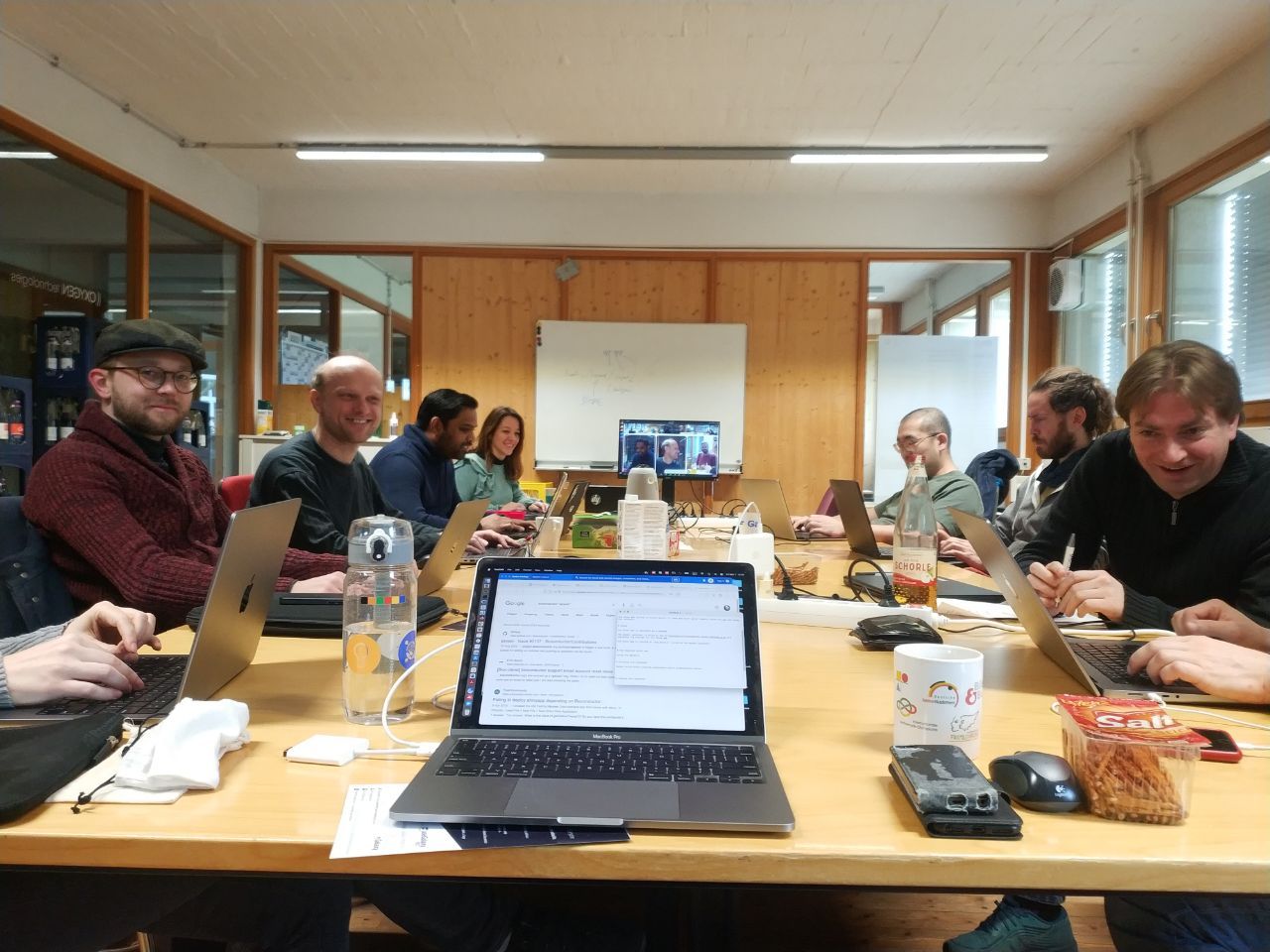
Galaxy is a free, open-source cloud-based system for analyzing data, authoring workflows and much more. A number of tools and resources for the imaging community are available via Galaxy. To further develop these resources, an "Image Analysis in Galaxy" hackathon was held from February 26th to March 1st, 2024, at the University of Freiburg (Germany). Co-organized by Euro-BioImaging and NFDI4BIOIMAGE, the event aimed to enhance image analysis capabilities and workflows within the Galaxy platform.
Here are some of the main outcomes and how they can be useful to you:
Since Galaxy is a workflow management system, you can use any of the tools available there in any order as part of a broader pipeline. To have access to the compute infrastructure in the available public servers, you just need to have a Galaxy account. Galaxy accounts are free, anyone can sign up and then get access to storage and compute power to play with your data.
Do you want to help shape this community resource? Further updates will be discussed at Euro-BioImaging’s FAIR Image Data Workflows Expert Group, led by Beatriz Serrano-Solano and Anne Fouilloux. They meet every3rd Wednesday of the month at 4 pm CE(S)T. Write to info@eurobioimaging.eu to join.
Read the full article about the Hackathon and its outputs on the Galaxy Community Hub: https://galaxyproject.org/news/2024-03-08-hackathon-imaging/

February 9, 2026
In this edition of our Meet the Nodes interview series, we introduce Irma Mahmutovic Persson, staff researcher at the Lund BioImaging Centre (LBIC),…
February 3, 2026
There’s a new marine sample dataset on the BioImage Archive, thanks to Tina Wiegand and her colleagues, part…
February 3, 2026
Breast cancer remains one of the most common cancers worldwide, and HER2-positive tumours — characterised by overexpression of the HER2 receptor — are known…