New insights into the altered lipid metabolism of osteosarcoma
Acidity is a key player in cancer progression, modelling a microenvironment that prevents immune surveillance and enhances invasiveness, survival, and drug resistance.
Drs. Sofia Avnet and Margherita Cortini, (University of Bologna) and Prof. Nicola Baldini (University of Bologna and IRCCS Istituto Ortopedico Rizzoli, Bologna) investigated the role of acidic tumor microenvironment and its impact on lipid accumulation and metabolism in osteosarcoma. They first demonstrated in spheroids from osteosarcoma cell lines that the exposure to acidosis remarkably causes intracellular lipid droplets accumulation by a mechanism which involves the sphingolipid metabolism.
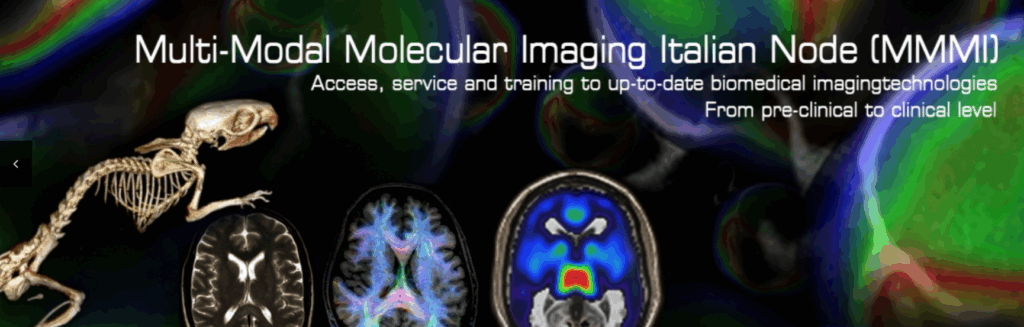
In order to evaluate the lipid accumulation and tumor growth in vivo targeting the sphingolipid metabolism in a mouse xenograft model, they then requested access to the Multi Modal Molecular Imaging Italian Node, hosted at the University of Torino, in Italy, to run Magnetic Resonance Imaging on the animal models treated with a combination of Fingolimod and a serine/glycine restrictive diet to reduce available precursors for fatty acid synthesis. The in vivo study confirmed that the combined treatment significantly affects the sphingomyelin pathway, tumor growth and fat fraction, suggesting that the inhibition of the sphingolipid pathway should be considered for future therapies.
About the Multi Modal Molecular Imaging Italian Node
The Multi Modal Molecular Imaging (MMMI) Italian Node is a multi-sited Node focused on biomedical imaging, and offering expertise and technical skills for the acquisition and analysis of in vivo images obtained by the most relevant state-of-the-art imaging technologies. The MMMI Italian Node comprises 8 research centers, each with its own specialties, located in 4 Italian cities (Turin, Milan, Naples, and Pisa). The Node provides the users with many services including a large repository of imaging agents/tracers for the available imaging technologies, and a number of cellular and animal models (mainly mice) reproducing the most relevant human pathologies. Support is available for advanced applications including quantitative assessment of biomarkers as well as in vitro assays for the validation of the imaging experiments.
More news from Euro-BioImaging
October 22, 2026
FLUID-AI4EOSC project officially launched: advancing models and data liquidity within the EOSC
We are thrilled to announce the official start of FLUID-AI4EOSC, a new Horizon Europe project that will bridge critical interoperability gaps between…
On October 5-6, the ESG4Stars project was launched. ESG4stars aims to reduce the environmental impact of research infrastructures. The kick-off meeting and…
RAISE Hub: One gateway to Europe’s AI in Science Community
A new online platform to connect researchers, infrastructures, and funders to accelerate AI scientific discovery across Europe Dublin, Ireland, 15 October…