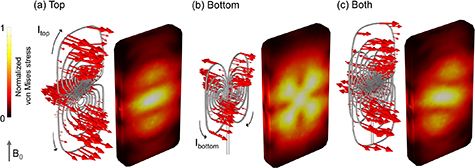
Transcranial magnetic stimulation (TMS) is a non-invasive method for stimulating the cerebral cortex. Concurrent functional magnetic resonance imaging (MRI) can show changes in TMS-induced activity in the whole brain, with the potential to inform brain function research and to guide the development of TMS therapy. However, the interaction of the strong current pulses in the TMS coil with the static main magnetic field of the MRI scanner produces high Lorentz forces, which may damage the coil enclosure and compromise the patient's safety. Maria Koponen, during her master’s thesis, studied the mechanical stresses of rat multi-locus TMS (mTMS) transducers inside a high-field MRI scanner (9.4T), using computational modeling and wanted to test some material options in a real fMRI-environment. In collaboration with the Finnish Biomedical Imaging Node, Kuopio Biomedical Imaging Unit, she studied the time-dependent mechanical behavior and durability of two selected mTMS coil arrays. She found that the current pulses produce shock waves and time-dependent stress distribution in the coil plates, whose intensity and location depend on the current waveform, the coil combination, and the transducer orientation relative to the MRI magnetic field. This study allowed her to define the most durable material, out of the six options studied, and provide novel insights for more durable TMS coil designs , which are essential for developing mechanically stable and safe mTMS-MRI transducers.
The Lorentz force (red arrows) and heatmaps of stress in the TMS coil array during a biphasic current pulse applied to the top coil, bottom coil, and both coils together. Figure has been adapted from Koponen et al, 2024: https://doi.org/10.1088/1361-6560/ad6b72. Used under a Creative Commons CC-BY 4.0 licence.
About the Finnish Biomedical Imaging (FiBI) Node
The Finnish Biomedical Imaging Node (FiBI) is a multi-sited, multimodal Node covering biomedical imaging from mouse to man. The spearhead imaging technologies of the FiBI Node include 1) preclinical and human PET imaging and PET tracer development, 2) preclinical high-field MRI, 3) magnetoencephalography (MEG), and 4) optical intravital imaging, coupled with a broad repository of imaging tracers and probes, numerous animal models from mice to pigs, and diverse stimulation systems for both animals and humans. The key expertise and main research applications focus on major challenges especially in cardiovascular and metabolic diseases, neuroscience, and cancer. With wide coverage of imaging modalities and expertise, the FiBI Node provides exceptional opportunities not only for basic research but also for translational research from small animals to larger animals to humans and to the clinic within a single Node.
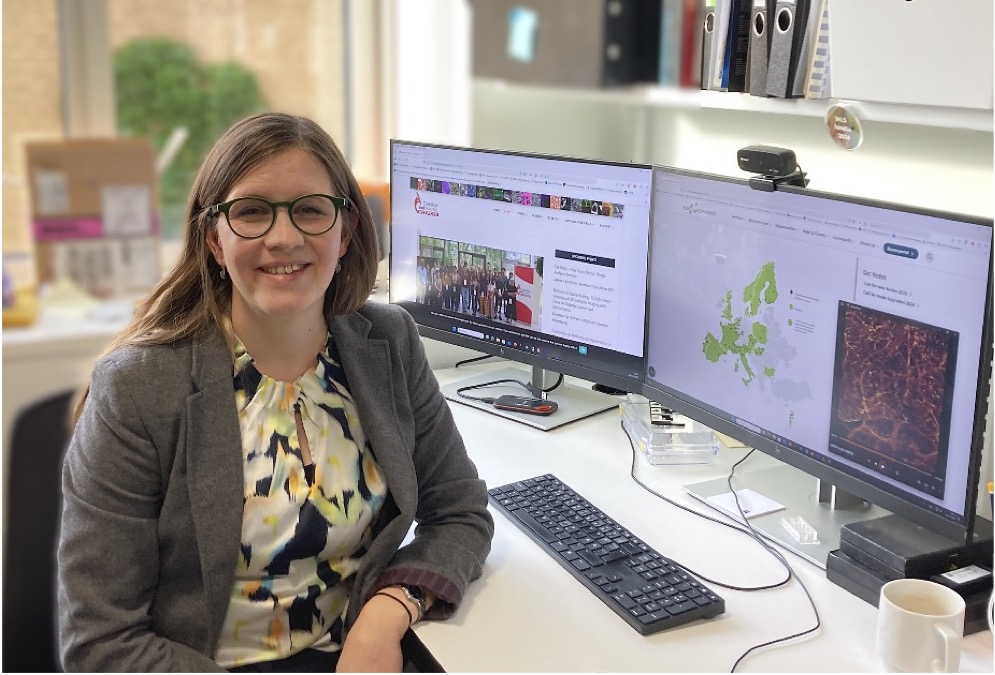
Meet Nina: Connecting Biology, Physics and People through Bioimaging
As part of our series highlighting the scientists behind the Euro-BioImaging Nodes, our Scientific Ambassador, Prasanna Padmanaban met with Dr. Nina Glöckner Burmeister,…
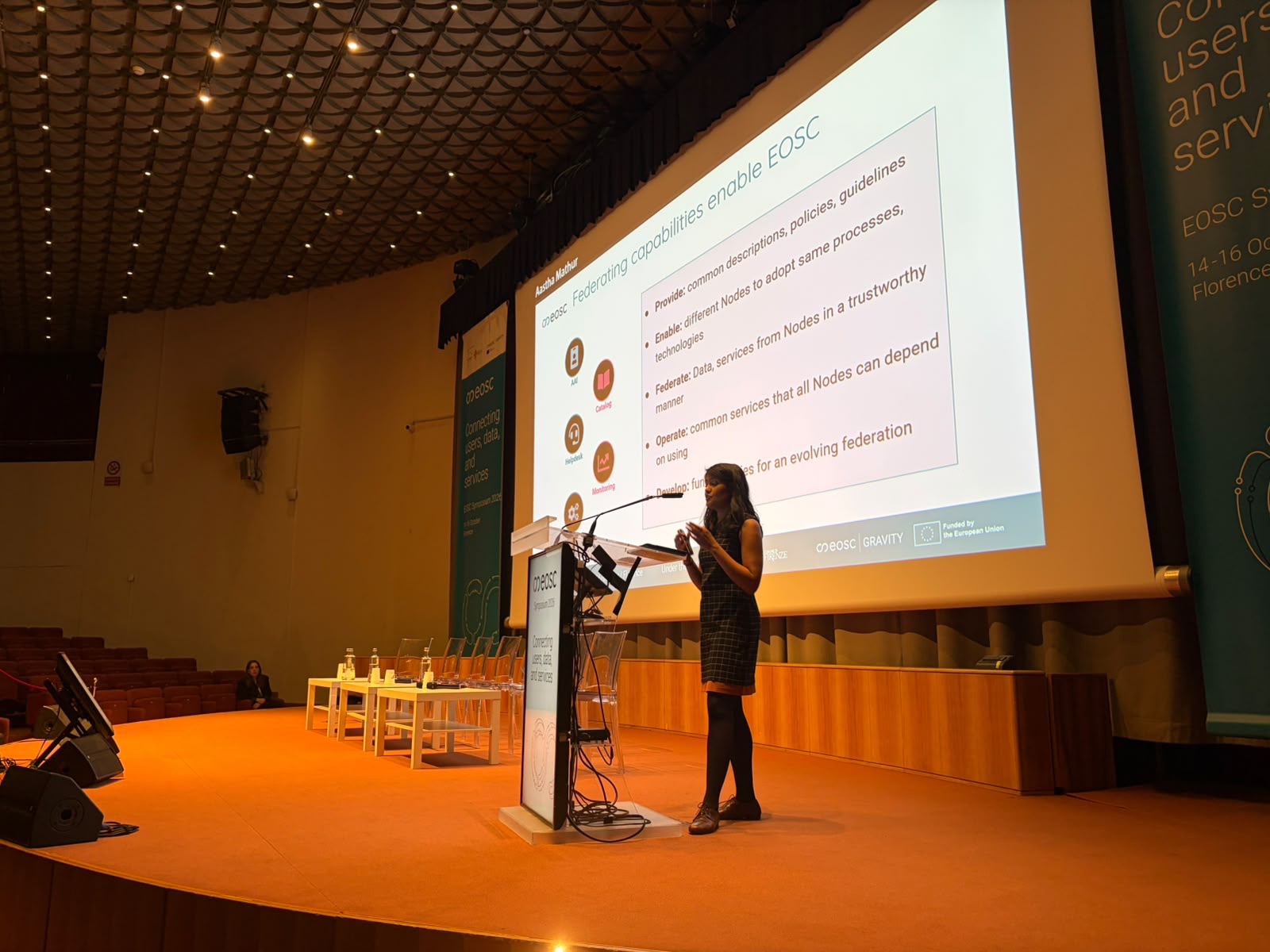
The EOSC Symposium 2026 took place from October 14-16, in Florence, Italy. More than 500 participants from 35 countries gathered there, including Euro-BioImaging’s…