Erin Tranfield, Head of the BioImaging Core at VIB, part of Euro-BioImaging's Flanders BioImaging Node, is a well-established electron microscopy (EM) expert, known not only for her technical mastery and leadership in facility development, but also for her ability to build community, share knowledge, and create momentum around what truly matters: the exchange of expertise. While her twenty-five years of experience in EM—from sample preparation to tomography and correlative imaging—have already been widely celebrated, this interview sets out to spotlight another facet of her remarkable career: the transformative impact of one of her most influential initiatives—the TechEM seminar series.
What began as an improvised response to an unprecedented situation—the COVID-19 pandemic—has, over the past 5 years, evolved into a vibrant, international, monthly seminar that no EM specialist wants to miss. But how did Erin transform a simple zoom meeting into a transformative seminar series?
In this interview, led byMuriel Mari, Associate Professor in the Biomedicine Department of Aarhus University and Euro-BioImaging's Scientific Ambassador, we trace the roots of TechEM, explore the challenges and values that have shaped its growth, discover the sense of belonging it fosters among participants, and look ahead to its future. What stands out is not only the scale and success of the initiative, but also the authenticity and humility that continue to drive it—making TechEM one of the most beloved and impactful platforms in today’s EM landscape.
Origins: From Accidental Beginnings to a Name That Stuck
“To be very honest, TechEM was an accident,” explains Erin. “In January 2020, two new team members joined my lab at the Instituto Gulbenkian de Ciência in Portugal. Neither had previous EM experience, and the plan was to integrate them progressively into workflows and facility practices. Then the pandemic hit, and we were all locked at home.”
Faced with the challenge of training her new team members remotely, Erin and her colleague Ana Laura Vinagre began sharing protocols and reviewing SOPs with them via Zoom.
The first session on April 8th 2020, entirely informal, was initiated with Heinz Schwarz, who agreed to join their Thursday lab meeting to speak about safety in EM labs. Erin tweeted a public invitation—and only one person responded: Linda Sandblad from Umeå, who joined with her lab.
“We were, I think, eight people in Zoom… and that was the first of what was to become the TechEM seminars.”
No name, no formal format—just a spontaneous gathering of peers.
Word of mouth did the rest. Erin invited one speaker after another—Bruno Humble, Helmut Gnaegi—and each guest often stayed, returning for future sessions. Within a few months, participation reached 40–50 people.
“People started to come, and then they just never stopped coming… word spread like fire. That is when I decided it needed a name… and so I came up with the TechEM Seminars,” says Erin.
While Erin hesitates about the label, she agrees the name reflects well what it is: a forum for discussing the technology and techniques behind EM.
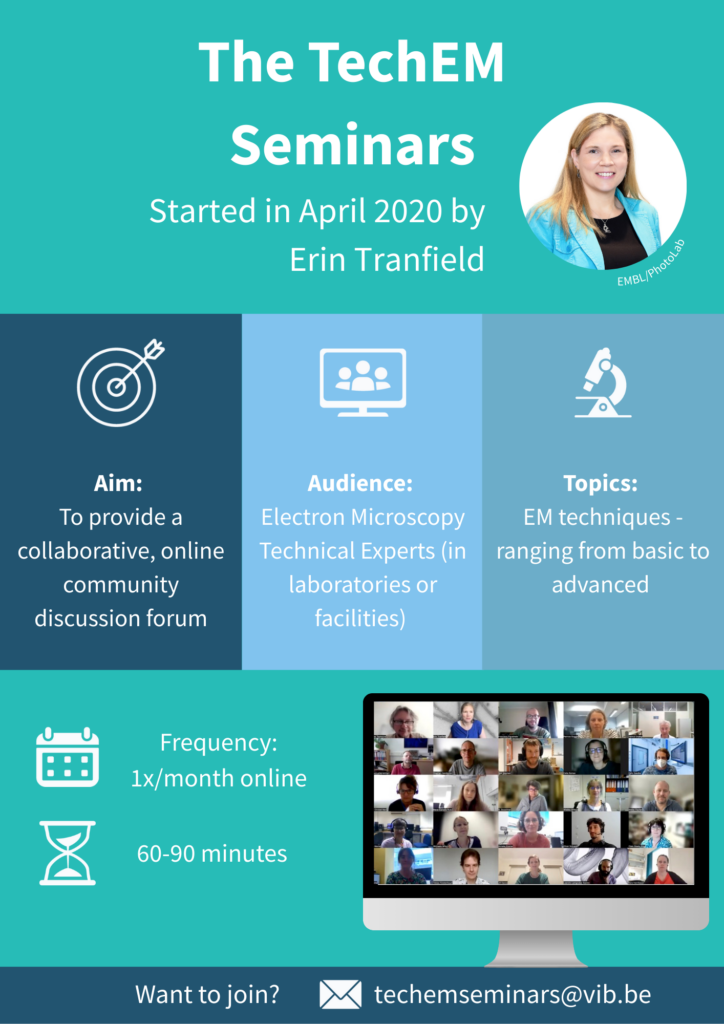
Figure 1: Overview of the aims, audience, and technologies explored in the TechEM Seminar series.
TechEM’s Unique Value: Sharing Challenges, Not Just Results
Unlike traditional conferences where polished results are showcased as if they emerged effortlessly, TechEM has carved its place by creating space for the real, raw process behind scientific discovery. Erin Tranfield emphasizes that her motivation was not to fill a gap in the EM community, but rather to learn.
“My strategy, is to invite speakers who I think I can learn from —which, by extension, becomes a ‘we can learn from’.”
And, it addresses a long-standing frustration with how mainstream scientific platforms often overlook the messiness of research—the failed experiments, the unexpected results, the problem-solving behind every figure.
“Polished presentations at conferences make it look like there weren’t 17 failed experiments in the background… which is rubbish. At least it is in my world.”
TechEM offers a counter-model: a space where struggles are acknowledged, failures are reframed as learning, and transparency fuels progress.
“We can learn by sharing our failures… If we share that, we’ll collectively save each other so much time because we won’t all recreate the same mistake.”
Seeing the Invisible: The Power of Artifact Sessions
One of the most impactful contributions of TechEM has been the artifact-themed seminars. Like the rest of the initiative, they started unintentionally—but became a landmark series.
“It was an accident that took a very long time to be finished… I thought it would be interesting if many pairs of technical expert eyes looked at an artifact, and we discussed: What is it? Where did it come from?”
Erin points out a simple yet powerful truth: artifact-free electron microscopy does not exist. Every technique carries its own signature distortions, and rather than pretending otherwise, the community benefits from confronting these head-on.
“We have to acknowledge our artifacts and work with them, around them… there is no world, in my opinion, in which there are zero artifacts.”
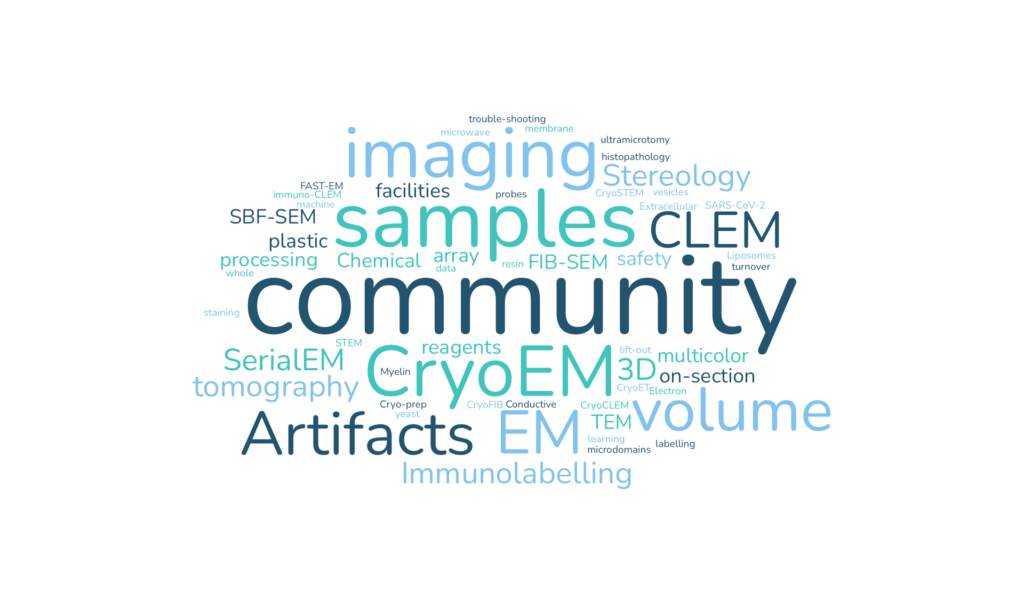
Figure 2: Overview of the topics & themes covered by the TechEM Seminar series since 2020. Visual generated using simplewordcloud.com
The artifact sessions have opened collaborative conversations around what is often invisible—or worse, ignored. Participants learn to recognize how artifacts might impact data interpretation, and share visual examples, from common knife marks to experimental distortions, to discuss their origin, significance, and potential workarounds.
“I find it very interesting when you put up a picture and people say ‘this is an artifact,’ or ‘that is an artifact’… and we see different things. That’s cool.”
The success of these discussions surpassed all expectations:
“I thought we wouldn’t have enough content for one hour… I think we’re at seven sessions now, and each of those seminars is an hour and a half long!”
Behind the Scenes: The Challenge of Sustaining TechEM
While TechEM has grown into a respected and much-anticipated monthly event, its continuity relies on the personal dedication of Erin Tranfield. What began as spontaneous Zoom sessions has become a widely attended seminar series. With that popularity, however, comes new logistical and organizational demands.
“My biggest challenge is time. Because it takes me quite a lot of time to organize.”
The process often happens in cycles. Erin describes setting up batches of six to eight seminars at a time, coasting for a while, and then repeating the process. Beyond time, there’s the human factor: finding speakers.
“When we first started TechEM, it was so small and informal… Now, with more traction, some speakers are shy. They are worried about the environment.”
Indeed, a regular TechEM session can draw a virtual audience of nearly 100—an intimidating number for early-career scientists and even seasoned researchers unused to online formats.
To ease this, Erin offers behind-the-scenes technical preparation for each session. She helps speakers with Zoom logistics, organizes short test sessions, gathers abstracts, and ensures each seminar runs smoothly and securely.
From Lockdown Lifeline to Lasting Community
The evolution of TechEM from informal lab chats to a structured seminar series was driven by community enthusiasm.
The first sessions often lasted over two hours and were far more than scientific seminars. They became an unexpected space for connection—a virtual support group where researchers could share not just data, but also the lived experience of science under lockdown.
This informal spirit hasn’t faded. Even now, long after the most restrictive pandemic days, that post-seminar exchange remains one of the community’s most cherished elements.
“Often after I stop the recording, there’s still a bit of chatter going on… informal sharing. This has also continued.”
When asked how she measures the success of TechEM, Erin’s answer is simple and telling:
“People keep showing up.”
Despite the ongoing demands of her work, there’s something in each seminar that keeps her motivated to continue.
“When I host a TechEM—there’s this fabulous energy in our Zoom room, which is amazing.” This energy is what drives Erin to continue.
For many participants, the community has become an essential part of their scientific routine—and identity. That sense of connection has helped build something rare in science: a deeply engaged, generous, and authentic professional community.
As of early 2025, the TechEM mailing list includes more than 350 people from across the world—from the west coast of the U.S. to New Zealand.
“We literally have the entire planet covered from one side to the other.”
Each month, around 25% of those subscribed attend the live sessions.
“The fact that many people come on a regular basis is impressive.”
Looking Ahead: Scaling Without Losing Soul
As TechEM continues to grow, the natural question arises: could this initiative partner with larger organizations or networks to expand its impact and sustainability?
While Erin Tranfield acknowledges the need for support, she is cautious about changing the nature of what has made TechEM thrive.
“I worry if we get too big, we lose what makes TechEM so unique.”
She is clear: TechEM was never meant to be corporate or polished. Its very strength lies in its informal tone, its organic growth, and its openness.
“I don’t want it to become staged and scripted because that’s exactly what it’s meant to not be.”
Yet there is only one Erin. For now, she manages everything alone—from speaker coordination and technical setup to hosting and follow-up.
“People send emails to the TechEM email address—‘Dear organizers.’ There’s no organizers. There’s me. Only Erin.”
Recently, several colleagues have begun to help with some aspects. Still, the scale of the work calls for additional support.
“It would be great to have some help… to centralise it… maybe have a little website. Because if you Google TechEM, I don’t think you ever find anything.”
How does TechEM fit into broader communities, like Euro-BioImaging?
“I think we have exactly the same mission: to share knowledge, technology, expertise across borders.”
For her, both TechEM and Euro-BioImaging, a European Research Infrastructure Consortium (ERIC) providing open access to imaging technologies, expertise and data services, are about removing barriers and creating accessible, collaborative spaces.
“We’re connected by our technology, our scientific expertise… what we’re trying to do is break down the borders, to make it so that it’s not compartmentalized.”
This vision is particularly meaningful in a field like electron microscopy, which Erin sees as both tightly knit and highly collaborative.
“It’s a small world in the sense that there’s a lot of people doing electron microscopy, but we more or less all know each other—at least by name—and we’re a supportive community.”
Learning from the Community, Protecting the Format
One of the most striking aspects of TechEM is how much Erin herself has learned from the community she helped bring together. Despite 25 years in the field, she continues to be surprised—and humbled—by the knowledge shared during these seminars.
“I’ve learned a lot of different technical details… small moments that would never be published.”
Because TechEM seminars are not embedded within the intense structure of traditional conferences, the insights they offer often feel more memorable—and more accessible.
“I tend to remember more from the seminars… because I’m less overwhelmed and less tired.”
Another defining feature of TechEM is its fluid, open-ended format. Unlike conventional webinars or symposia, there is no hard stop after 60 minutes. Conversations are allowed to unfold naturally, especially when they touch on topics that strike a chord with the group.
“The goal is really to let the fluidity of knowledge sharing happen.”
A Future Rooted in Authenticity
Looking five years ahead, Erin is clear-eyed about what it will take to keep TechEM both functional and true to its origins. While she sees the need for more organizational support and structural consistency, she is equally committed to preserving the informal, inclusive spirit that defines the initiative.
“If we’re still going in five years, I may need some more of that structure… to help with the organization and the setup, and to build consistency.”
She also envisions potentially revisiting earlier sessions—particularly core topics like safety—that are just as relevant for new community members today as they were in the early days.
Visibility, Legacy, and a “Beautiful Monster”
As the sole moderator of every TechEM session, Erin has become the face—and voice—of the series.
“I think many more people know me now and I know them. This lets me help people by connecting them to another person who can really answer their question or troubleshoot their problem.”
For all the recognition, Erin remains modest—almost self-deprecating—about what she’s built.
“It’s my imposter that says: I have not done anything special. I’ve just organized an online meeting, and people seem to like it, so I can’t stop.”
When asked what advice she’d give to someone wanting to create a similar platform, she laughs.
“Careful. You might create a monster… A beautiful monster. A monster you love but a monster nonetheless. If I were to stop organizing TechEM, I think there might be a mutiny in the community.”
A Call to Join—and to Share Honestly
As the interview draws to a close, Erin offers a clear and open invitation to anyone interested in becoming part of the TechEM community.
“To join is very simple. You send an email to techemseminars@vib.be, and I will subscribe you.”
She shares an events calendar, so participants can block time for upcoming seminars. But more than just attending, she hopes people will present their work—especially the parts that didn’t go as planned.
“If I can convince people to present their work, particularly their work that has not been a success… those are the best seminars.”
Erin sees real value in these moments—as contributions to collective learning.
“Just come. Just join. Just be part of it. Join in the enthusiasm.”
Closing Words: A Thank You to the Community
As the final note in the interview, Erin offers a message not about herself—but about the people who have made TechEM what it is.
“I may send out the talk ideas, I may send out the invitations… but it’s our speakers and it’s our community that make TechEM strong.”
She acknowledges the generosity, openness, and engagement that define the seminar series. Whether it’s sharing “oops moments,” offering encouragement, or reaching out to each other behind the scenes, the community has created something that goes far beyond slides and microscopes.
“I’ve just built a location for this interaction to take place… but the core of TechEM’s success is the EM community.”
A Final Word
What Erin Tranfield has built through TechEM goes far beyond a monthly seminar. It is a living testimony to what science becomes when we strip away ego, embrace imperfection, and come together not to impress—but to share, support, and grow. In a field that often prizes perfection and performance, Erin has created space for authenticity, connection, and the quiet power of collective intelligence. TechEM is not just a series of talks. It is a movement, a memory bank, a mentorship circle, and a gift to the electron microscopy community. We owe her—and every participant who chose to show up, speak honestly, and stay after the recording stopped—a deep and lasting thank you.
— Muriel Mari, for the Euro-BioImaging Scientific Ambassador Program
Testimonials
“The talks allow me to discover what all those colleagues in EM are working on. It broadens my vision… and shows how every lab has its own protocols. Erin’s TechEM initiated a new era of open discussion on what is going on in EM labs—where the hurdles are, how to overcome them, and how to celebrate success. I hope Erin will continue to orchestrate this powerful instrument.”
-- Bruno Humbel, OIST
“The seminar brings together EM people from all over the world. Erin creates a unique atmosphere that makes me forget the everyday pressure and reminds me why EM became my passion: making the invisible visible.”
-- Dagmar Zeuschner, University of Münster
“Erin went on the brave adventure to gather electron microscopists around the world. She built a resourceful, pro-active, and open-minded community that helps me stay updated, improve my skills, and grow my network.”
-- Séverine Kunz, Max-Delbruck Center
“The TechEM seminar series has brought the community closer together. I always get valuable input from the talks and discussions. It allows me to meet and talk to colleagues monthly—not just at conferences.”
-- Felix Gaedke, University of Freiburg
“The TechEM is a great initiative from Erin, starting during Covid. Glad she’s continuing, I would miss it if she didn’t! It’s a chance to discuss EM prep and meet friends.”
-- Helmut Gnaegi, Diatome
“TechEM brought hope and motivation during Covid lockdown and grew into a community of starters and seniors sharing knowledge, skills, failures, and successes. Thanks, Erin, for all the energy you’ve put in!”
-- Viola Oorschot, EMBL
“Erin encourages constructive discussion and brings in key contributors. TechEM has improved how I work—one example, fixation techniques. Erin is an expert facilitator; there’s little else like it.”
-- Matt Russell, University of Oxford
“Being one of the few people doing EM in my faculty, TechEM gave me the opportunity to meet colleagues, share knowledge, discuss techniques, and even start new collaborations. I greatly enjoy these seminars.”
-- Rob Mesman, ERASMUS MC
“What we like most is that TechEM is about practical things—revisiting old protocols or hearing about unexpected innovations. And we benefit from staying connected with our lovely EM community!”
-- Moebius Group, Max Planck Institute
More news from Euro-BioImaging
March 30, 2026
Euro-BioImaging attends the PAERI Conference
Euro-BioImaging was delighted to attend the Public Awareness & Engagement of Research Infrastructures (PAERI) conference, represented by External Communications Officer, Marianna Childress-Poli. This year’s…
The Madrid Advanced Microscopy Center (MAdMiC) is the first Euro-BioImaging Node in Madrid (Spain). It is formed through the collaboration and close work of…
Participate in the NFDI4BIOIMAGE Community Survey 2026 on Research Data Management
German BioImaging, within its work in the NFDI4BIOIMAGE consortium, and in collaboration with Euro-BioImaging ERIC, has launched a new survey to collect input about…