October 8, 2026
Euro-BioImaging at ‘Data Stewardship goes Germany – from going to growing’
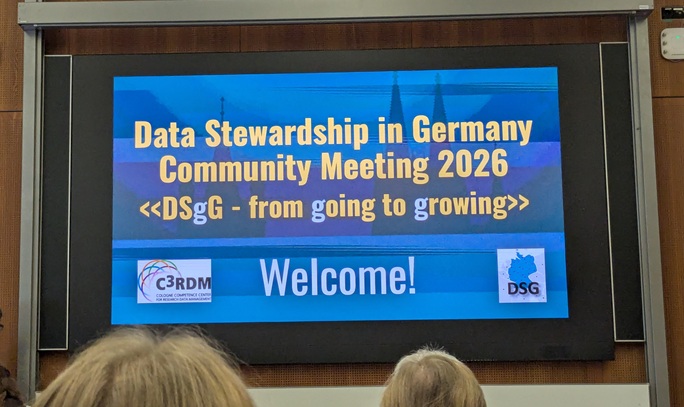
This September, Euro-BioImaging was part of the Data Stewardship goes Germany (DSgG) Community Meeting in Cologne. Under the theme “from going to…



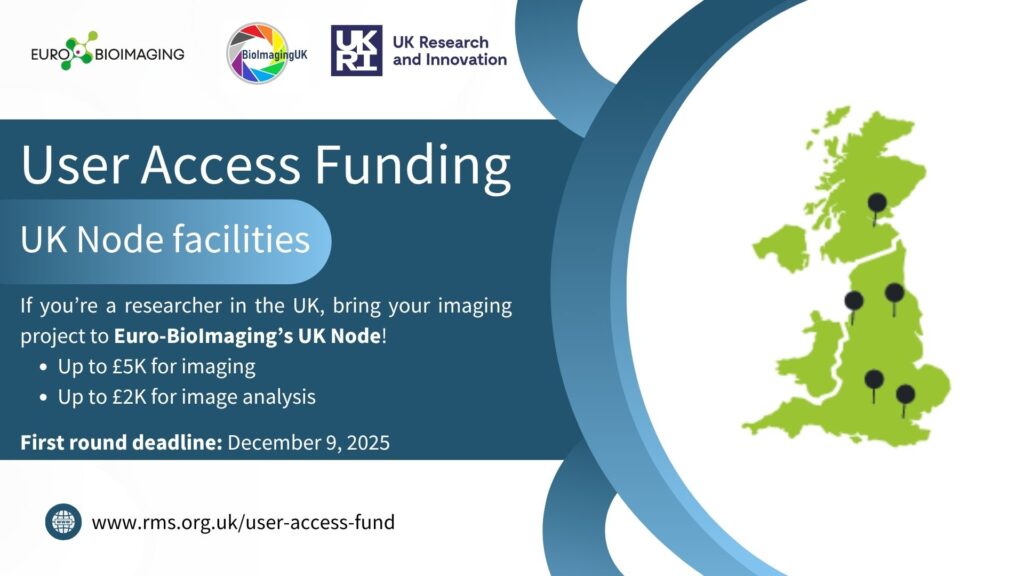
UK researchers now have unprecedented access to state-of-the-art bioimaging technologies through a new fund announced by the UK Node of Euro-BioImaging. The UK Bioimaging User Access Fund, supported by £1.8 million in strategic funding from UKRI-BBSRC and UKRI-MRC over five years, aims to democratise access to advanced imaging facilities across the country and beyond.
The fund offers up to £5,000 at 100% Full Economic Cost (FEC) for bioimaging hardware access, or up to £2,000 for image analysis services only. This investment covers all aspects of facility access, including consumables, travel and accommodation expenses, and comprehensive technical support and training.
"This funding represents a significant opportunity for UK researchers across all biological disciplines," explains Georgina Fletcher, UK Node Manager. "We're removing financial barriers that might prevent researchers from accessing the cutting-edge imaging technologies they need to advance their science."
The UK Node comprises 14 facilities across seven sites, offering access to an impressive range of advanced biological imaging techniques. Researchers can access correlative, multi-modal, high-content, and super-resolution microscopy, along with expert image analysis services. Six of these sites are eligible for this funding opportunity: ESRIC (Edinburgh Super-resolution Imaging Consortium), the University of York's Imaging and Cytometry Facility, multiple centres at the University of Liverpool, Oxford Brookes University's Centre for Bioimaging, several imaging centres at King's College London, and The Francis Crick Institute's CALM facility.
If the required technology is not available within the UK, the fund also supports access to more than 200 Euro-BioImaging facilities across Europe, ensuring UK researchers can access exactly the expertise and equipment their projects demand.
Beyond equipment access, successful applicants receive comprehensive support throughout their projects, including initial consultation and experimental planning, hands-on training, sample preparation assistance, and high-quality data acquisition services.
Applications are reviewed on a rolling basis every four months, with evaluation dates on 31 March, 31 July, and 30 November. For the inaugural round, the deadline has been extended to 9 December 2025, with decisions expected within four weeks of each review cycle. Projects will be assessed based on technical feasibility and scientific merit.
There is one mandatory requirement: researchers must discuss and agree their experimental plan—including feasibility, cost, and timeframes—with their chosen host facility before submitting an application. This ensures projects are well-planned and technically viable from the outset.
"We encourage researchers to reach out early to discuss their imaging needs," adds Fletcher. "Our facilities are ready to help develop robust experimental plans that will make the strongest applications."
For informal enquiries or guidance on which facility might be most suitable for specific research needs, researchers can contact info@eurobioimaging.eu or georgina@rms.org.uk.
Full details about the funding opportunity, eligibility criteria, and the application process are available at www.rms.org.uk/user-access-fund.
The CLF OCTOPUS facility at Harwell is excluded from this scheme as it already benefits from dedicated UKRI-funded user access arrangements through the Central Laser Facility.
Contact: georgina@rms.org.uk
October 8, 2026
This September, Euro-BioImaging was part of the Data Stewardship goes Germany (DSgG) Community Meeting in Cologne. Under the theme “from going to…

October 7, 2026
On 28–29 September 2026, the growing French volume electron microscopy (vEM) community came together in Bordeaux for the first France VolumeEM Scientific Days.

October 7, 2026
Euro-BioImaging joined partners from across Europe on 29. & 30. September 2026 at the official kick-off meeting for STARDAST, a new Horizon Europe…