
October 15, 2026
Open Call: Exploit Large Scientific Datasets with AI and HPC through RI-SCALE
The European RI-SCALE project has launched an Open Call for Use Cases, inviting research teams, research infrastructures and companies to…



With the occasion of the Board meeting which took place in Amsterdam last May, the Med-Hub section Director Linda Chaabane and the Med-Hub Head of Operations Alessandra Viale travelled to Nijmegen to visit the Preclinical Imaging Center Node (PRIME) at RadboudUMC, one of our biomedical imaging Nodes with a special expertise in the preparation and multimodal imaging of animal models for many different diseases.
It was a pleasure to meet the Node’s staff, including technical staff and the heads of all the main facilities of the Node: Prof. Amanda Kiliaan (Node’s Head), Ing. Wilma Jansen Kessels (Node’s coordinator), Prof. Sandra Heskamp (Coordinator of RTC imaging, PET and SPECT), Prof. Peter Friedl (Head of the MultiPhoton Microscopy facility, Prof. Jan Bussink, (Head of the Radiotherapy facility) and Dr. Nelleke Verhave (Head of the Animal Research facility).
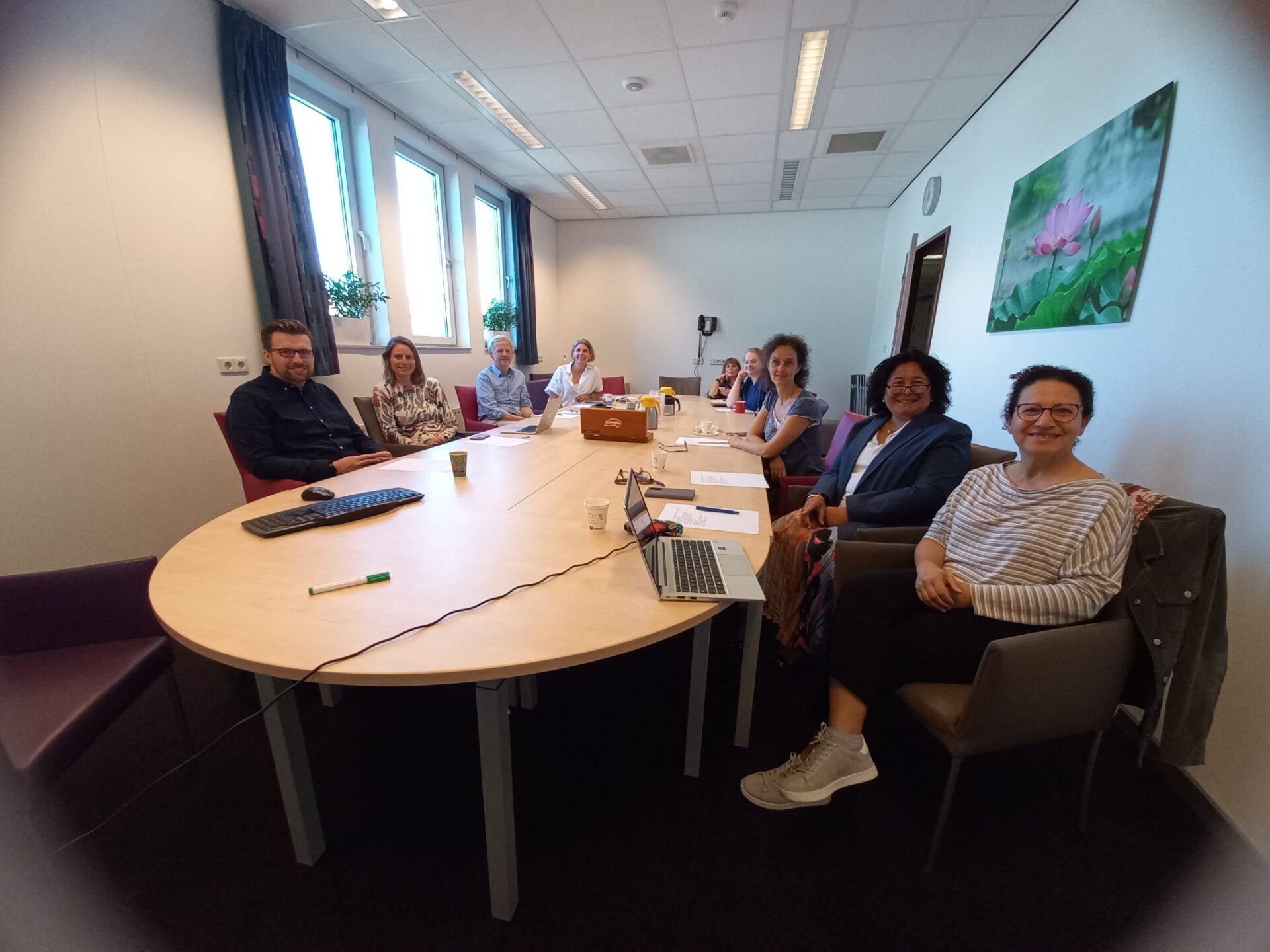
After briefly presenting the latest updates and opportunities from Euro-BioImaging, and hearing about the main research activities of the Node, Linda and Alessandra were guided through the imaging laboratories and the animal facilities in a very fascinating tour of the Node.
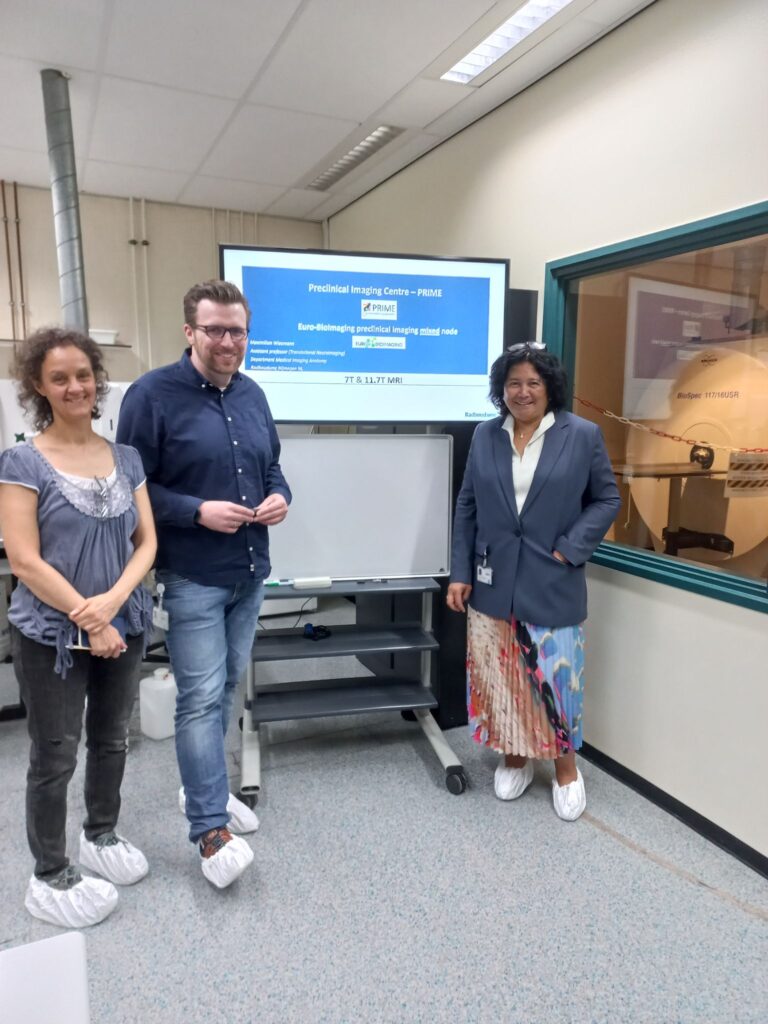
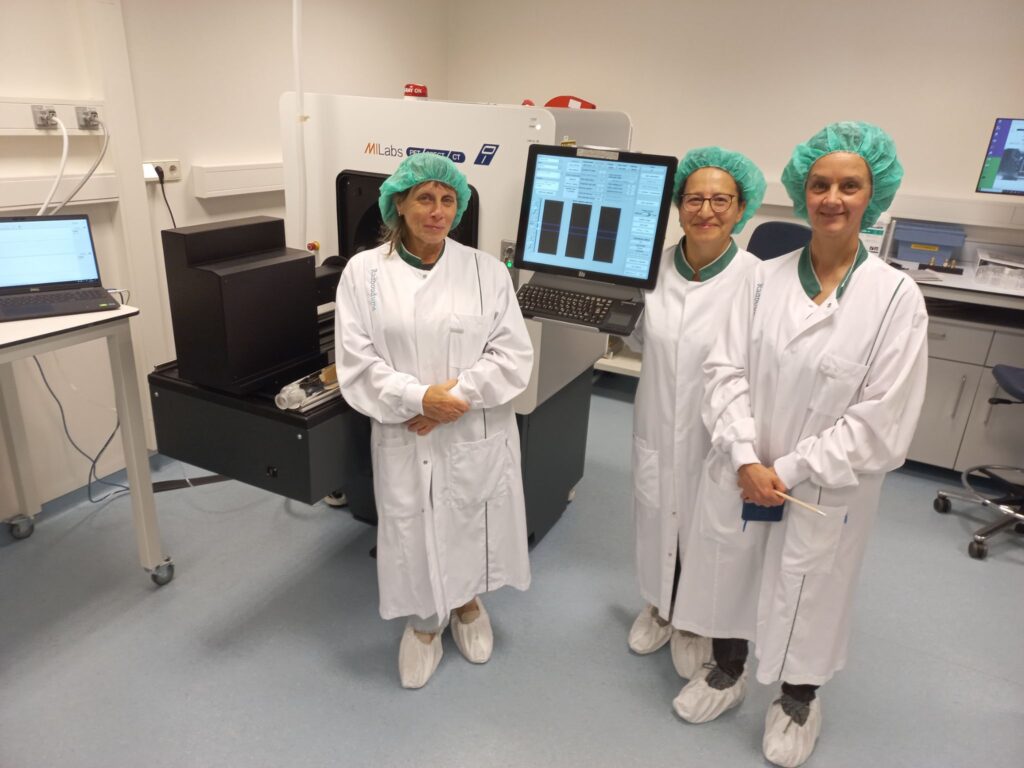
PRIME, embedded in the Animal Research facility, is equipped with cutting edge imaging instrumentation including all the most relevant imaging technologies for in vivo imaging of small animals and ex-vivo samples. All the different machines are placed on the same floor to facilitate the movement of the animals from one imaging room to the other. This proximity, along with the use of animal beds which are compatible with both MRI and PET/SPECT machines, allows to run smoothly multimodal correlative imaging studies.
The equipment includes 7T and 11.7T MRI scanners, with a crio-probe and the option to run hyperpolarized MRI experiments thanks to the presence of a DNP polarizer, PET and SPECT scanners, a 2-photon microscope for intravital optical imaging. Most interestingly, the Node has recently acquired a Small Animal Radiation Therapy Platform (SARRP) system coupled with a micro-CT tomograph that allows precise focussing of the therapeutic radiation as well as the monitoring of the effects.
The animal facilities are impressive: an animal housing room with a digital, non-invasive monitoring system for continuously monitoring the animals' health and behavioral status without causing stress is present, as well as a number of rooms for the preparation of different types of animal models and behavioral rooms. Beside standard rodent animal modes of stroke, obesity, hypertension, cancer and neurological disorders, the Animal Research Facility also has a farm housing for sheeps, pigs, chickens and even more exotic models such as mosquitoes.
The expertise at the Node spans different areas such as neuroscience, oncology, immunology, infections, cardiovascular and metabolic diseases, with interesting skills on correlation across MRI and optical imaging of human post-mortem samples, that coupled to imaging of animal models provides a strong tool for the understanding of disease mechanisms.
Linda and Alessandra were very impressed by the services available at the Node and very thankful to the Node’s staff for the visit and the useful insights provided.
October 15, 2026
The European RI-SCALE project has launched an Open Call for Use Cases, inviting research teams, research infrastructures and companies to…

October 15, 2026
The 2026 edition of SPAOM, the meeting of the Spanish and Portuguese Advanced Optical Microscopy community, marked a special milestone: the 10th edition of this meeting bringing together researchers, microscopy specialists, technology developers and imaging facilities.

October 13, 2026
From 27 September to 1 October, our team member Feriel Ramdhane (Image Data Scientist at Med-Hub) represented Euro-BioImaging at MICCAI 2026 in Strasbourg.