
October 8, 2026
Euro-BioImaging at ‘Data Stewardship goes Germany – from going to growing’
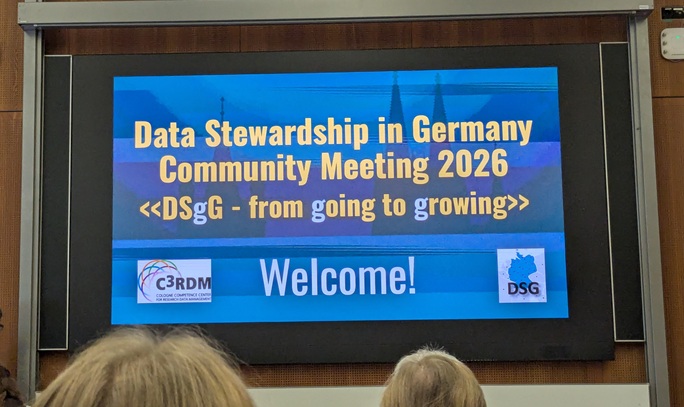
This September, Euro-BioImaging was part of the Data Stewardship goes Germany (DSgG) Community Meeting in Cologne. Under the theme “from going to…


Euro-BioImaging was delighted to attend the AI2Med event, held from November 25-26, at the University of Turku in Turku, Finland. This two-day event focuses on the growing need for collaboration between computational scientists and healthcare practitioners, covering applications from medical imaging to protein design and clinical text mining. The event focused on health data and how it needs to be well-structured to enable the application of AI tools and to democratise access to AI.
Representing Euro-BioImaging, Susanne Vainio and Sudeep Das shared insights on how European Research Infrastructures can support scientific innovation. During their presentation, they highlighted how research infrastructures empower scientists by providing technologies and expertise, supporting the development and participation in consortia, building networks, and offering essential resources. They also emphasised Europe’s strategic role in AI-driven research.
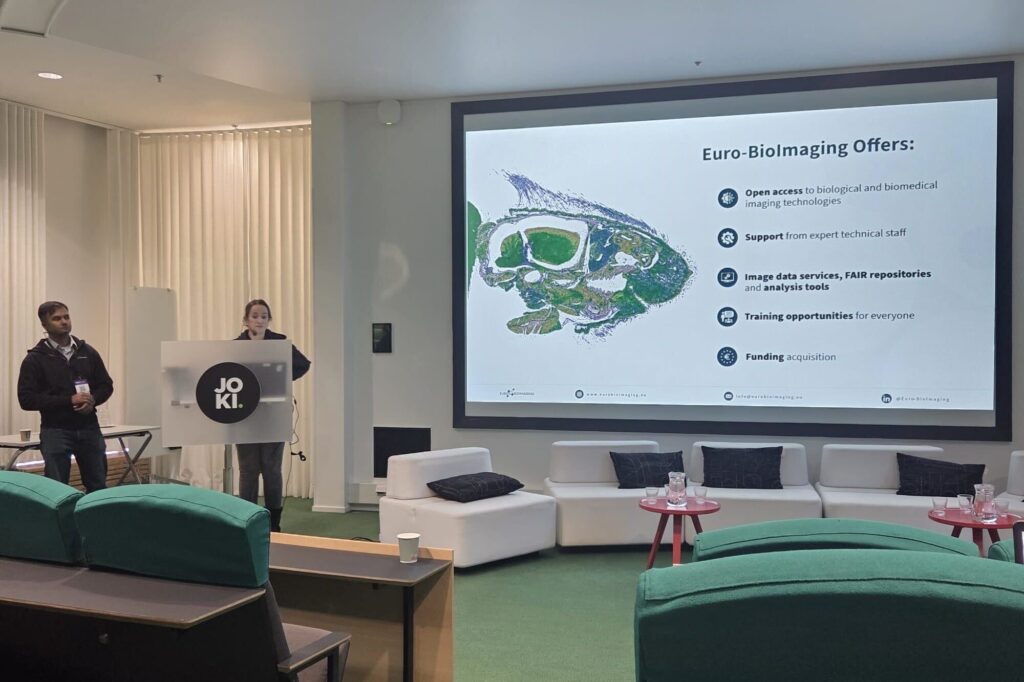
Europe’s global competitiveness is strengthened through initiatives such as the Apply AI strategy and the AI in Science Strategy. The EU’s push towards enabling access to health data through the European Health Data Space (EDHS) regulation was also presented.
The event highlighted that digital transformation is essential for AI-driven precision medicine. Experts noted that hospitals struggle to unlock AI’s potential while data remains siloed across fragmented systems, and that creating interoperational systems is costly and slow. With healthcare generating nearly a third of the world’s data, access to FAIR, structured, and computable health data is key to enabling AI-driven discoveries.
Breakthroughs showcased at AI2Med included smartphone-based cardiac screening, AI-assisted drug discovery, and privacy-preserving federated learning models. Speakers stressed that AI should adapt to human needs, supporting wellbeing, diagnostics, and security, rather than the other way around.
Euro-BioImaging looks forward to continuing its work to foster collaboration among researchers, clinicians, and AI experts, driving innovation at the intersection of technology and healthcare.
October 8, 2026
This September, Euro-BioImaging was part of the Data Stewardship goes Germany (DSgG) Community Meeting in Cologne. Under the theme “from going to…

October 7, 2026
On 28–29 September 2026, the growing French volume electron microscopy (vEM) community came together in Bordeaux for the first France VolumeEM Scientific Days.

October 7, 2026
Euro-BioImaging joined partners from across Europe on 29. & 30. September 2026 at the official kick-off meeting for STARDAST, a new Horizon Europe…