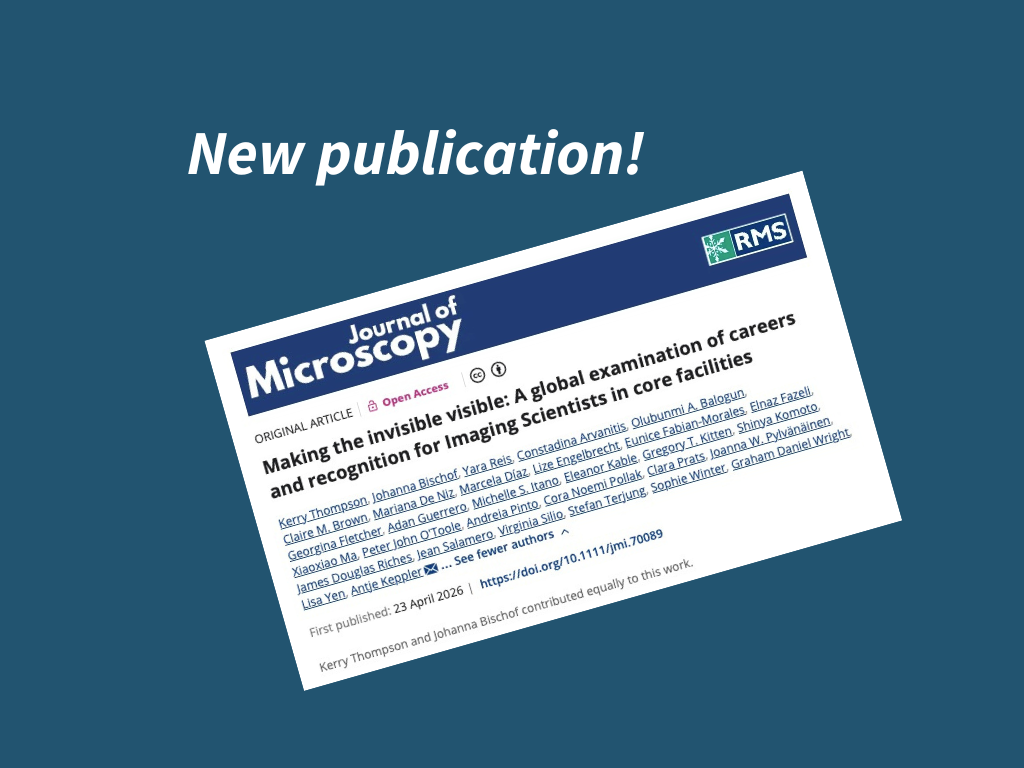
A new publication from the Global BioImaging community sheds light on the career paths, recognition, and working conditions of imaging scientists worldwide—offering both critical insights and practical recommendations to strengthen this essential workforce.
Developed through the Global BioImaging Working Group on Career Paths for Imaging Scientists, the study brings together an international author team representing imaging infrastructures and networks across the globe. It is based on one of the largest international survey datasets of its kind, capturing the experiences of imaging scientists working in core facilities and research infrastructures across multiple regions.
Euro-BioImaging Nodes and the Hub team played an active role in shaping this work, both through contributions to the Working Group and strong participation in the underlying survey. In particular, colleagues from BioImagingUK, the Finnish Advanced Microscopy Node, Danish BioImaging, France BioImaging, and the EMBL Node contributed their expertise and perspectives.
Interconnected challenges shaping careers in imaging
The study provides a detailed picture of the professional landscape for imaging scientists, highlighting both the diversity of roles and the structural challenges many face.
A central finding is the strong interconnection between career progression, professional recognition, and funding structures. Imaging scientists often operate at the interface of research, technology development, user support, training, and data analysis. Despite this broad and highly specialised contribution, their roles are frequently not clearly defined within institutional career frameworks.
“Through this global effort, we see a clear and consistent message from the community: recognition, career development, and funding structures for imaging scientists are deeply interconnected—and need to be addressed together. The strength of this work lies in the shared evidence across regions, which we hope will help inform more sustainable approaches and support at the level of institutions, infrastructures, and funders.”
- Johanna Bischof, Head of Bio-Hub Operations and Co-Chair of the Global BioImaging Career Path WG
Survey responses point to several recurring challenges:
Limited visibility and recognition, particularly in relation to authorship and acknowledgment in scientific publications
Unclear or fragmented career pathways, especially for staff scientists and facility-based roles
Dependence on short-term or project-based funding, affecting job security and long-term planning
High diversity of responsibilities, often without corresponding career structures or evaluation criteria
Importantly, the study shows that these challenges are not isolated. They reinforce each other—for example, lack of recognition can limit career progression, which in turn affects the ability to secure sustainable funding for positions and facilities.
At the same time, the dataset highlights the strength and impact of imaging scientists’ contributions, from enabling cutting-edge research to training users, developing methods, and advancing data analysis practices.
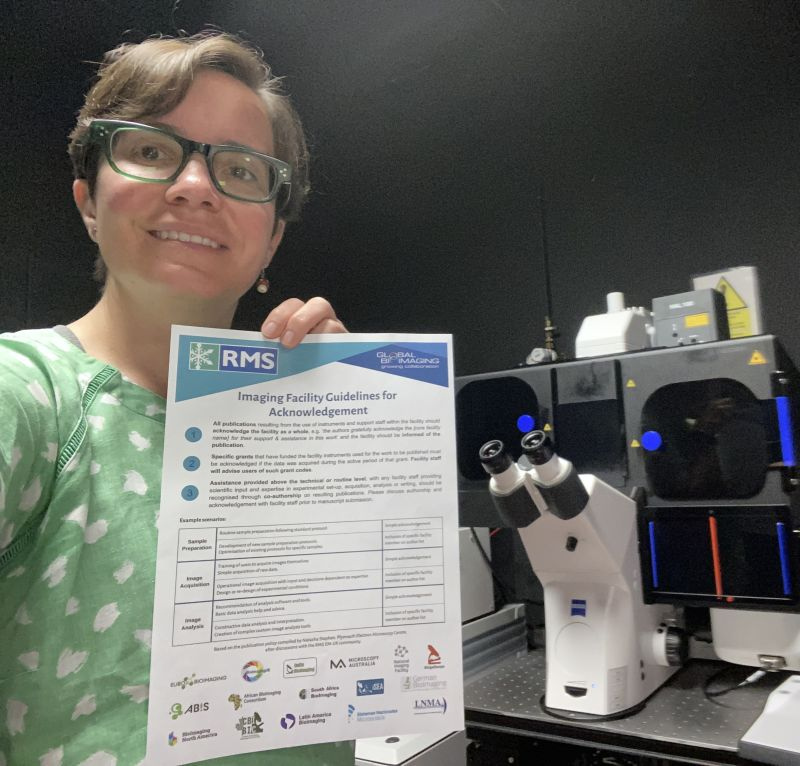
Marie Held of Euro-BioImaging's UK Node proudly displays the Acknowledgment poster.
From community insights to practical recommendations
Building on these findings, the publication outlines a set of practical, community-driven recommendations aimed at institutions, funders, and research infrastructures.
These include:
Strengthening recognition practices, including clear authorship and acknowledgment guidelines
Developing structured and transparent career pathways for imaging scientists and facility staff
Supporting long-term, sustainable funding models for roles embedded in research infrastructures
Increasing visibility of imaging scientists’ contributions to research, innovation, and training
The study is accompanied by a fully open dataset, providing a valuable resource for further analysis, benchmarking, and evidence-based policy development.
A collaborative effort across the global imaging community
This publication reflects a truly collaborative effort across the Global BioImaging network, bringing together perspectives from different regions, infrastructures, and professional contexts.
The strong engagement of Euro-BioImaging Nodes and the Hub team highlights the active role of the European community in these discussions, while contributing to a broader international exchange of experiences and best practices.
By combining global evidence with community expertise, the study contributes to ongoing efforts to better support imaging scientists and to strengthen the sustainability of imaging facilities worldwide.
Building sustainable careers for the future of imaging
As imaging technologies continue to advance and play an increasingly central role in biological and biomedical research, the need for skilled, recognised, and well-supported imaging scientists is greater than ever.
This study provides an important step towards that goal—offering both a clearer understanding of current challenges and a roadmap for building more sustainable and rewarding career paths across the global imaging community.
Meet Nina: Connecting Biology, Physics and People through Bioimaging
As part of our series highlighting the scientists behind the Euro-BioImaging Nodes, our Scientific Ambassador, Prasanna Padmanaban met with Dr. Nina Glöckner Burmeister,…
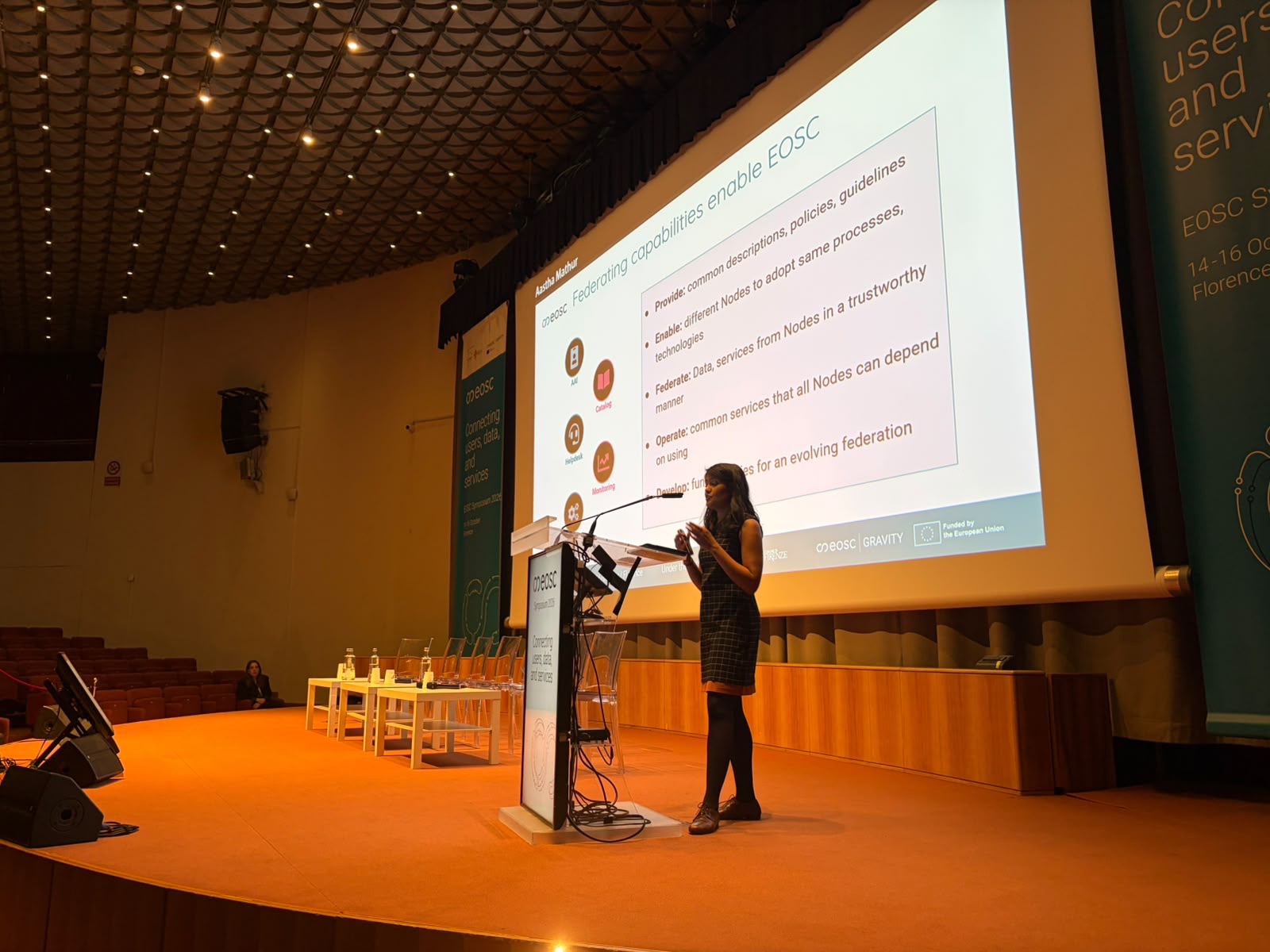
The EOSC Symposium 2026 took place from October 14-16, in Florence, Italy. More than 500 participants from 35 countries gathered there, including Euro-BioImaging’s…