
October 12, 2026
EVOLVE Mentoring Programme 2026: Building connections across the imaging community
The second edition of the EVOLVE Mentoring Programme has come to a close, marking the end of several months of mentoring, knowledge exchange…



Chronic intake of high amounts of fructose has been linked to the development of metabolic disorders caused by the almost complete clearance of fructose by the liver. However, direct measurement of hepatic fructose uptake is complicated by the fact that the portal vein is difficult to access.
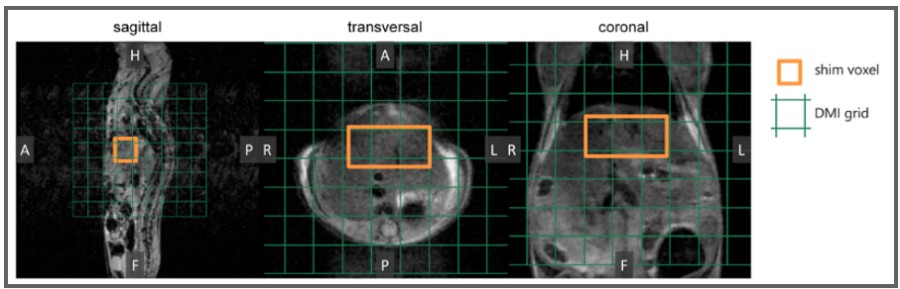
Dr. Arjan Hendriks, from the University Medical Center Utrecht, applied for access at the PRIME Node to explore the opportunities and potential effectiveness of different deuterated compounds to map body metabolism with deuterium metabolic imaging (DMI), and thanks to the data obtained during this access he developed a new, non-invasive method to measure hepatic fructose uptake and metabolism, based on administration of [6,6’-2H2]fructose followed by DMI.
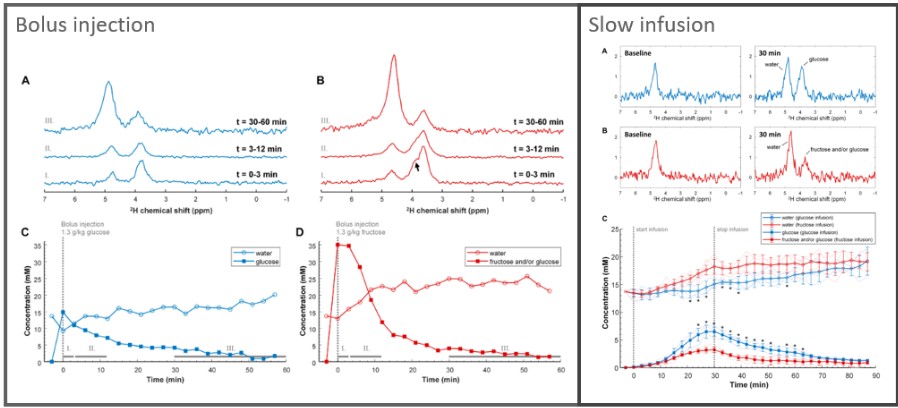
The application of this method in mice showed a higher extraction and faster turnover of fructose in the liver, as compared with glucose. Furthermore, comparing high concentration bolus injections with a slow low concentration infusion gave more insight into the fructose build up in the liver as compared to glucose. DMI with [6,6’-2H2]glucose and [6,6’-2H2]fructose could potentially contribute to a better understanding of healthy human liver metabolism and aberrations in metabolic diseases.
This is an example of research that can be supported by the Euro-BioImaging’s PRIME Node.
The Dutch Preclinical Imaging Center PRIME – Molecular Imaging Node is a dual-sited Node that consists of the Preclinical Imaging Centre (PRIME), Radboud University Nijmegen, and the Intravital Microscopy Facility (IMF), Hubrecht Institute, Utrecht. This Node is a centralized facility for multimodality imaging of small animals, such as mice and rats. PRIME is the only centre in the Netherlands where more than four imaging modalities for small animal imaging are housed under one roof in one facility. The intravital microscopy laboratory offers advanced genetic mouse models and has heavily invested in state-of-the-art imaging of small animals using multiphoton microscopy. PRIME functions as single-site facility for small animal imaging with state-of-the-art equipment and expertise for magnetic resonance imaging (MRI), positron emission tomography (PET/CT), single photon emission computed tomography (SPECT/CT), intravital multi-photon fluorescence imaging (MPFI) and high frequency ultrasound imaging (HFUS).
October 12, 2026
The second edition of the EVOLVE Mentoring Programme has come to a close, marking the end of several months of mentoring, knowledge exchange…

October 8, 2026
This September, Euro-BioImaging was part of the Data Stewardship goes Germany (DSgG) Community Meeting in Cologne. Under the theme “from going to…

October 7, 2026
On 28–29 September 2026, the growing French volume electron microscopy (vEM) community came together in Bordeaux for the first France VolumeEM Scientific Days.