March 26, 2026
Welcome, MAdMiC Node!
The Madrid Advanced Microscopy Center (MAdMiC) is the first Euro-BioImaging Node in Madrid (Spain). It is formed through the collaboration and close work of…



Euro-BioImaging’s Advanced Microscopy and Molecular Imaging (AMMI) Node is a single-sited mixed Node centrally located in Maastricht, in the south of the Netherlands. The Node focusses on offering and developing the complete pipeline of microscopic and pre-clinical imaging. To that end, it combines advanced light microscopy, electron microscopy, and mass spectroscopy-based molecular imaging with high-end, non-invasive (bio)medical imaging technologies like PET and CT. Traditionally focussed on biomedical research questions, in the past few years and thanks to collaboration opportunities fostered within Euro-BioImaging, they play an active role in a growing network of innovation and collaboration for multimodal plant imaging and agronomy. We spoke to Marc van Zandvoort, Head of AMMI Node, Bernhard Schäfl, Senior Researcher in the field of deep learning and visual computing at VRVis, part of Austrian BioImaging/CMI Node, and Luigi Pinto, an Agronomist/Mechanical Engineer at BF Educational, to learn more about the technology development projects that bring them together across disciplines.
“This has been a really intense collaboration,” explains Marc. “Starting with the PETAL project and Euro-BioImaging’s Plant Imaging Expert Group, that I founded together with Prof. Nicola d’Ascenzo from BF Educational in Italy, we were able to develop great collaboration patterns, starting with online meetings and extending to in person visits to the various sites. This became possible thanks to funding from the PETAL project - but also from the EIC grant RE-IMAGINE-CROPS and the Euro-BioImaging/EVOLVE project. Mobility is crucial to establishing good collaboration pipelines - on an individual level but also on an institutional level.”
“The mobility ... makes the collaboration so much more interesting and effective, leaving your safe haven and looking closely at the methods of others.”
-- Marc van Zandoort, Head of AMMI Node
In collaboration with a large consortium that includes members from France, Italy, the Netherlands, Austria, Germany, and Finland, the goal is to develop ground-breaking new imaging equipment that combines PET and Multiphoton (MP) Endoscopy in one portable machine that can be used in the fields.
Among the many scientific questions the consortium wants to address is: Can chemical-free seed coatings be useful to agriculture? To answer this question, they are testing two different seed coatings in wheat plants - one of which is a chemical-free bio-based macrobiotic. The wheat plants are grown at BF Educational, in Jolanda di Savoia, Italy, where MRI/PET imaging for plants is available on site. While these techniques give macroscopic information at the entire plant level, MP endoscopy yields the essential cellular and subcellular status of the plant. The MP endoscopes are provided by the French Nodes, while at the AMMI Node the experimental procedures are set up. This is done by combining MP benchtop microscopy with MP endoscopy imaging, piloted by two talented postdocs in Marc's group Vytautas Kučikas and Mengyao Zhou.
However, imaging is not enough, especially under field conditions the challenge is to merge the MRI/PET data, which gives an overall view of the wheat plant in low resolution - with MP endoscopy data, which measures a very small part of the plant with high resolution. The difference in resolution and information level requires efficient data management and analysis protocols. That’s why VRVis, of the Austrian BioImaging/CMI Node, is part of the project. With its tremendous expertise in data analysis & visualisation, it overlays the data in a meaningful way using AI.
What I learned during my Euro-BioImaging/EVOLVE job shadowing visit at AMMI Node is just how much work it is to actually obtain the data from multiphoton endoscopy and microscopy. I learned the complexities of these imaging approaches and what can and cannot be measured by them.
-- Bernhard Schäfl, Senior Researcher in the field of deep learning and visual computing, VRVis
The project thus brings together researchers from various backgrounds - including image analysis, equipment engineering, and chemistry. While all partners are inspired by the novel nature of the project, the variety of different scientific backgrounds means they look at it from different perspectives.
“Before I started working on this project,” says Marc, “A leaf was a leaf, and grass was grass. But after looking at a dandelion leaf under my MP microscope I was awed. What I learned from visiting the greenhouses and fields at BF Educational with Nicola and Luigi was how complex plants are and how much variation they show and how many things you have to take into account when imaging them. When Bernhard came to visit me in Maastricht, I learned a lot about what is needed for AI analysis of data. It’s been very, very interesting.”

Luigi Pinto, BF Educational
Indeed, in the past year, Marc, his postdocs Vytautas and Mengyao, and Bernhard travelled to BF Educational in Italy, while Bernhard and Luigi travelled to Maastricht. The visits of Bernhard and Luigi to Maastricht partly overlapped to stimulate the collaboration. These periods of intense exchange have led to facilitated workflows, a greater understanding of each other’s work and challenges, and even set the stage for new institutional collaborations between Maastricht University and BF Educational.
“As an AI/deep learning specialist, my role is to extract information from visual data, like images and volumes, in order to tell what’s going on. Also, reconstructing 3D volumes from a collection of 2D images is part of my work,” explains Bernhard. “In order to do so, I need a lot of data. What I learned during my job shadowing visit at AMMI Node is just how much work it is to actually obtain the data from multiphoton endoscopy and microscopy. I learned the complexities of these imaging approaches and what can and cannot be measured by them. Operating the machines requires a lot of knowledge and experience, you really need to know what you want to do, and what you want to see in the end. This already starts with preparing the sample to be imaged. By joining these processes myself I understood the complexities of the workflow and what it all entails. Generally, understanding the challenges from the domains of other people helps you to collaborate in a better way.”

Luigi Pinto, BF Educational
“From my perspective, it’s important for every group to understand the challenges of the other group,” says Luigi. “At BF Educational, we grow wheat plants in experimental conditions - we function as a crucial link/bridge between science and the agricultural industry. Understanding where each partner comes from, we learn from each other - and in the end, we achieve better results.” By carrying out the sample preparation and imaging together with Mengyao and Vytautas and, vice versa, the visits of the Maastricht team to the site of Nicola d’Ascenzo and Luigi, significantly more understanding has arisen on all sides.
Via the strong collaborations we have established, we express our needs and merge interdisciplinary expertise to develop a technology that is really relevant for agricultural science.”
-- Luigi Pinto, Agronomist/Mechanical Engineer, BF Educational
Both PETAL and RE-IMAGINE-CROPS have built in mechanisms to foster collaboration. The Euro-BioImaging/EVOLVE job shadowing programme is another similar programme that Euro-BioImaging Node staff can leverage to learn best practices implemented at other Nodes. Mobility reinforces and facilitates working relationships, enabling collaborators to work more efficiently together. Marc, Luigi, and Bernhard’s collaboration is a perfect example of how mobility bears fruits.

Luigi Pinto, BF Educational
“In the last 15 years, a number of new technologies have been introduced to the agricultural sector. In many cases, the development work was done without the close collaboration of the agricultural sector - and uptake by farmers was minimal,” explains Luigi. “This project promises to be different. Via the strong collaborations we have established, we express our needs and merge interdisciplinary expertise to develop a technology that is really relevant for agricultural science.”

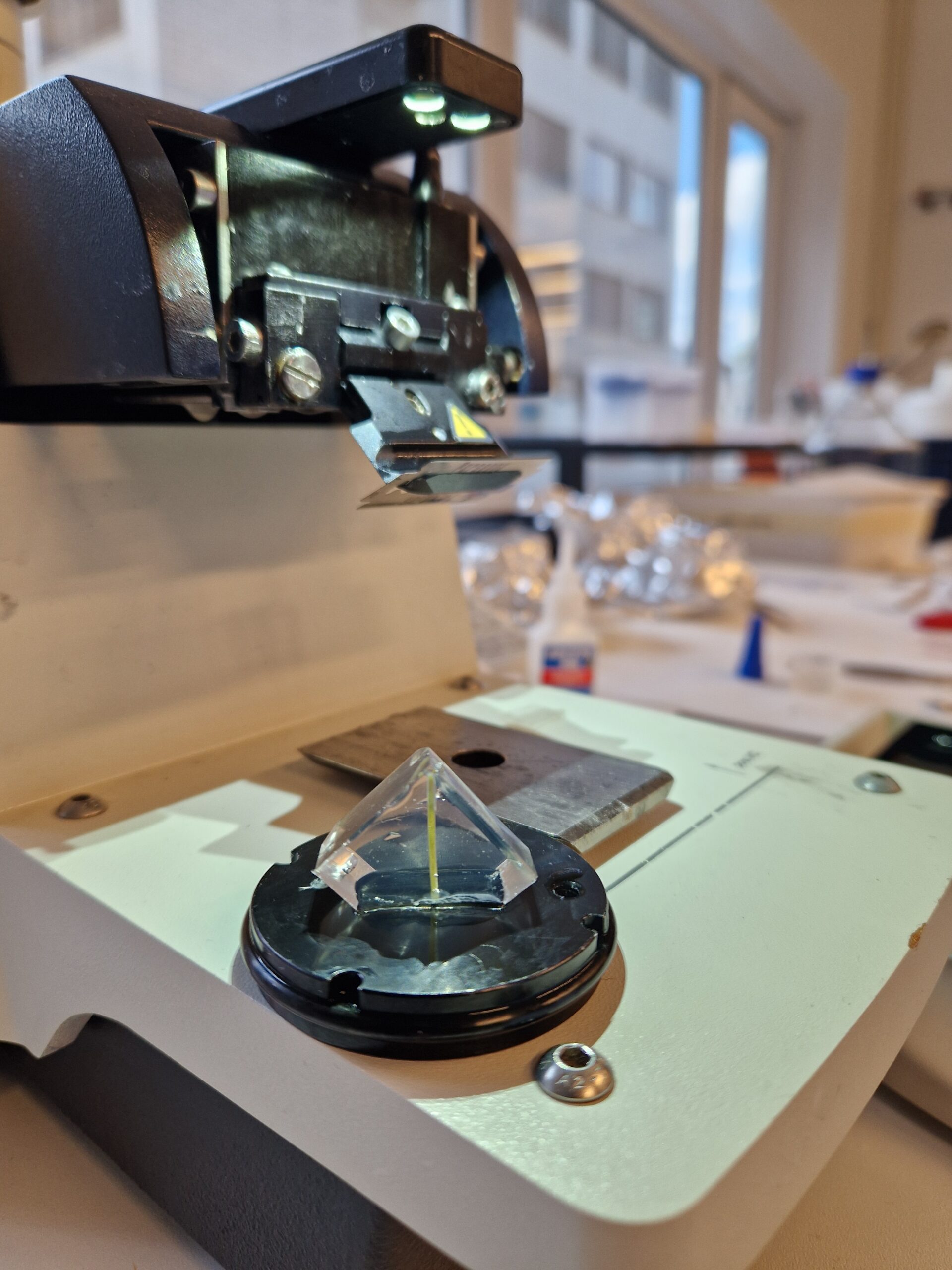
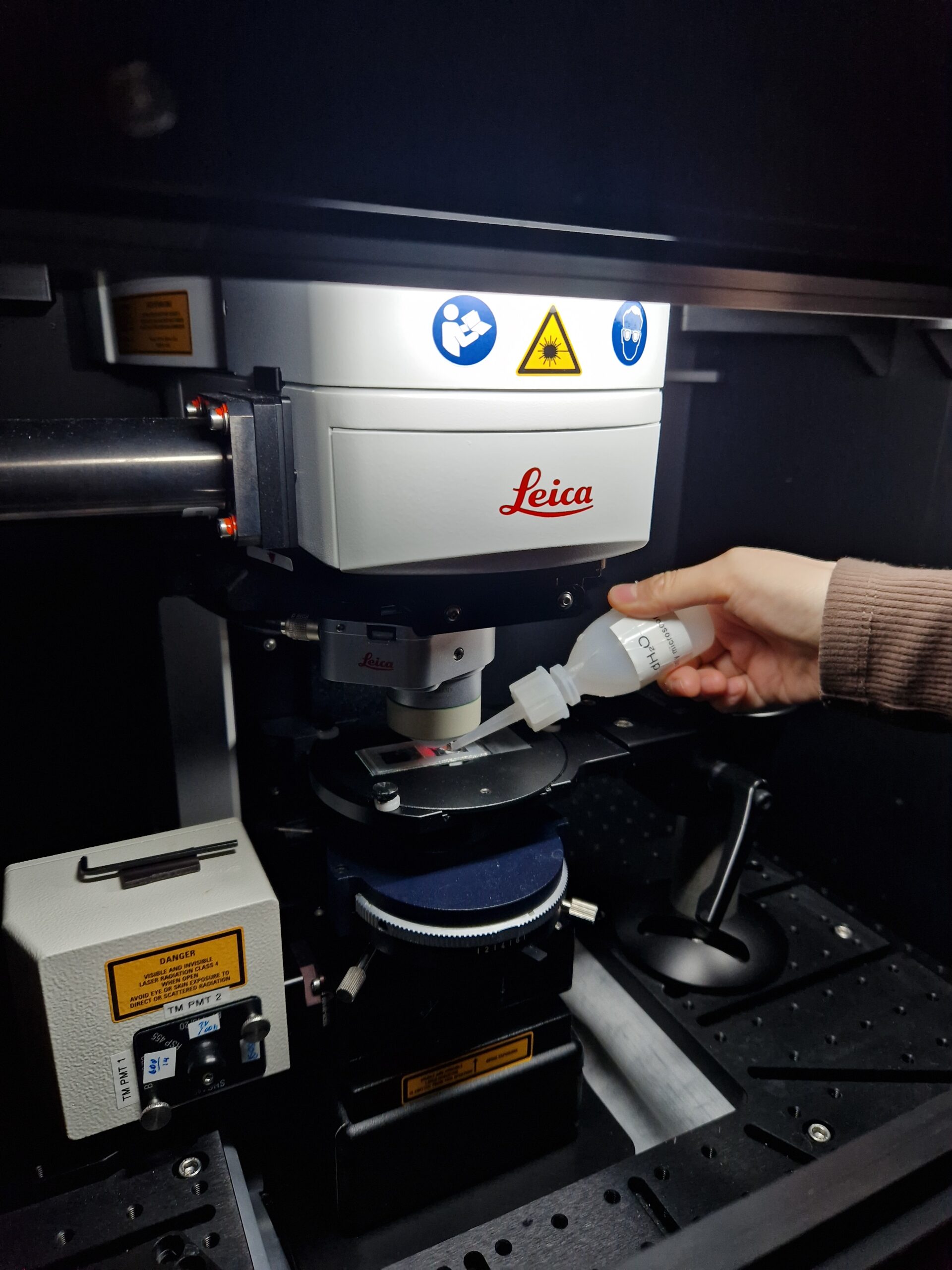
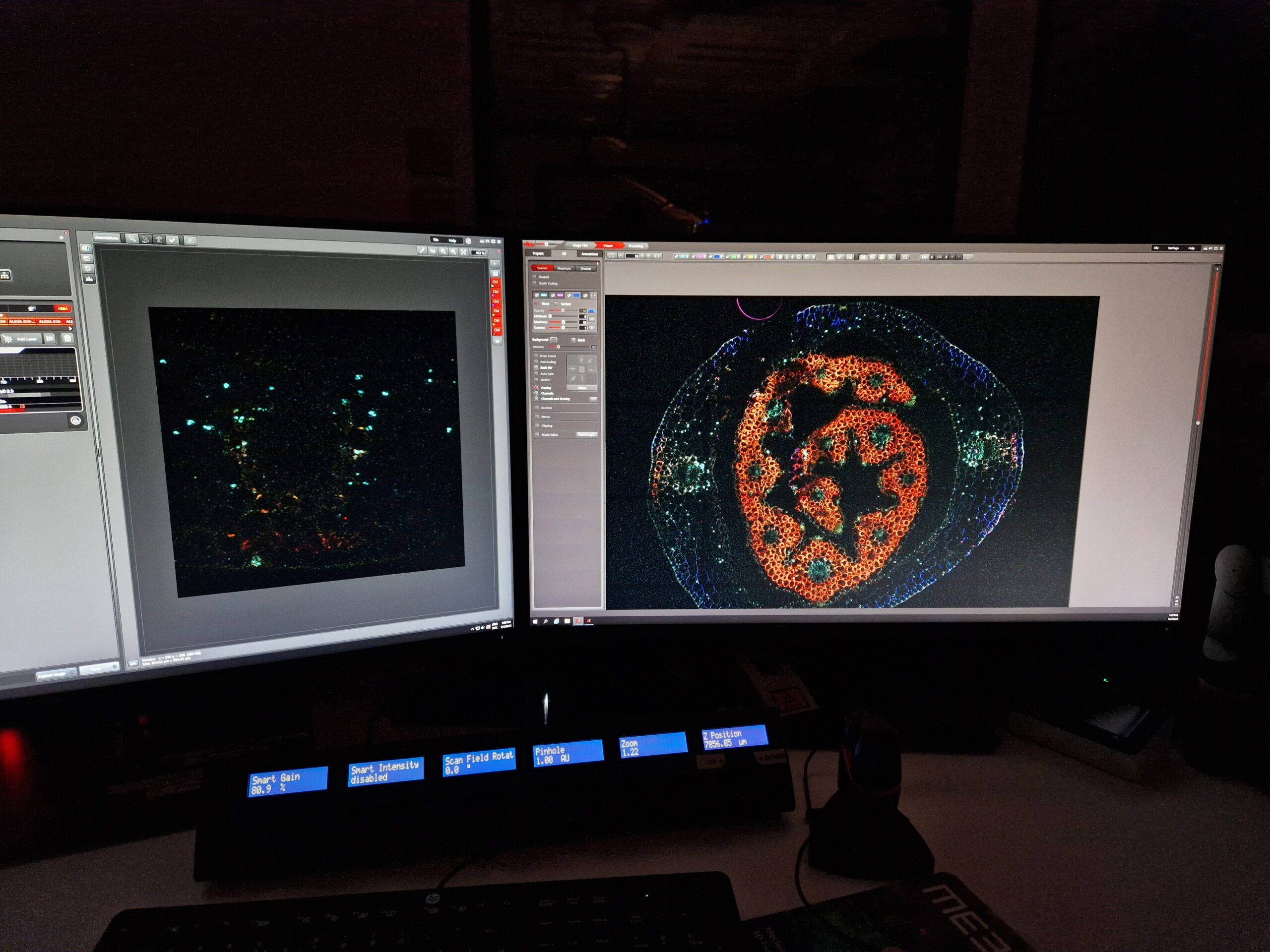
From left to right - Different growth phases of the same wheat seedlings, fixed and embedded tissues ready to be sliced, the Multiphoton microscope, and microscope visualisation of wheat leaves. Photos by Luigi Pinto, BF Educational
“Importantly, the collaborations amongst the partners in all projects is amazing and for me unprecedented,” says Marc. “The mobility stimulates that and makes the collaboration so much more interesting and effective, leaving your safe haven and looking closely at the methods of others.”
We look forward to exciting results. In the meantime, the strong collaborations that have emerged are already a success story.
Euro-BioImaging's Plant Imaging Expert Group brings together Imaging specialists from Euro-BioImaging Nodes and beyond, researchers applying plant imaging in their work as well as technology developers pushing the boundaries of the field. Everyone is welcome!
As coordinator of the RE-IMAGINE-CROPS EIC pathfinder project, Euro-BioImaging is excited to invite you to a two-day event to explore Precision Agronomy: Present and Future. The first day, dedicated to consortium members, is the RE-IMAGINE-CROPS 1st in person Annual Meeting, while the second day includes an AgroServ event organised by Euro-BioImaging which is open to all.
March 26, 2026
The Madrid Advanced Microscopy Center (MAdMiC) is the first Euro-BioImaging Node in Madrid (Spain). It is formed through the collaboration and close work of…
March 26, 2026
German BioImaging, within its work in the NFDI4BIOIMAGE consortium, and in collaboration with Euro-BioImaging ERIC, has launched a new survey to collect input about…
March 25, 2026
Turin, Italy – 20–22 October 2026 Early career professionals working in imaging core facilities will soon have the opportunity to strengthen essential skills beyond…