
October 12, 2026
EVOLVE Mentoring Programme 2026: Building connections across the imaging community
The second edition of the EVOLVE Mentoring Programme has come to a close, marking the end of several months of mentoring, knowledge exchange…



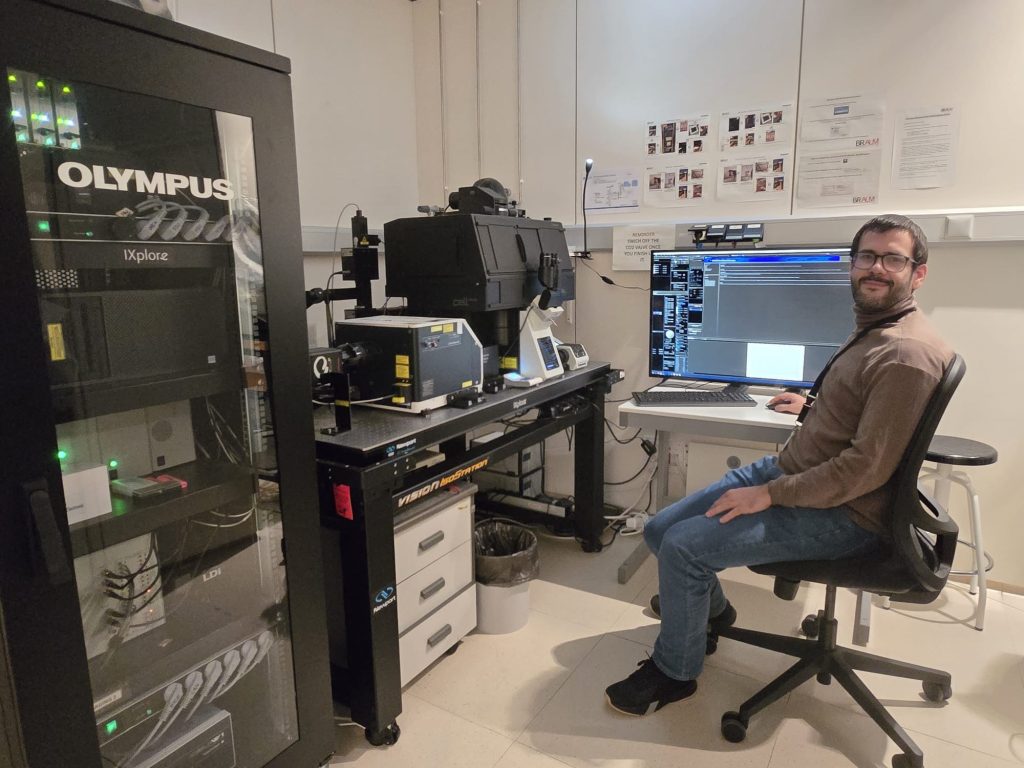
The Basque Resource for Advanced Light Microscopy (BRALM) is part of Euro-BioImaging since January 2024 and provides access to state-of-the-art advanced light microscopy equipment and image analysis resources. They offer over 20 different imaging technologies, including widefield, confocal, two-photon, atomic force microscopy, light-sheet and many more microscopes, paired with techniques such as FRET, FLIM, Expansion Microscopy, and many more. As experts, they are able to build custom microscopes, including a custom self-build STED microscope with the ability to perform super-resolution shadow imaging (SUSHI). One of the newest additions to their team is a very diversely-trained microscopy specialist named Diego Ramirez. As part of our ongoing series of interviews with Euro-BioImaging Node staff, our Scientific Ambassador, Rajiven Srikantharajah, sat down with Diego to learn about his pathway into the BRALM, his experience with Euro-BioImaging's Shadowing Programme and the borders between light and electron microscopy.
Article contributed by Euro-BioImaging Scientific Ambassador Rajiven Srikantharajah (Centro Nacional de Investigaciones Cardiovasculares (CNIC), Madrid, Spain)
Diego has studied and worked on as many subjects as there are microscopes are in the BRALM. Initially, he studied biotechnology in Salamanca and proceeded to do two masters, one in nanoscience (Donostia-San Sebastian) and one in bioinformatics (Barcelona). He secured internships in academia and industry and worked with multiple techniques, including mass spectrometry, flow cytometry and nucleic acid sequencing. After becoming a public servant in the Spanish system, he actively chose to work as a microscopy specialist at the BRALM. He has been working there for less than a year and has encountered many opportunities and challenges. Integrating into the new position was easy for him, and he is especially thankful for his past experiences even if they are, apparently, not directly related, enjoying the “good mentorship to guide you when entering” this new field and “meeting people across the institute to find” his place within the community.
For anyone entering the field of science, Diego recommends to “be curious and eager to learn from many disciplines. Science, especially microscopy, is highly interdisciplinary” and he adds to “enjoy what you do, even though it is not always easy.” Especially for upcoming microscopy specialists he reminds them, “Be prepared to work in darkness and enjoy the images. Biological structures can be incredibly beautiful.”
As he is keen to learn from many places, Diego applied for Euro-BioImaging´s own cross-node job shadowing programme (part of EVOLVE). In this unique programme, Node staff are encouraged to work with other Euro-BioImaging Nodes to learn and exchange ideas, discover new equipment, trade best practices/protocols, learn how other Nodes organize their service and analysis methods and build up new networks. In Diego's case he visited the Swedish node at SciLifeLab - a powerhouse for imaging. During his visit, he learned expansion microscopy and other innovative microscopy techniques. He reminisces what a “great experience both professionally and personally” it was. On the professional side, he learned a lot and improved the expansion microscopy technique at BRALM and on the personal side he expanded his network and exchanged experiences with fellow microscopy specialists. When asked if he can recommend it, he smiles and says: “Definitely. It is valuable both professionally and personally. It allows you to learn new techniques, build networks and exchange experiences.”
Currently, Diego optimises protocols and guides researchers and research groups by giving advice on how to perform experiments, given the many technical options and diverse range of equipment. While he is part of BRALM, he overlaps with the electron microscopy facility of the same node (BREM), so as to use light microscopy techniques to enhance or complement electron microscopy results. His favourite technique is currently STED microscopy. He explained “It is relatively fast, relatively simple to use, can be applied to living cells and be combined with techniques like FCS or FLIM.” Especially since it has “room for further development” he is excited about the future of the technique. To all users, he finally adds the importance of sample preparation. “Even if the microscope works perfectly, poor sample preparation can ruin the result, so you often have to repeat experiments many times,” he concludes.
October 12, 2026
The second edition of the EVOLVE Mentoring Programme has come to a close, marking the end of several months of mentoring, knowledge exchange…
October 8, 2026
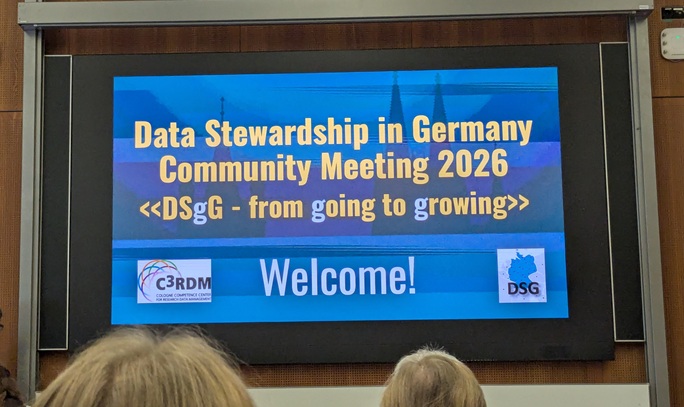
This September, Euro-BioImaging was part of the Data Stewardship goes Germany (DSgG) Community Meeting in Cologne. Under the theme “from going to…

October 7, 2026
On 28–29 September 2026, the growing French volume electron microscopy (vEM) community came together in Bordeaux for the first France VolumeEM Scientific Days.