
October 16, 2026
RAISE Hub: One gateway to Europe’s AI in Science Community
A new online platform to connect researchers, infrastructures, and funders to accelerate AI scientific discovery across Europe Dublin, Ireland, 15 October…



Melisa Özakçakaya is a PhD student at the Computational Imaging Laboratory (CIL) at Boğaziçi University in Istanbul, Türkiye. Her research uses magnetic resonance imaging (MRI) and magnetic resonance spectroscopy (MRS) to investigate the biochemical processes underlying disease. In 2026, Melisa received an Access Grant through Global BioImaging’s Imaging 4 All (i4A) initiative, funded by Wellcome. The grant enabled her to spend one month at Centre for Preclinical Imaging (CPI) at the University of Liverpool, part of Euro-BioImaging’s UK Node. Working with Professor Harish Poptani and his team, she explored advanced MR imaging approaches and investigated metabolic markers of ageing in the mouse brain using high-field in vivo ¹H-MRS (magnetic resonance spectroscopy). We spoke to Melisa about the experience, what she learned and the impact the visit is already having on her research and career.
When Melisa first heard about Imaging 4 All, she was preparing to begin the first year of her four-year PhD programme. She was already active in the international scientific community through the International Society for Magnetic Resonance in Medicine (ISMRM) and European Society for Magnetic Resonance in Medicine and Biology (ESMRMB), but she had never had the opportunity to go abroad for an extended research visit and carry out her own research project.
Melisa and her supervisor first met Professor Poptani at an ESMRMB conference in 2025 at Marseille, France. She was fascinated by his work in MRS and impressed by the advanced equipment available at CPI. She valued their scientific exchange at the conference, but did not imagine that she would one day spend a month working alongside his team in Liverpool.
Imaging 4 All turned that possibility into reality. The programme supports researchers and imaging professionals based in low- and middle-income countries to visit imaging facilities and laboratories around the world. Participants can conduct experiments, develop their imaging skills and gain valuable practical experience with technologies that may not be available at their home institutions.
Melisa learned about the programme from her PhD supervisor, who encouraged her to apply. Together with her supervisor and Professor Poptani, she worked carefully to develop and refine the proposal. In addition to opening the door to her research visit, the application process gave her valuable experience in grant writing.
“Imaging 4 All is a really great opportunity,” says Melisa. “As a PhD student, it gave me outstanding international experience, which is clearly pivotal for my career. I worked really hard on my application- and it paid off.”
During her month in Liverpool, Melisa was immersed in MR spectroscopy and involved in every stage of the experimental process. She attended imaging sessions alongside experienced members of the CPI team and was encouraged to ask questions, from the most fundamental to the most technically challenging.
Although she was not authorised to operate the scanner herself, Melisa contributed ideas to the experimental process, which the facility’s experts were able to implement on the system.
“This was a unique experience: combining access to high-field preclinical systems- together with the experts who know how to use them. This is not something that’s easy to find,” Melisa reflects.
Spending extended periods alongside an MRS expert gave her a much deeper understanding of the complete workflow, from setting up imaging protocols to interpreting the resulting data. It also allowed her to see how decisions made during image acquisition can influence subsequent analysis and scientific conclusions.
The visit was equally important on a personal level. For the first time, Melisa was living and working independently in another country, adapting to a new research environment and experiencing a different way of working.
“Imaging 4 All is a really great opportunity. As a PhD student, it gave me outstanding international experience, which is clearly pivotal for my career. I worked really hard on my application- and it paid off.”
-- Melisa Özakçakaya, PhD student, Computational Imaging Laboratory (CIL), Boğaziçi University
This gave her a clearer idea of what it would be like to join a new research group and undertake studies in an unfamiliar setting. At the same time, she felt warmly welcomed by the CPI team, who supported her professionally, showed her around Liverpool and shared suggestions for exploring the city during her free time.
The experience is already influencing Melisa’s day-to-day research. Her time at the scanner has given her a much stronger grasp of the MRS workflow and a clearer understanding of how imaging protocols affect the data she analyses. This practical insight is also helping her engage more critically with the scientific literature.
Building on the experiment she worked on in Liverpool, Melisa submitted an abstract to the MRS Workshop 2026: Where East Meets West for Metabolic Imaging taking place in Türkiye in October 2026. Attending the workshop has long been one of her ambitions, and she hopes the abstract will provide another opportunity to present her work and connect with the international MRS community.
For Melisa, the Imaging 4 All grant offered much more than access to advanced technology. It gave her practical expertise, international experience and greater confidence at an important stage of her scientific career.
From the facility perspective, the visit was also a nice experience. As Professor Poptani said, “It was great to host Melisa through the I4a exchange program. As a shared research facility, the Centre for Preclinical Imaging at the University of Liverpool is open to researchers wanting to use our cutting edge preclinical imaging technologies and share our expertise. We recognise that such facilities may not be available in resource-limited countries and as such we are even more motivated to help budding scientists like Melisa achieve their goals.”
The i4a initiative demonstrates how access to open imaging facilities—and to the specialists who operate them—can create opportunities whose impact continues long after a research visit has ended.
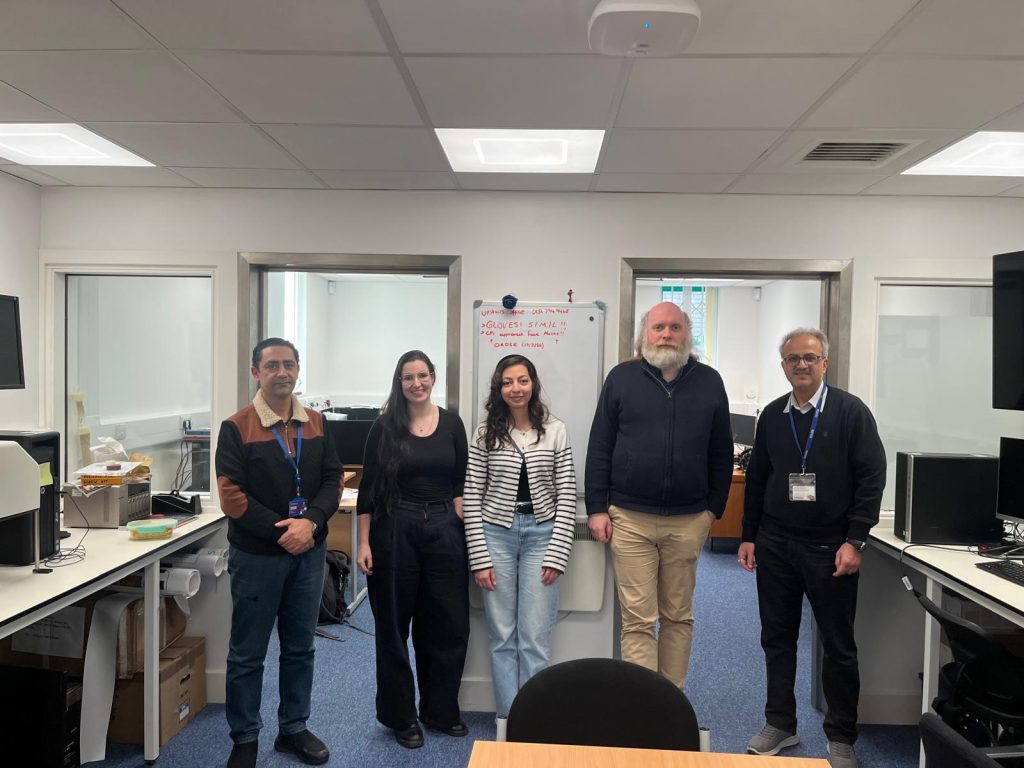
A picture of Melisa at the facility with the CPI team (photo originally published on the Boğaziçi University website)
October 16, 2026
A new online platform to connect researchers, infrastructures, and funders to accelerate AI scientific discovery across Europe Dublin, Ireland, 15 October…
October 16, 2026
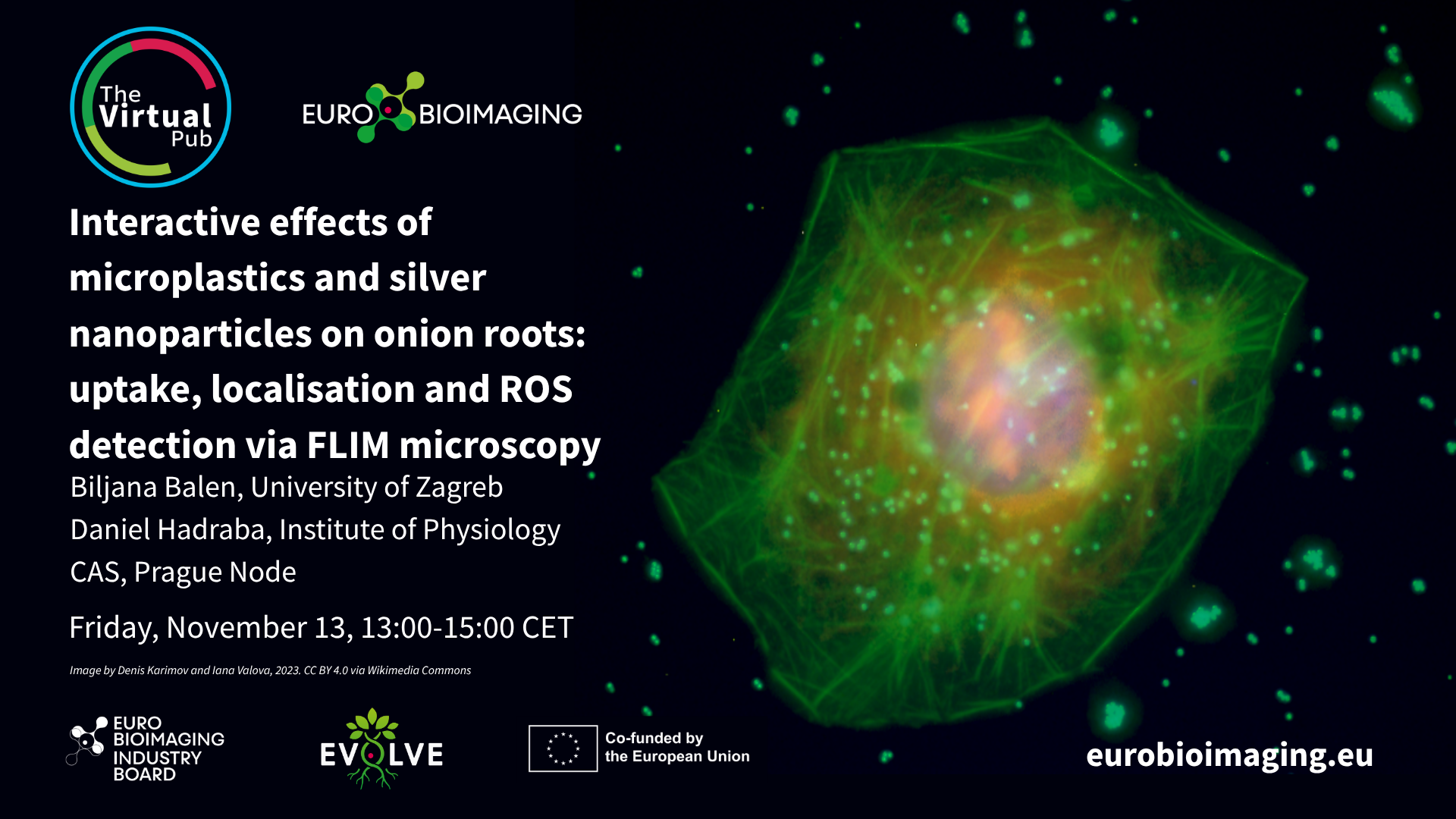
At the Special Edition Virtual Pub, “Imaging Micro- and Nanoplastics,” Euro-BioImaging users, Node experts and Industry partners will explore how advanced microscopy, clinical…
October 16, 2026
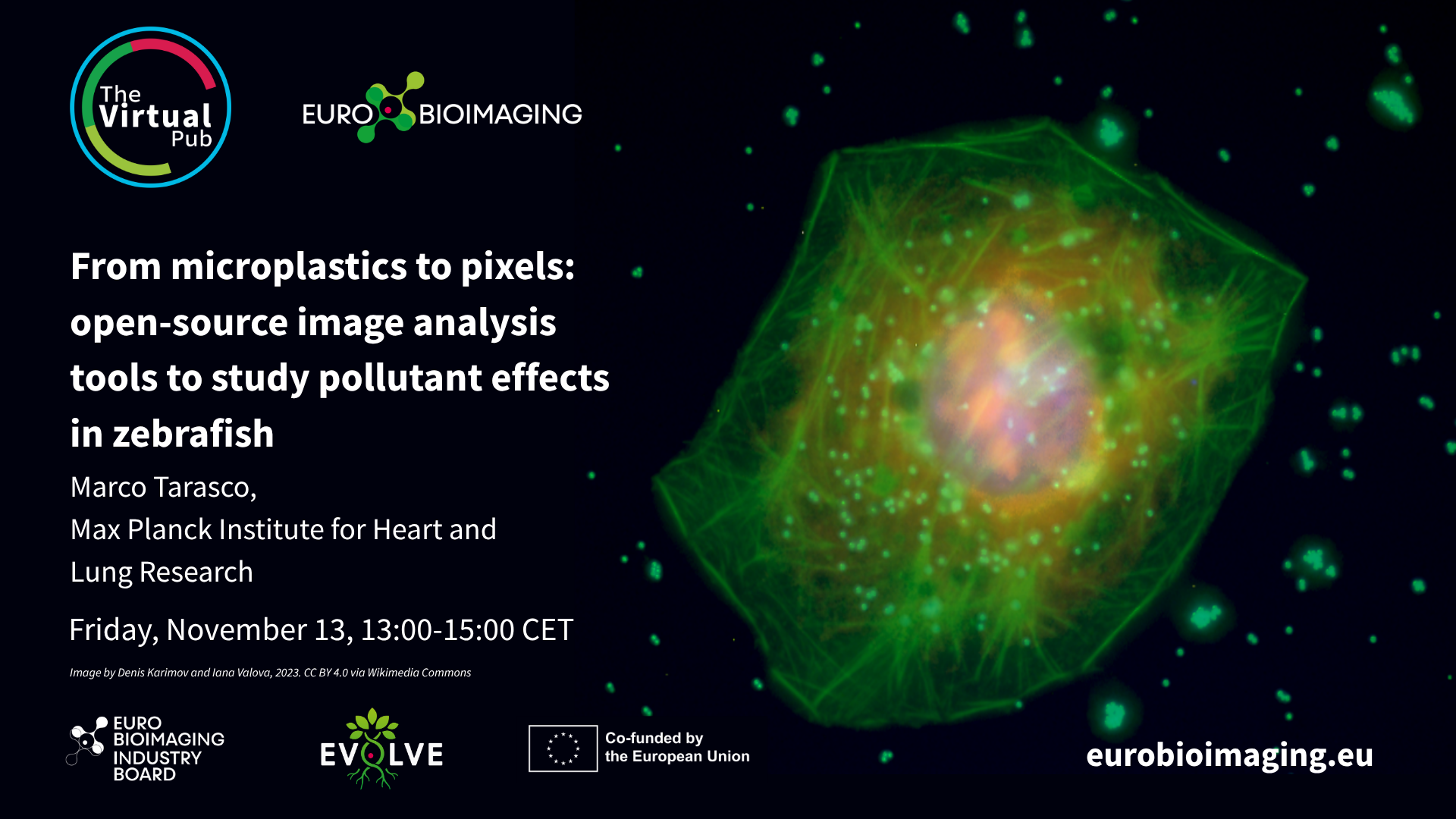
At the Special Edition Virtual Pub, “Imaging Micro- and Nanoplastics,” Euro-BioImaging users, Node experts and Industry partners will explore how advanced microscopy, clinical…