
October 16, 2026
RAISE Hub: One gateway to Europe’s AI in Science Community
A new online platform to connect researchers, infrastructures, and funders to accelerate AI scientific discovery across Europe Dublin, Ireland, 15 October…



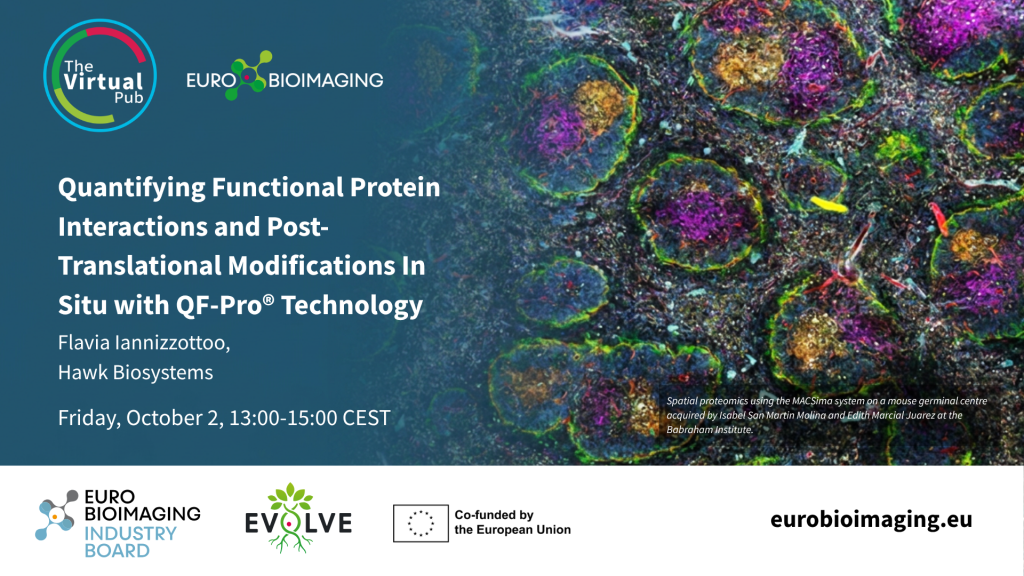
Spatial proteomics is rapidly transforming the way researchers study complex biological systems. To explore the latest developments in this fast-moving field, Euro-BioImaging is organising a Special Edition Virtual Pub dedicated to Spatial Proteomics on Friday, October 2, from 13:00–15:00 CEST, bringing together experts from academia and industry.
At this event, Flavia Iannizzottoo, Hawk Biosystems, will explore how QF-Pro® Technology complements the spatial proteomics toolbox.
Quantifying Functional Protein Interactions and Post-Translational Modifications In Situ with QF-Pro® Technology
By: Flavia Iannizzottoo, Hawk Biosystems
Spatial proteomics technologies have transformed our ability to map protein expression and localization within complex tissue architecture. Yet expression and localization alone do not reveal whether a protein is functionally engaged in the interactions or modification states that actually drive biological activity.
QF-Pro® Technology, developed by Hawk Biosystems, complements the spatial proteomics toolbox by adding a functional layer: a quantitative readout of protein-protein interactions (PPIs) and post-translational modification (PTM) states in situ, in fixed cells and formalin-fixed paraffin-embedded (FFPE) tissue. Built on an amplified FRET-FLIM detection principle, and run on the dedicated Violet 3.0 instrument, QF-Pro® Technology generates the QF-Pro® Score, a FRET efficiency percentage that reflects the degree of functional engagement between two protein partners, or the functional state of a modification such as phosphorylation.
Currently available for research use only (RUO), QF-Pro® Technology is being applied today across biomarker discovery and target validation, generating functional interactomics data that other spatial omics platforms cannot provide on their own. We will show how this RUO foundation is shifting toward translational applications: because QF-Pro® Technology runs independently of transcriptomic and proteomic workflows, it can be layered onto existing spatial omics pipelines as a complementary functional readout, supporting a path from functional biomarker discovery toward companion diagnostic development.
October 16, 2026
A new online platform to connect researchers, infrastructures, and funders to accelerate AI scientific discovery across Europe Dublin, Ireland, 15 October…
October 16, 2026
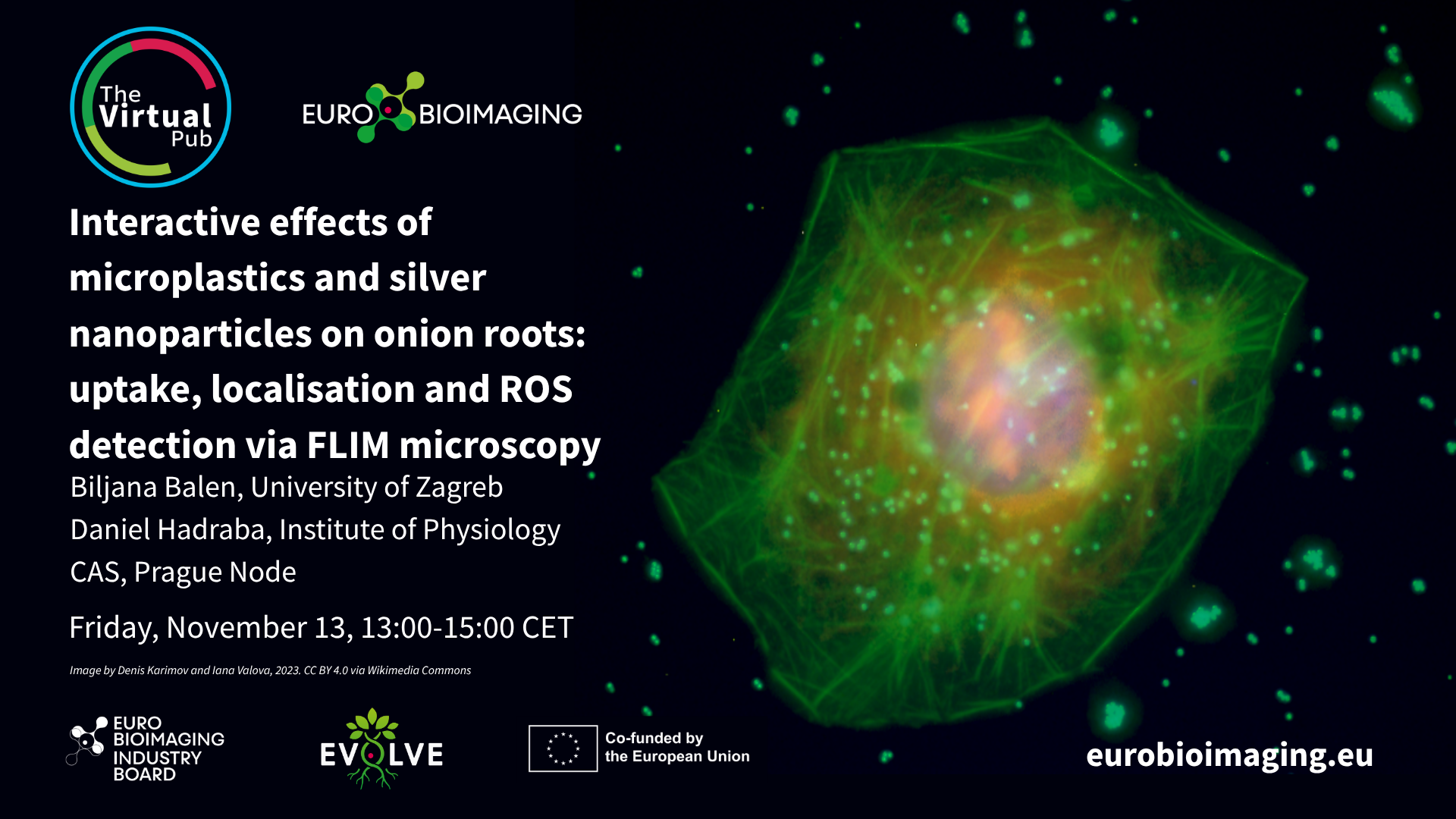
At the Special Edition Virtual Pub, “Imaging Micro- and Nanoplastics,” Euro-BioImaging users, Node experts and Industry partners will explore how advanced microscopy, clinical…
October 16, 2026
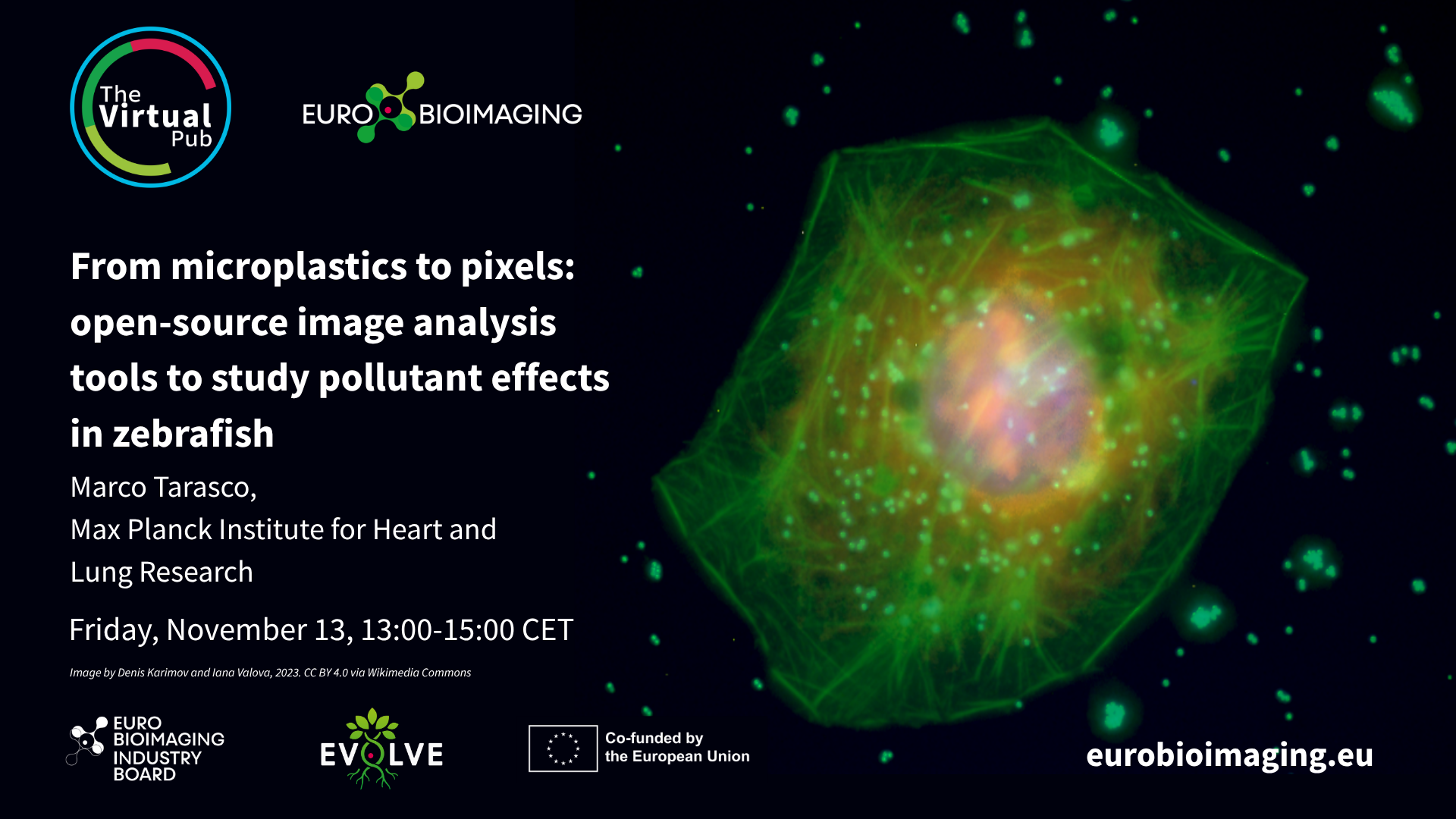
At the Special Edition Virtual Pub, “Imaging Micro- and Nanoplastics,” Euro-BioImaging users, Node experts and Industry partners will explore how advanced microscopy, clinical…