
October 16, 2026
RAISE Hub: One gateway to Europe’s AI in Science Community
A new online platform to connect researchers, infrastructures, and funders to accelerate AI scientific discovery across Europe Dublin, Ireland, 15 October…



Alzheimer’s Disease (AD) is the most prevalent cause of dementia and represents one of the most significant healthcare challenges of the 21st century. A major neuropathological hallmark of AD is the presence of extracellular amyloid-β (Aβ) plaques. However, there is no strong evidence that Aβ production is increased in late-onset AD, suggesting that the underlying problem lies instead in impaired Aβ clearance. The mechanisms responsible for Aβ clearance are currently under intense investigation. One possible pathway involves the elimination of soluble Aβ from the brain through transcellular transport across the blood–brain barrier and the blood–cerebrospinal fluid (CSF) barrier.
Dr. Salli Antila from the University of Helsinki investigated how sustained atrophy or hyperplasia of the dural lymphatic vasculature in transgenic AD mouse models affects CSF outflow and amyloid pathology. For this research, Dr. Antila received support from the Kuopio Biomedical Imaging Unit of the Finnish Biomedical Imaging Node, where anatomical MRI measurements were performed to monitor potential alterations in brain ventricular volume following manipulation of the dural lymphatic vasculature.
The study demonstrated that overall brain Aβ accumulation was not significantly influenced by the specific manipulation of the dural lymphatic vasculature. These findings indicate that multiple pathways regulate CSF drainage and can compensate for each other, emphasizing the need for further research to elucidate the mechanisms underlying Aβ accumulation.
Learn more here.
About the Finnish Biomedical Imaging (FiBI) Node
The Finnish Biomedical Imaging Node (FiBI) is a multi-sited, multimodal Node covering biomedical imaging from mouse to man. The spearhead imaging technologies of the FiBI Node include 1) preclinical and human PET imaging and PET tracer development, 2) preclinical high-field MRI, 3) magnetoencephalography (MEG), and 4) optical intravital imaging, coupled with a broad repository of imaging tracers and probes, numerous animal models from mice to pigs, and diverse stimulation systems for both animals and humans. The key expertise and main research applications focus on major challenges especially in cardiovascular and metabolic diseases, neuroscience, and cancer. With wide coverage of imaging modalities and expertise, the FiBI Node provides exceptional opportunities not only for basic research but also for translational research from small animals to larger animals to humans and to the clinic within a single Node.
October 16, 2026
A new online platform to connect researchers, infrastructures, and funders to accelerate AI scientific discovery across Europe Dublin, Ireland, 15 October…
October 16, 2026
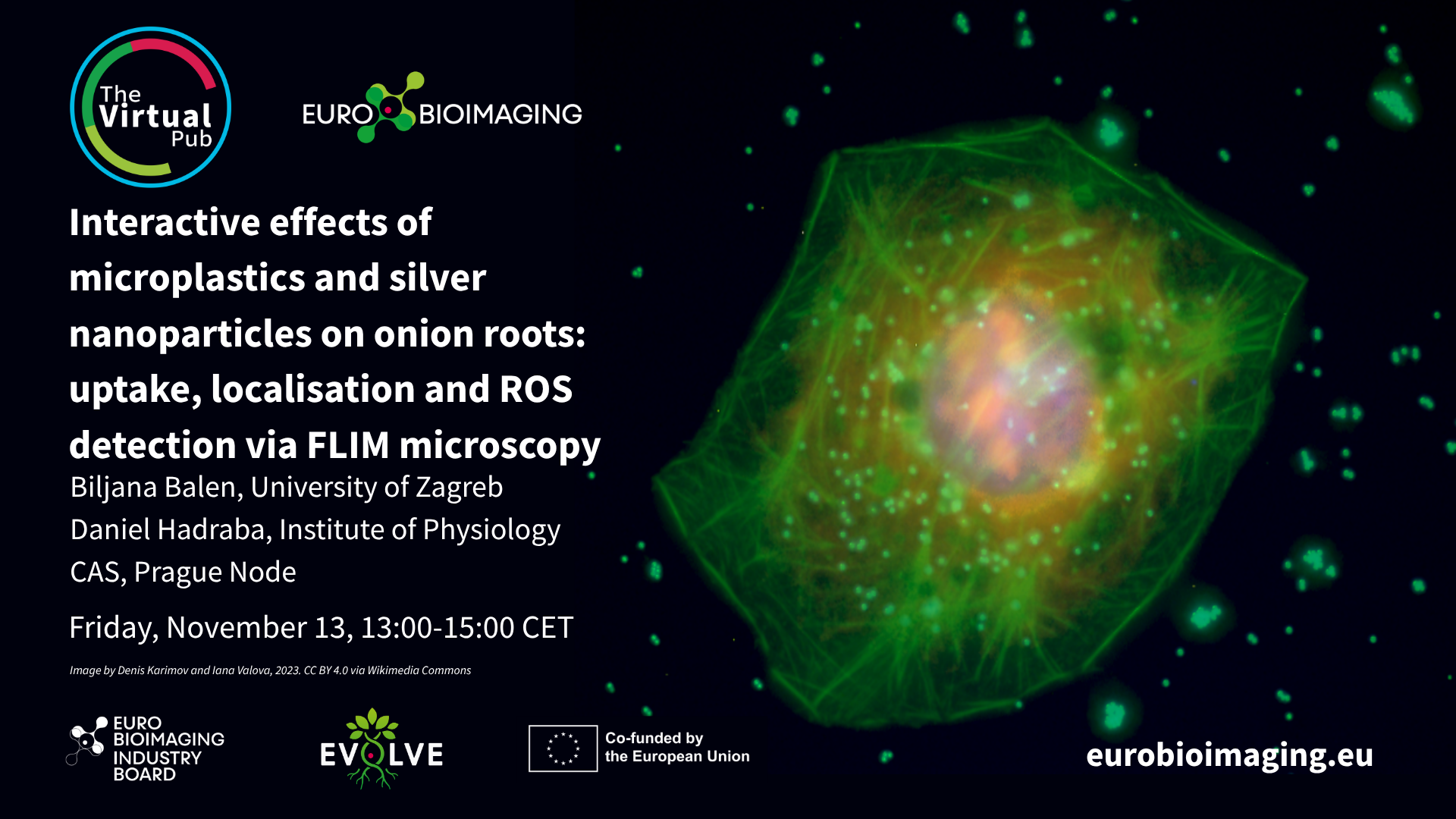
At the Special Edition Virtual Pub, “Imaging Micro- and Nanoplastics,” Euro-BioImaging users, Node experts and Industry partners will explore how advanced microscopy, clinical…
October 16, 2026
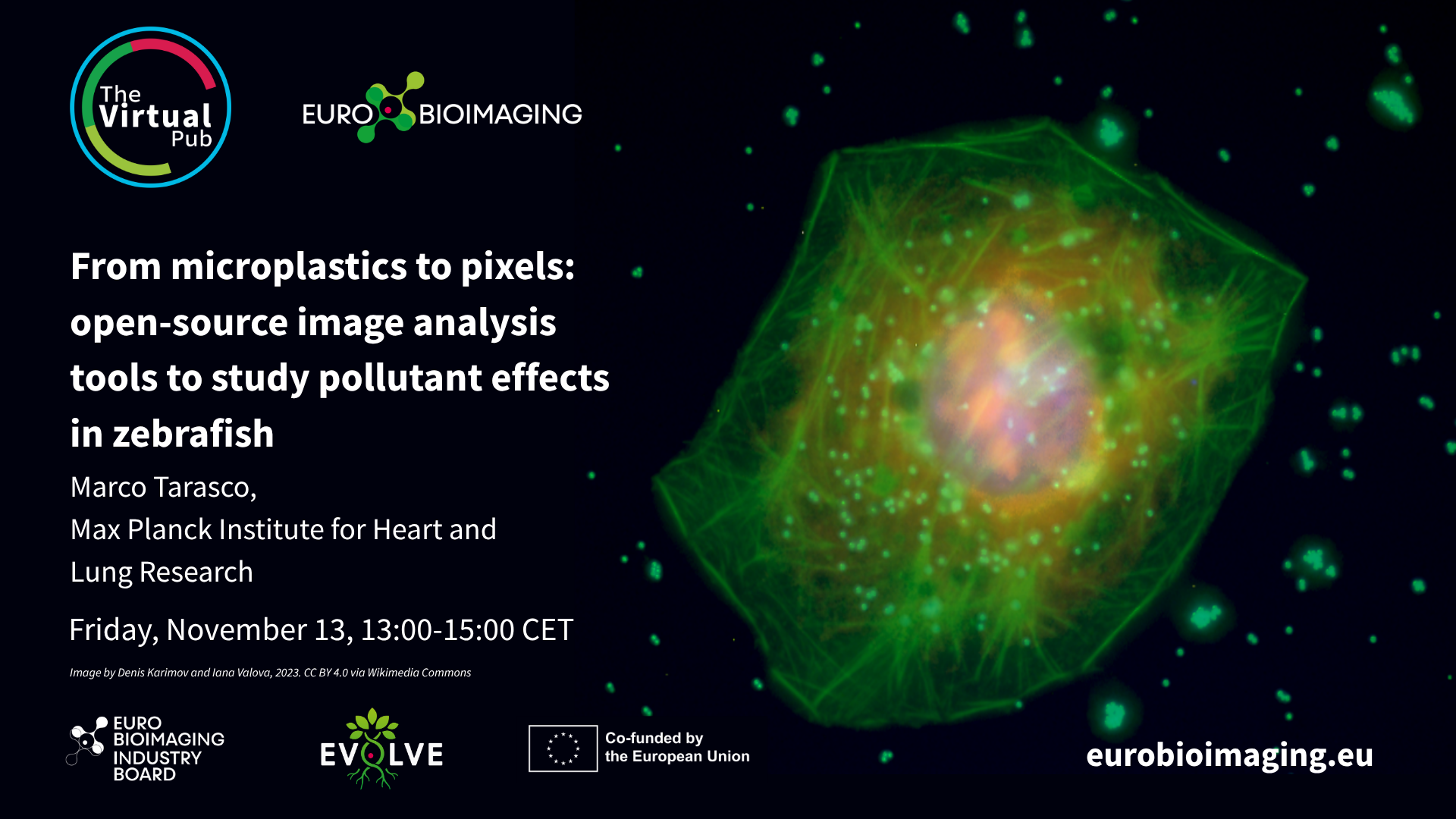
At the Special Edition Virtual Pub, “Imaging Micro- and Nanoplastics,” Euro-BioImaging users, Node experts and Industry partners will explore how advanced microscopy, clinical…