October 26, 2026
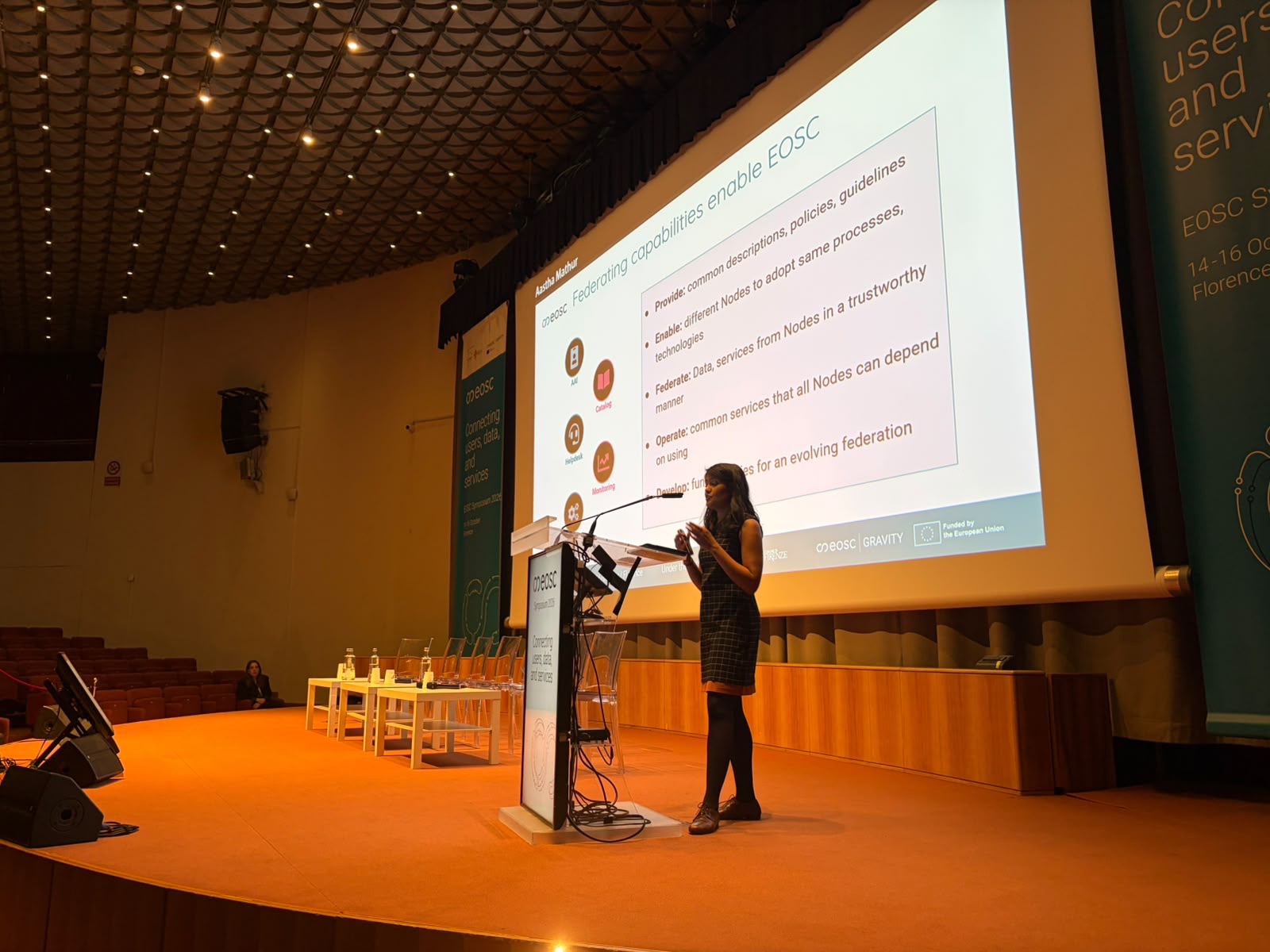
Euro-BioImaging at the EOSC Symposium
The EOSC Symposium 2026 took place from October 14-16, in Florence, Italy. More than 500 participants from 35 countries gathered there, including Euro-BioImaging’s…



The canSERV Annual Meeting, held in Brussels from 25–27 March 2026, brought together researchers, service providers, Research Infrastructures, policymakers, and patient representatives to reflect on the project’s impact and future directions. Alongside consortium-internal discussions on sustainability, communication, and next steps, the central highlight was the user-focused session, “Impact and Future Perspectives,” which showcased the tangible outcomes of canSERV-supported research.
Since its launch in 2022, canSERV (GA# 101058620) has seen strong demand for the more than 500 scientific services from Research Infrastructures (RI) that are offered to the cancer research community free of charge under this EU-funded transnational access program. Across eight open and challenge-driven calls, the project received 447 applications from 45 countries, spanning Europe and beyond. From these, 155 applications were granted, enabling access to 259 RI services, with a total budget allocation of €8.8 million. Notably, around 5% of users came from industry, highlighting the project’s relevance beyond academia.
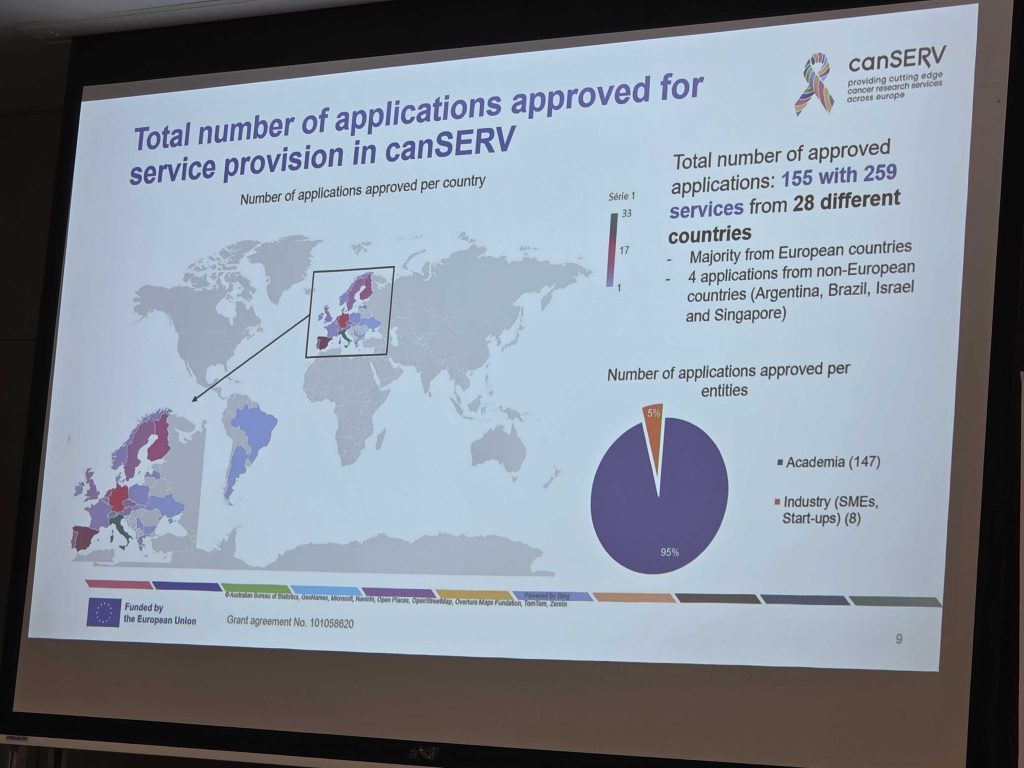
These numbers reflect more than access provision - they illustrate a growing, interconnected European cancer research ecosystem, brought together by coordinated access to RI services.
The user presentations highlighted the breadth and diversity of the canSERV community. Speakers ranged from early-career researchers and PhD students to established senior scientists, representing a wide geographical spread across all of Europe and addressing a broad spectrum of cancer types and research questions.
Projects spanned multiple stages of the cancer research pipeline, from fundamental discovery and novel treatment development to translational applications and clinical trial planning - including topics such as the role of bacterial toxins in bowel cancer development, predictive factors in hereditary cancers, biomarkers for metastatic colorectal cancer, and tools for early melanoma detection.
A key theme emerging across presentations was the integration of diverse RI services - often combining expertise and technologies across infrastructures to help the researchers address their complex scientific questions at levels that are not possible without this program.
Importantly, many users described canSERV support as “seed funding” that enabled them to generate preliminary data, strengthen collaborations, and position their work within larger research programmes. Several projects have already progressed to follow-up funding applications or continued use of RI services, demonstrating impact well beyond the initial access provision.
Even though only a fraction of the 155 supported projects were presented, the examples shared clearly illustrated the project’s role in fostering integration across the European Research Area (ERA), accelerating scientific progress, and enabling cross-border collaboration.
The session also provided valuable perspectives from both users and service providers, underlining the importance of close interaction between researchers and RIs in delivering high-quality, impactful science.
“What really stood out was the diversity of important cancer research that is supported by canSERV. It is incredibly rewarding to see how canSERV particularly supports early career researchers and those who do not have access to all the advanced technologies they need for their projects - helping them move their ideas forward. For many, this access is a crucial stepping stone, enabling new collaborations, follow-up funding, and shaping the direction of long-term research."
- Johanna Bischof, Head of Bio-Hub Operations, Euro-BioImaging
Euro-BioImaging has been a key contributor to canSERV, supporting a total of 48 user projects across a wide range of imaging technologies and scientific questions. The projects reflect the diversity of both the user community and the advanced imaging services available across Euro-BioImaging Nodes, from advanced microscopy to in vivo imaging.
Three of these projects were highlighted during the user meeting, illustrating how imaging is integrated into broader, cross-RI research workflows.
Maria Tsoumakidou (BSRC Alexander Fleming, Greece) presented work uncovering a novel activated cancer-associated pericyte (actCAP) state linked to lung tumor innervation. By combining services from INFRAFRONTIER ERIC, Instruct-ERIC, and Euro-BioImaging the project demonstrates the power of integrating complementary RI services to address complex biological questions. As part of the project Maria visited the Euro-BioImaging PPBI Node in Portugal to perform large-scale imaging of cleared lungs, receiving support for the sample preparation, imaging, and data handling.

Claudius Sebastian Mathy (Uniklinikum Erlangen, Germany) focused on the development of new imaging approaches for breast cancer, presenting a proof-of-concept study for Deuterium Metabolic Imaging (DMI) in human patients. Using MRI services at the Euro-BioImaging High Field MRI Node in the Netherlands, this work highlights the role of advanced MRI imaging in translational and clinical research. Learn more

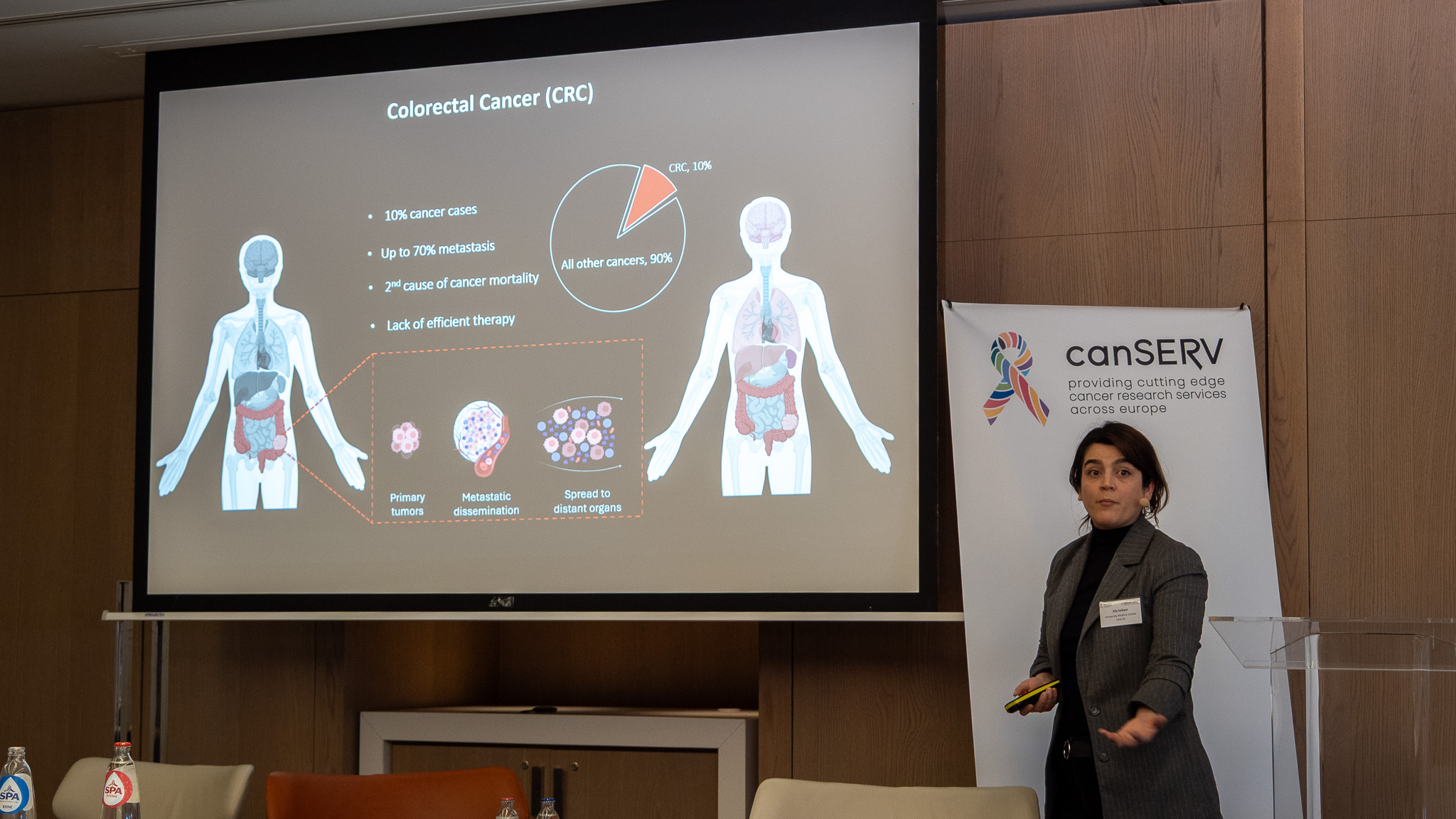
Elly Soltani (UMC Utrecht, Netherlands) explored the molecular and structural landscape of VEGFA-carrying extracellular vesicles in colorectal cancer. Her project combined Euro-BioImaging and Instruct ERIC services, including super-resolution imaging at the EMBL Node of Euro-BioImaging with proteomics services provided by the CEITEC Brno Centre of Instruct, to link molecular detail with structural insights.
Together, these examples highlight not only the scientific breadth of canSERV-supported projects, but also the importance of seamless access to integrated RI services in enabling new discoveries across the cancer research continuum.
The first day of the meeting also featured contributions from the European Commission, patient representatives, and representatives of the Cancer Mission Board, providing important context on policy developments and future priorities. These discussions fed into a roundtable on “The Future of the Cancer Mission and Europe’s Beating Cancer Plan, and the role of RIs and canSERV,” which brought together stakeholders from research, policy, patient organisations, and Research Infrastructures.
“Research infrastructures like Euro-BioImaging play a crucial role in the evolving European cancer research landscape. By working closely with initiatives such as the Cancer Mission, EUCAIM, CANDLE and UNCAN, and through projects like canSERV, we are helping to build a more connected and effective ecosystem - one that can support researchers across borders and disciplines, now and into the future,”
-- Ilari Pulli, Head of Operations at the Statutory Seat, Euro-BioImaging
The discussion emphasised the critical role of research infrastructures in enabling high-quality, accessible, and collaborative cancer research across Europe, and highlighted the importance of sustaining and building on initiatives like canSERV.
Overall, the canSERV Annual Meeting demonstrated the project’s clear impact in connecting researchers with cutting-edge RI services, supporting high-quality science, and strengthening collaboration across Europe. The user session, in particular, provided compelling evidence that access to integrated RI services not only advances individual projects but also contributes to a more cohesive and effective European cancer research landscape.
October 26, 2026
The EOSC Symposium 2026 took place from October 14-16, in Florence, Italy. More than 500 participants from 35 countries gathered there, including Euro-BioImaging’s…
October 26, 2026
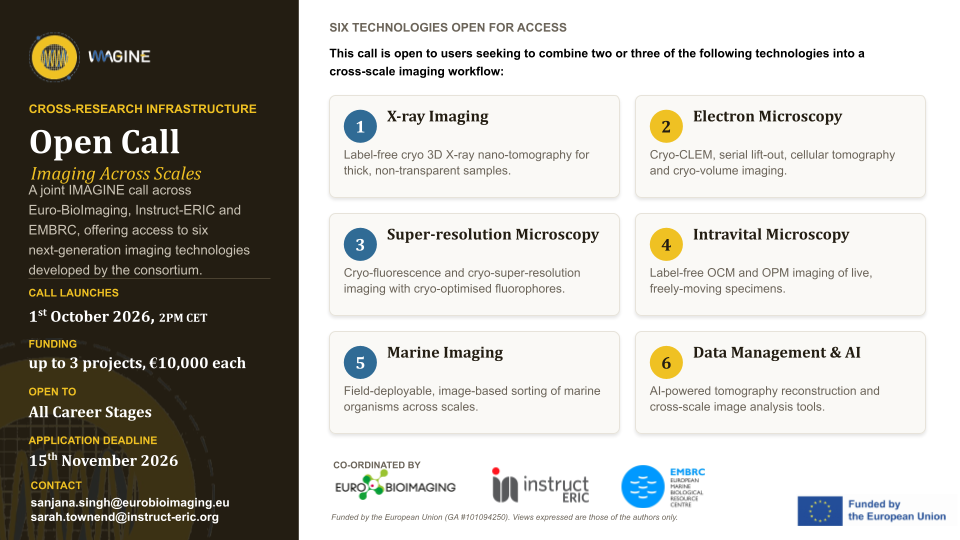
Could combining novel imaging technologies help you answer a research question—or develop a new workflow at your facility? The IMAGINE Open Call:…
October 23, 2026
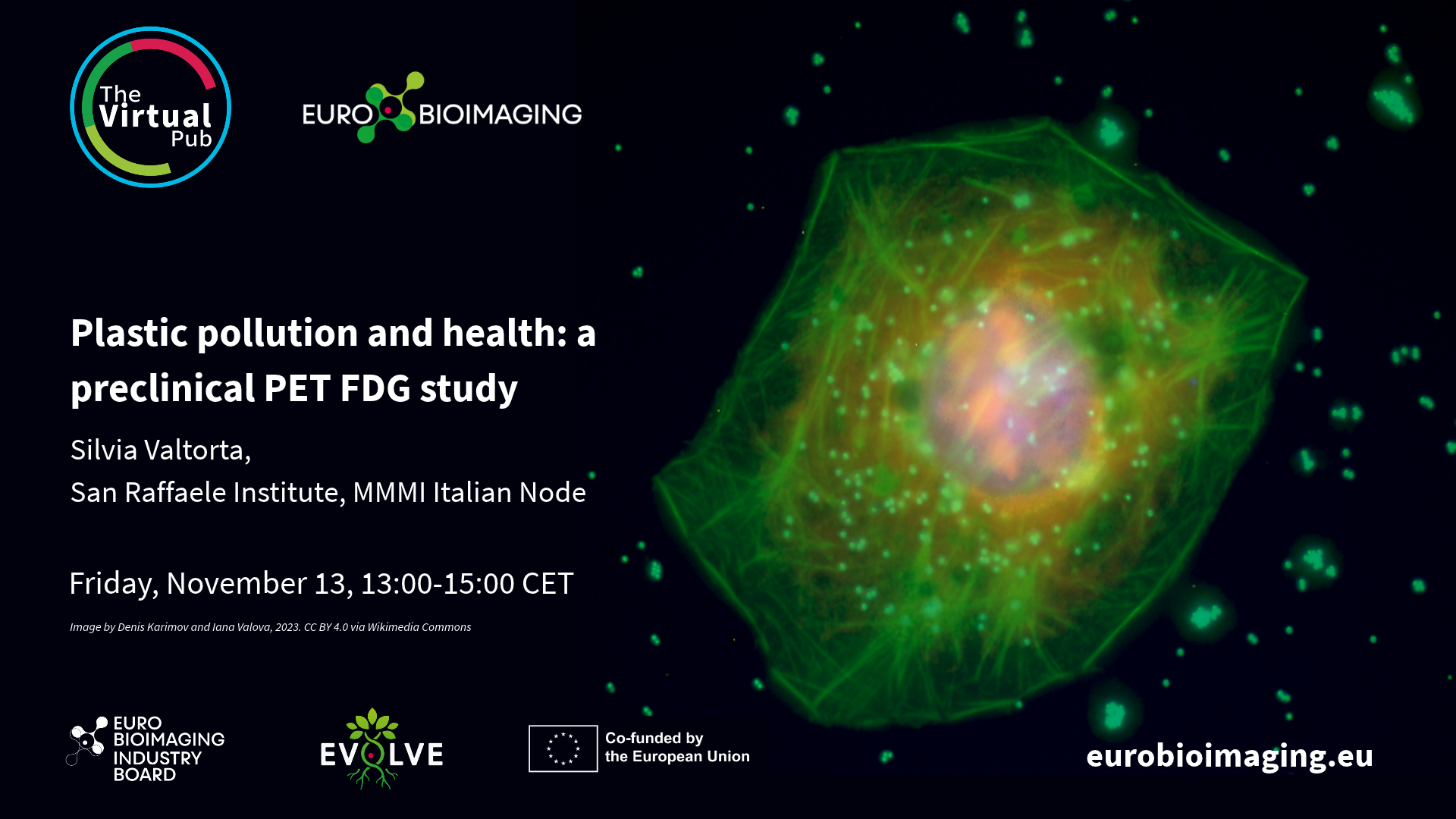
At the Special Edition Virtual Pub, “Imaging Micro- and Nanoplastics,” Euro-BioImaging users, Node experts and Industry partners will explore how advanced microscopy, clinical…