October 26, 2026
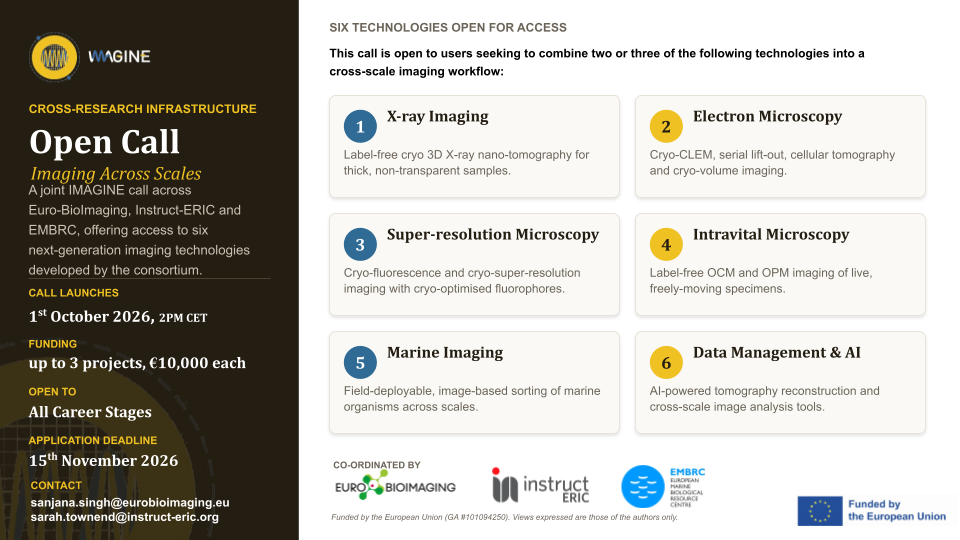
Try novel imaging workflows with the IMAGINE Open Call
Could combining novel imaging technologies help you answer a research question—or develop a new workflow at your facility? The IMAGINE Open Call:…


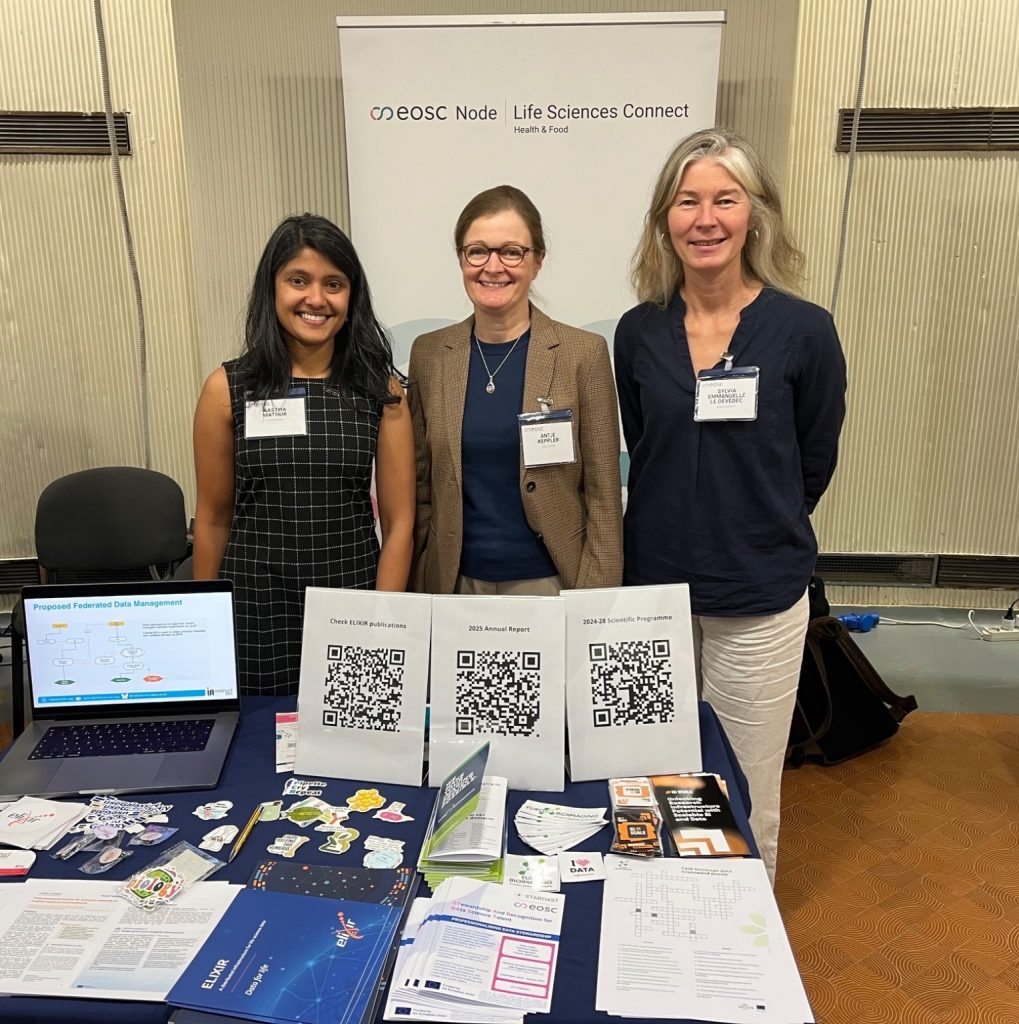
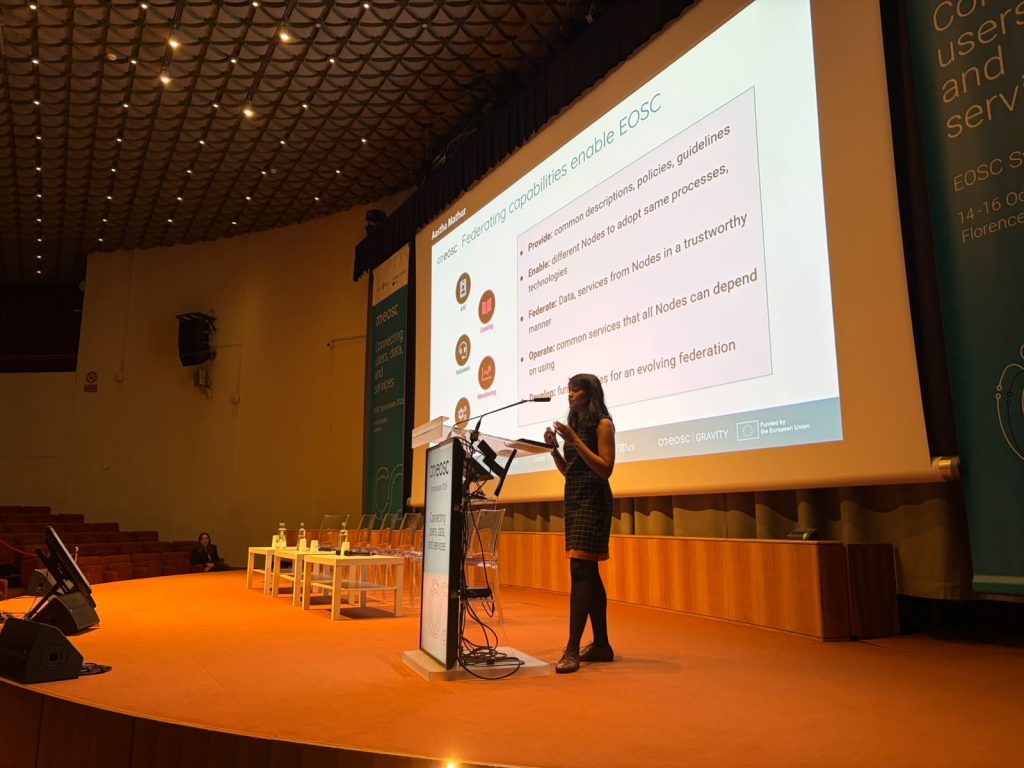
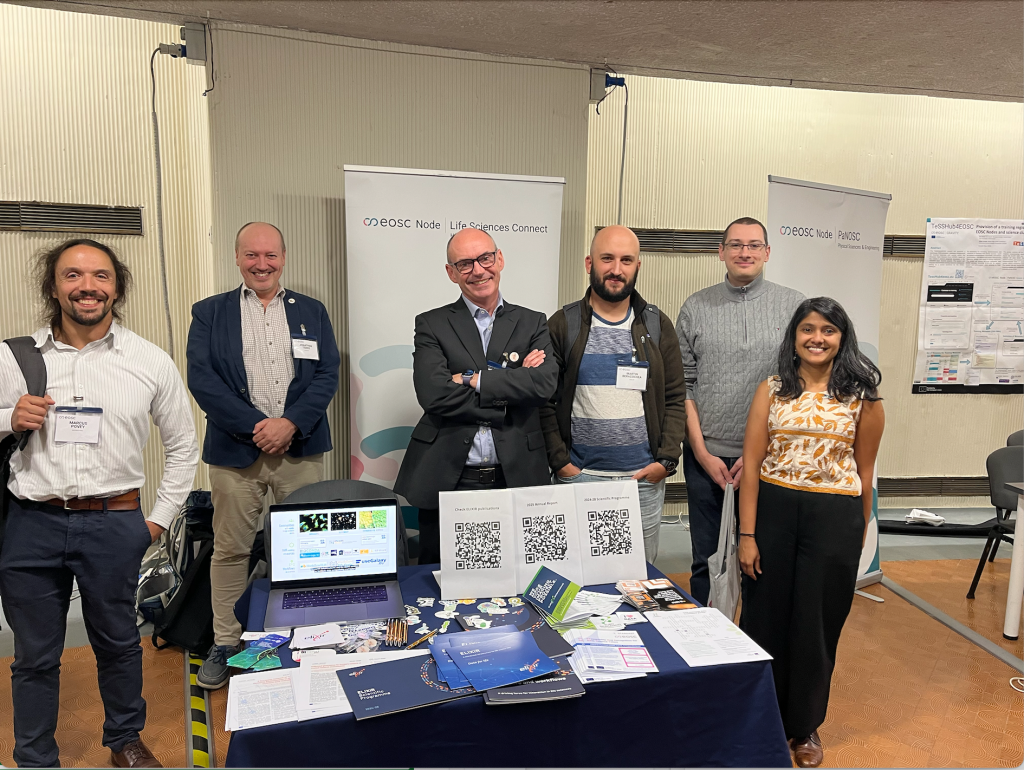
The EOSC Symposium 2026 took place from October 14-16, in Florence, Italy. More than 500 participants from 35 countries gathered there, including Euro-BioImaging’s Bio-Hub Section Director, Antje Keppler, and Head of Image Data Services, Aastha Mathur. In addition to a vibrant programme featuring talks from high-level stakeholders, the Symposium included an exhibitor space to feature the newly operational EOSC Nodes. We shared a booth with our partners from the Life Sciences Connect (LSC) Node, which is jointly coordinated by ELIXIR, EMBL, Euro-BioImaging ERIC and Instruct ERIC. Now that 14 of the 28 nodes of the EOSC Federation are in production, more than 120 scientific services can be accessed and used across institutional, disciplinary and national boundaries.
Through presentations, panel discussions and networking opportunities, the programme explored how EOSC brings users, data and services together. Sessions addressed Europe’s readiness for AI, the role of ERICs within EOSC, and potential business models to sustain the Federation.
An important perspective came from Gianluigi Consoli, Director General for Internationalisation at Italy’s Ministry of University and Research, as reported on the EOSC website: “EOSC does not replace our research infrastructures. It connects them.”
The programme explored EOSC collaborations highlighting the EOSC Federation’s links with EuroHPC, Destination Earth and European Data Spaces into focus, with SIMPL highlighted as a means of enabling interoperability. Speakers considered how EOSC can help researchers use AI and how ERICs and ESFRI research infrastructures can provide trusted services. They also discussed aligning EOSC’s development with the European Health Data Space and European cultural heritage infrastructures.
There was also an exploration of the experience of Nodes already in production. Sessions explored how the ongoing development of mandatory federating capabilities is shaping the interoperability framework. Business model discussions centred on how independent organisations can sustain the services they provide together.
Looking ahead, the closing plenary outlined priorities for the Federation’s next phase. With 14 Nodes now in production, attention is turning to making onboarding easier, securing the sustainability of services, strengthening Node-led governance and developing a more distributed architecture.
We are pleased to see the EOSC Federation becoming reality, and are happy to be contributing via the EOSC LSC Node. We will inform our Euro-BioImaging Nodes of more ways to get involved in the coming months.
October 26, 2026
Could combining novel imaging technologies help you answer a research question—or develop a new workflow at your facility? The IMAGINE Open Call:…
October 23, 2026
At the Special Edition Virtual Pub, “Imaging Micro- and Nanoplastics,” Euro-BioImaging users, Node experts and Industry partners will explore how advanced microscopy, clinical…
October 23, 2026
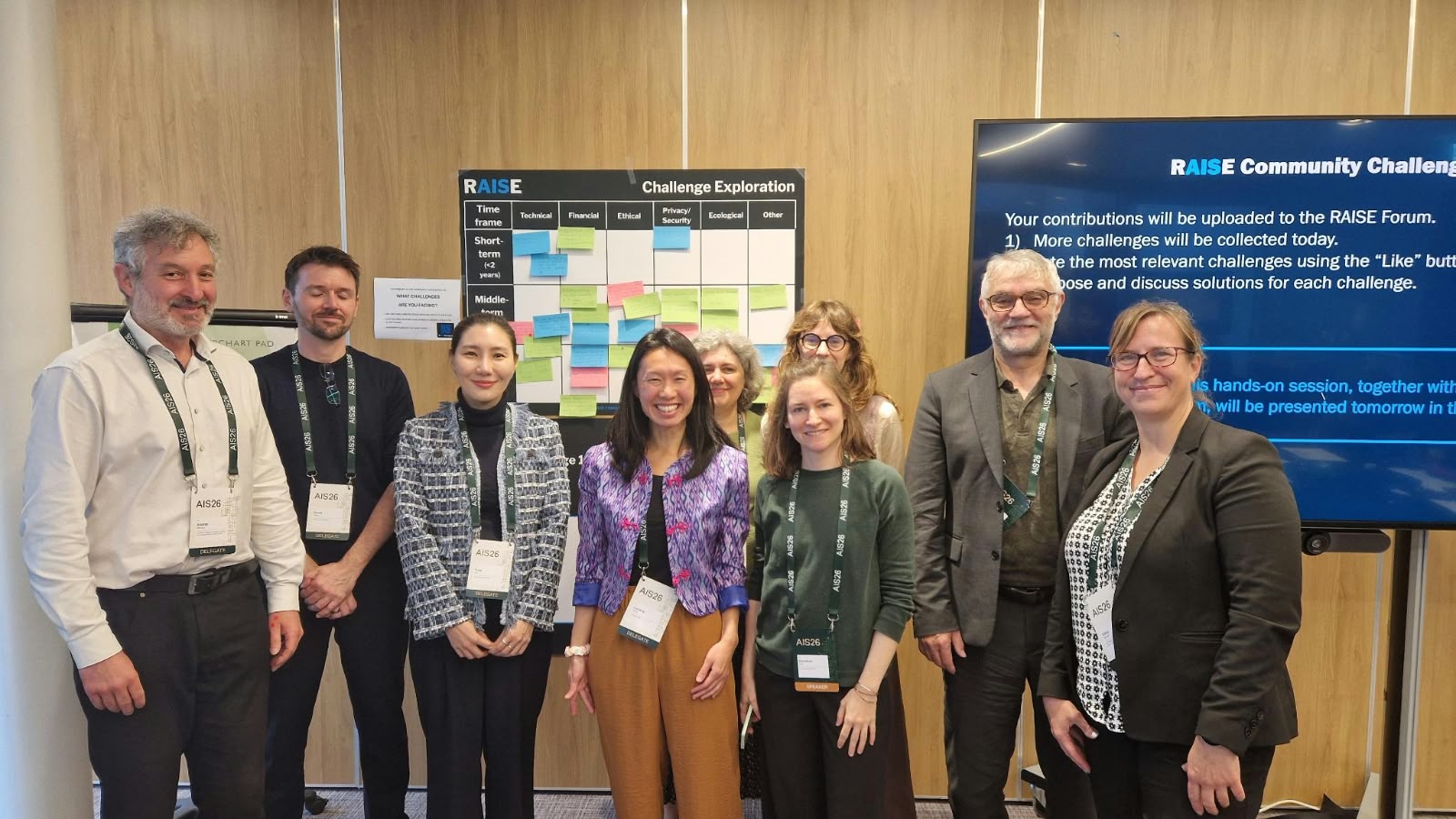
At the AI in Science Summit 2026 (AIS26) in Dublin, Euro-BioImaging joined Europe’s scientific community, AI experts, industry representatives and…